1 LT Batch DTF Ink
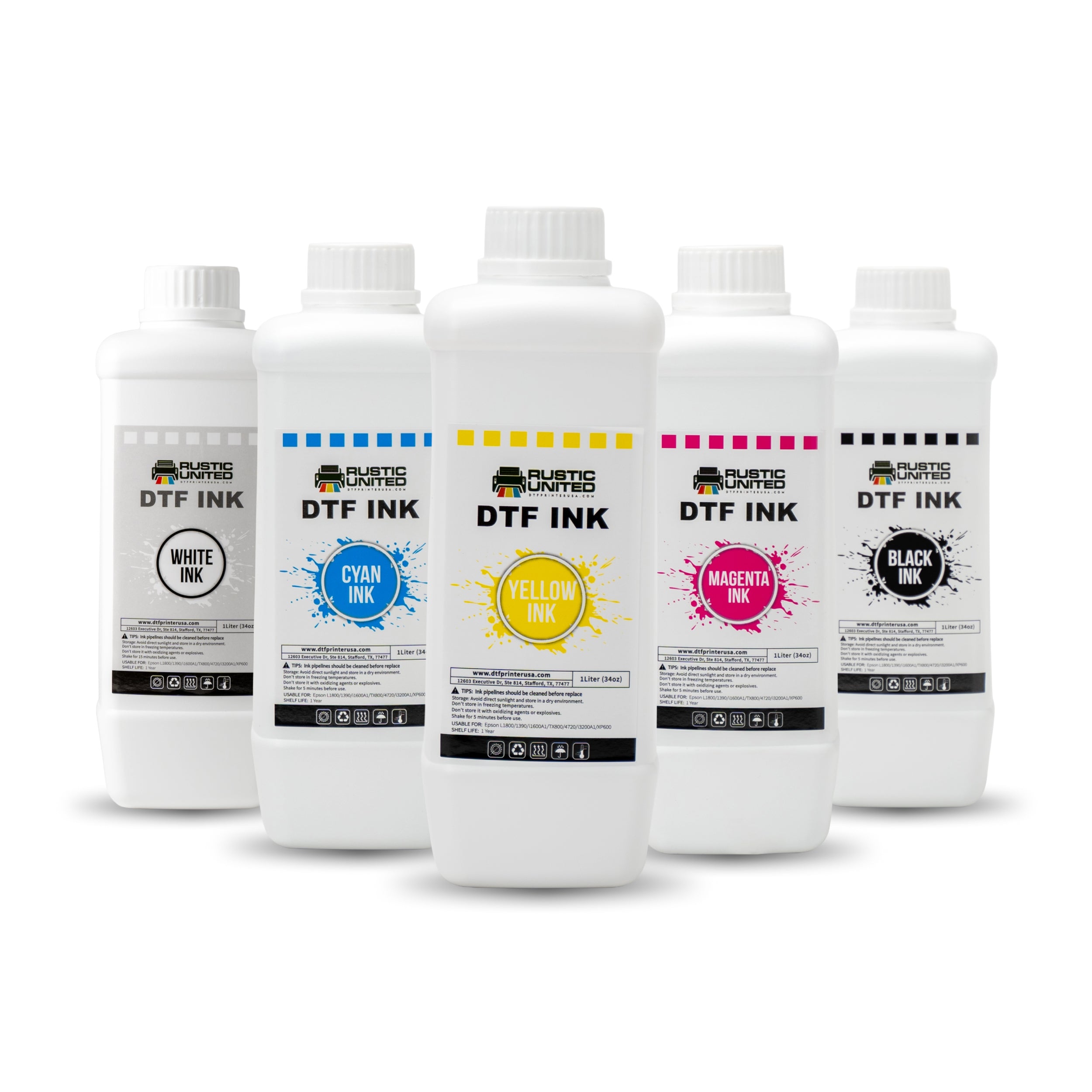
White, Cyan, Magenta, Yellow and Black, a liter of each in one carton. Full-color artwork leans on every bottle at once, so keeping the rack matched is what stops a reprint reading differently from the original.
Get the SetHalf the work here is merch, and merch means artwork that other processes struggle with: photographs, gradients, poster art printed small and fast. DTF handles it, provided the consumables are right. Order before the daily cutoff and it leaves our Texas warehouse that afternoon, every item formulated for Epson i3200 and i1600 heads.
These four carry the load on any full-color job, and all of them sit in Stafford ready to move up to Navasota, Anderson, Brenham, Hempstead and Bryan. Every film width, both powder grades, sheet packs, printhead fluids and packaging appear in the catalog below.

White, Cyan, Magenta, Yellow and Black, a liter of each in one carton. Full-color artwork leans on every bottle at once, so keeping the rack matched is what stops a reprint reading differently from the original.
Get the Set
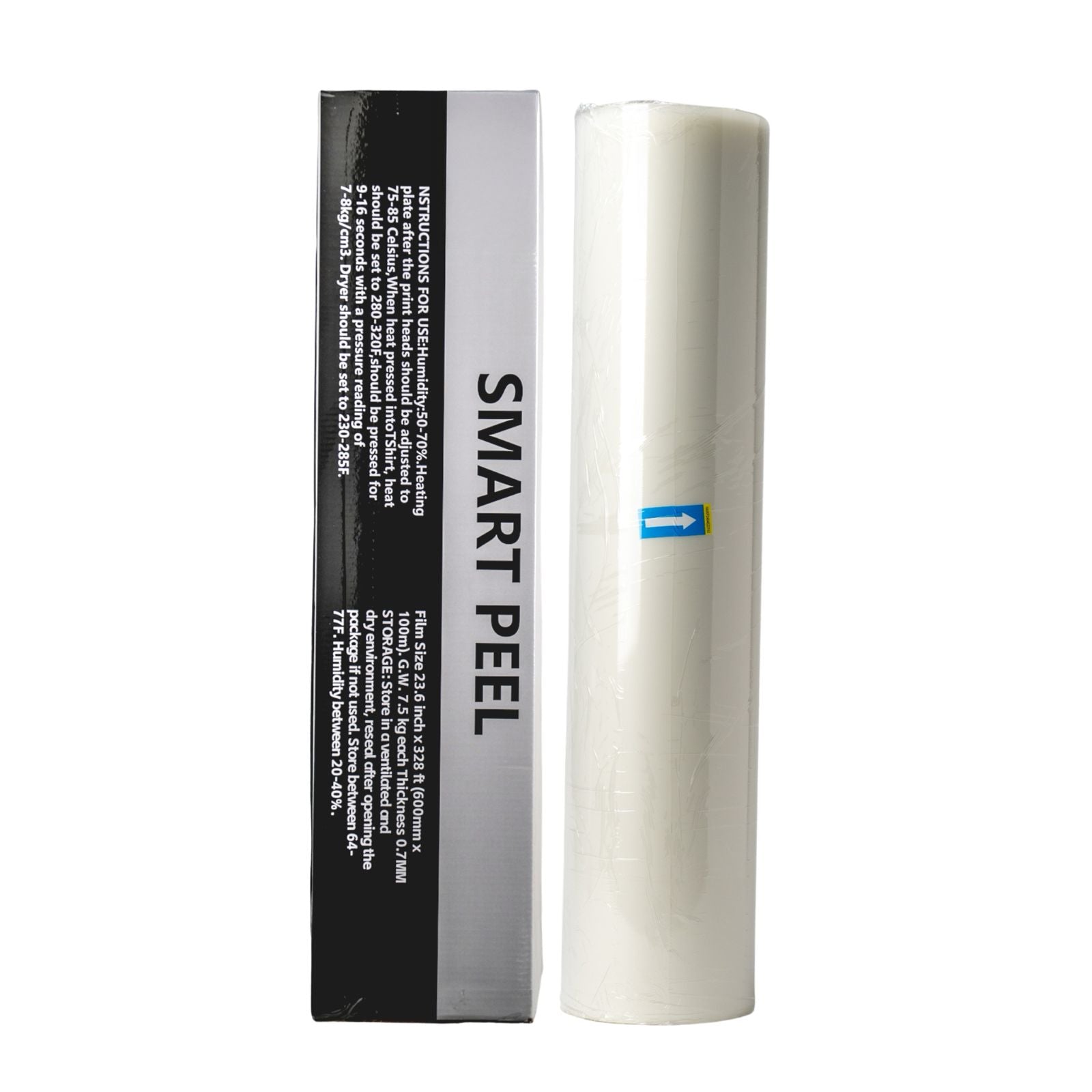
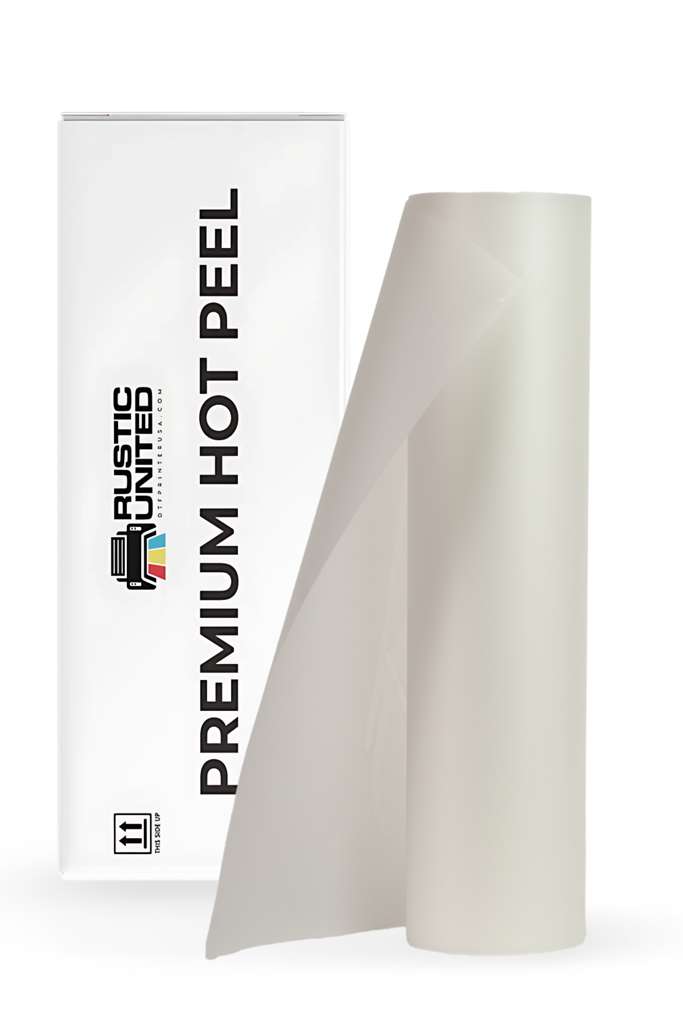
A 24 inch roll running 328 feet, forgiving about peel timing and consistent throughout. Enough film to carry a festival weekend of merch without stopping to reload in the middle of it.
Check Stock
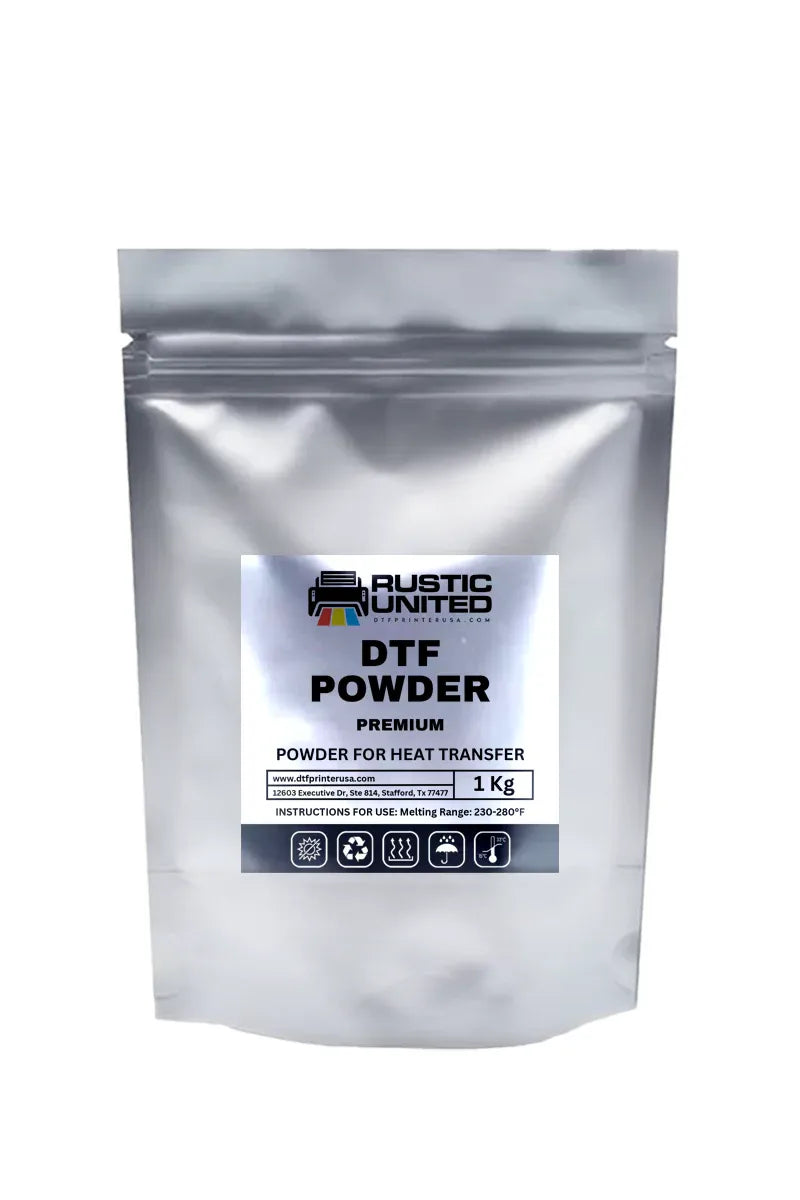
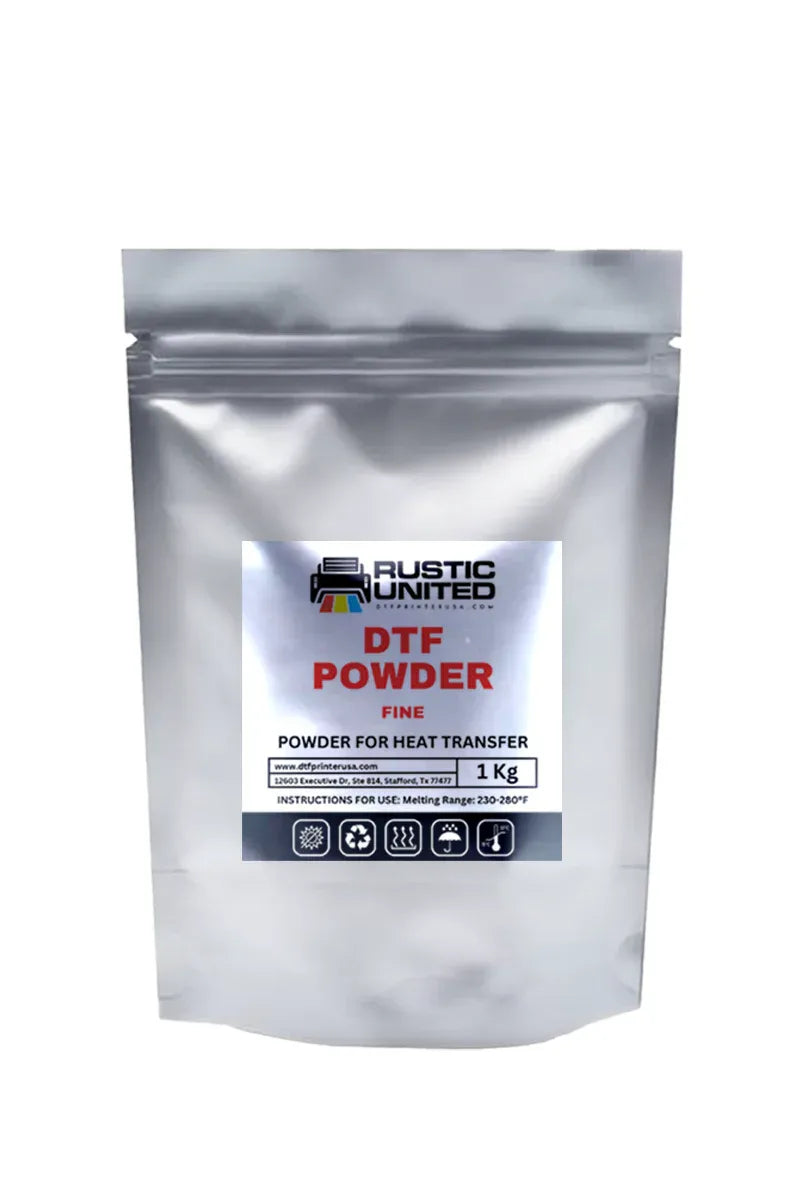
Fine and premium, each sold by the kilogram. Fine is the one that matters on detailed poster art and halftones, where a coarse grain shows in the finish; premium goes under hoodies and heavier pieces meant to last.
View Options
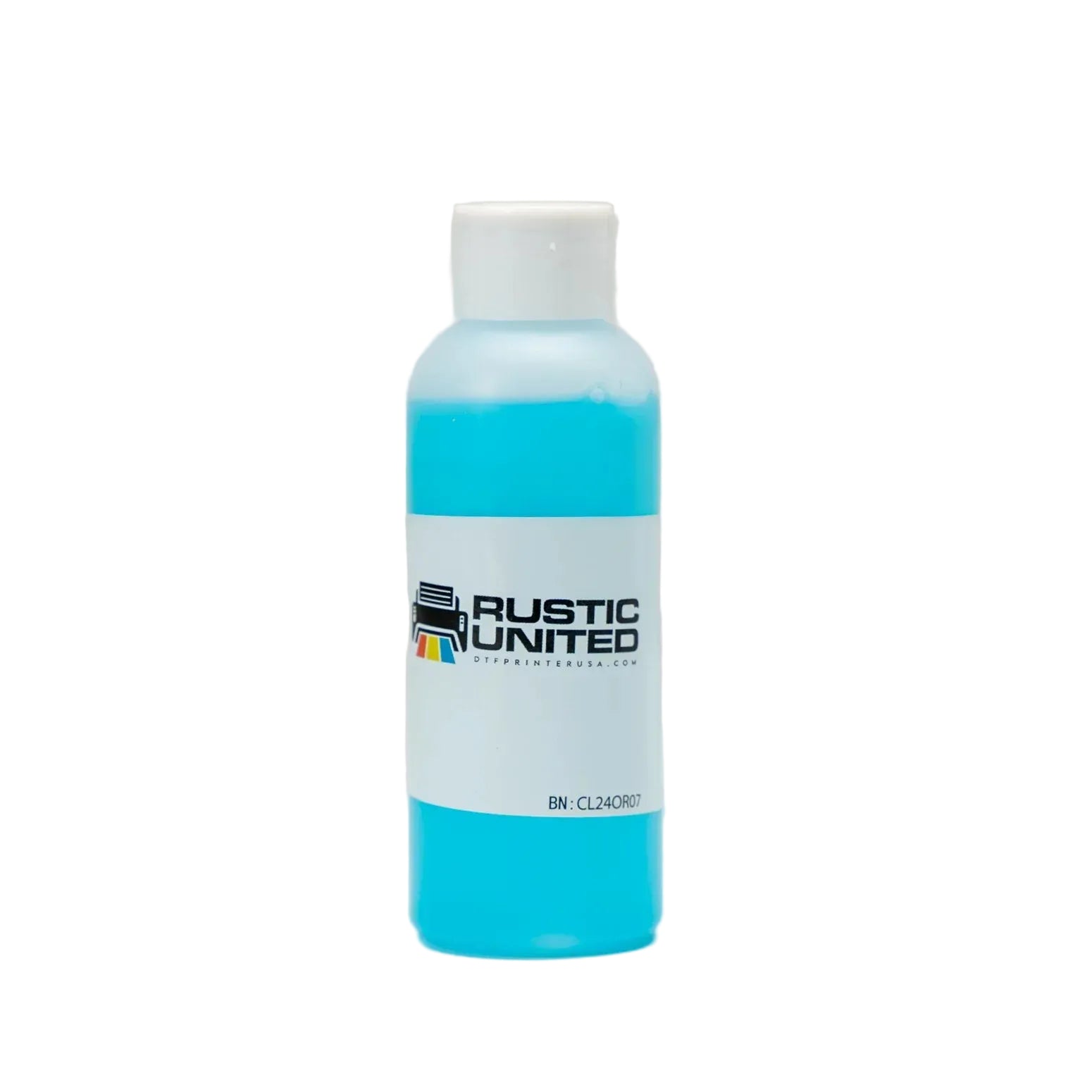
A concentrated 100 ml printhead cleaner. Full-color work asks a lot of every nozzle at once, and a single dropped nozzle shows up across an entire photographic design rather than in one corner.
View OptionsFull-color artwork mixes from these five, so the set matters more than any single bottle. Take one color or the whole rack, all built to the same OEKO-TEX certified specification for Epson i3200 and i1600 printheads.
DTF white ink does more work under a photograph than under a logo, because every tone in the image is sitting on top of it and any unevenness reads as a shift in the picture rather than a slightly dull letter. That is why merch work goes through white faster and punishes a thin underbase harder. Keep it agitated, keep a spare bottle behind the one in use, and the color layer looks after itself.
Open a category for the complete list and current pricing. Every film width we stock, fine and premium powder, A3 cut sheet packs, printhead fluids and packaging, all held in Stafford and cleared to leave for Navasota the same working day.

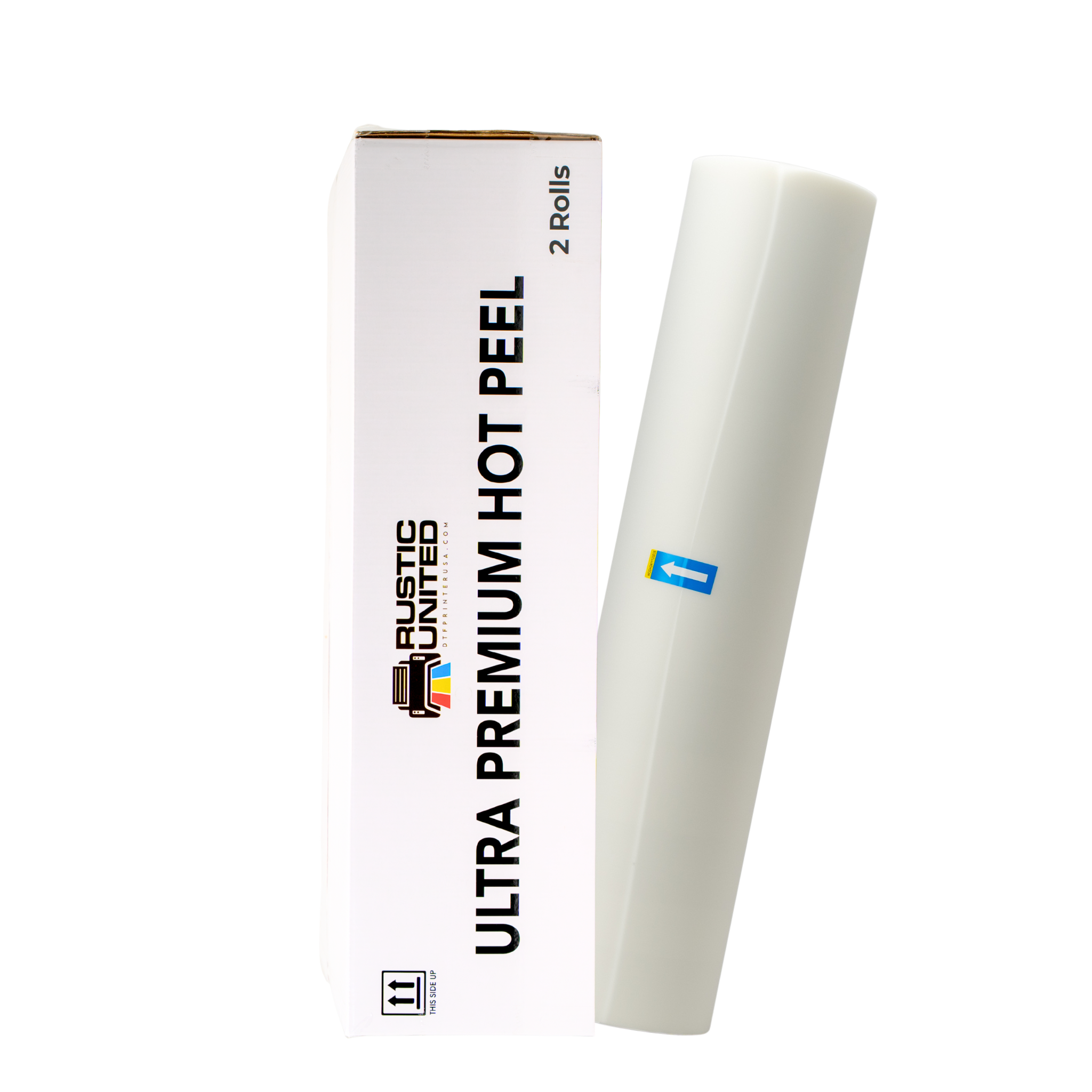
A 24 inch by 328 ft roll that lifts warm or cold as you prefer. The general-purpose roll and the sensible one to keep loaded.
Check Stock
The film to reach for when the artwork is photographic or built from halftones, since the release is cleaner and holds fine tonal detail. In 12, 16.5, and 24 inch widths.
View Sizes
Twenty-four inches by 328 feet of cold peel film, taken off once the sheet is cold. Reach for it when a merch piece should finish matte rather than glossy.
Shop Film
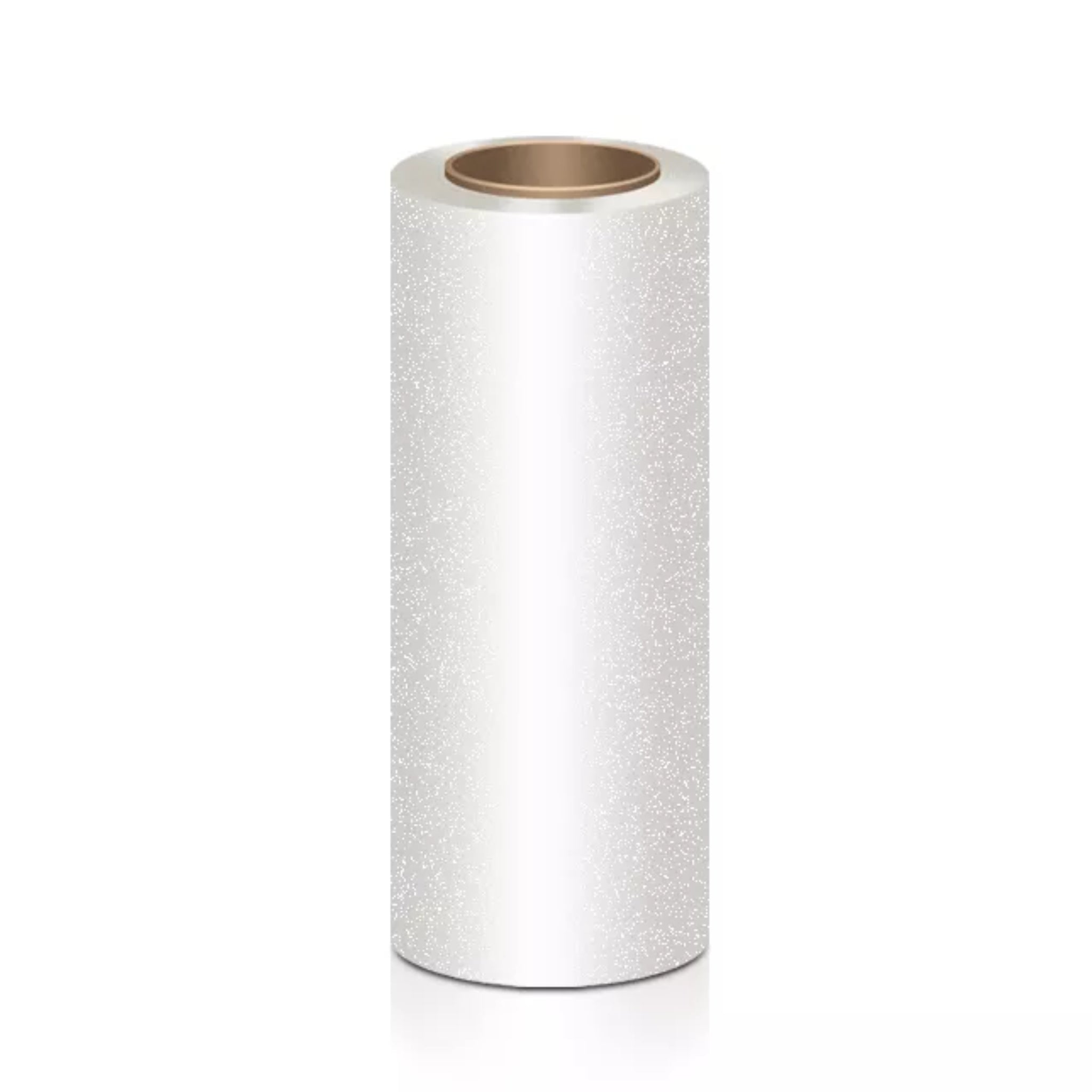
A 24 inch by 328 ft glitter roll for the pieces meant to catch stage light. Loads and presses exactly like standard film.
Shop Film
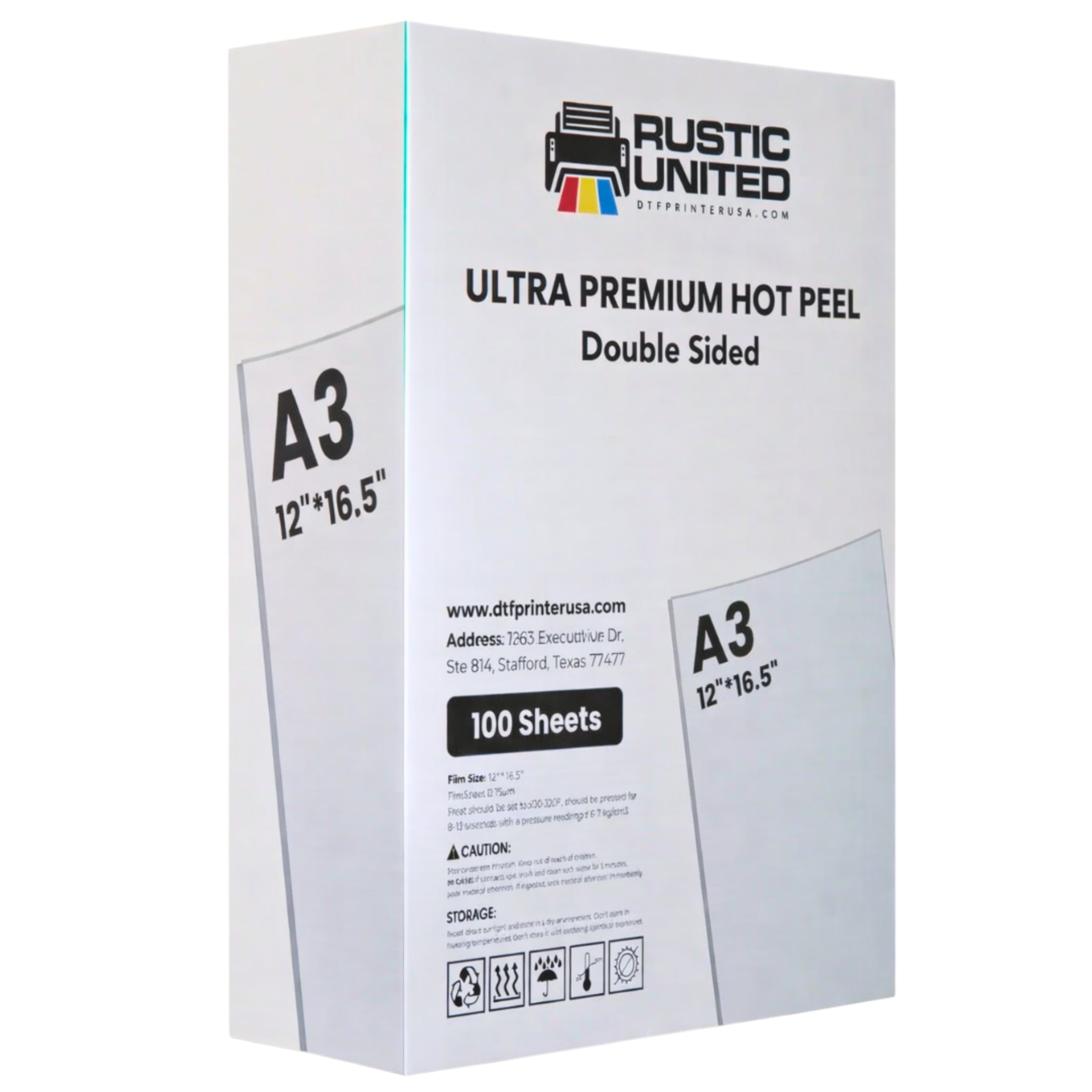
A hundred A3 sheets per pack, ideal for proofing a photographic design before committing a roll to it.
Get Sheets
The stronger grade by the kilogram, for hoodies, tote bags and heavier merch pieces.
Stock Up
A kilogram of fine grain, which is what halftone and photographic work needs so the texture does not show in the finish.
Check Stock
Concentrated cleaner in a 100 ml bottle, and the first thing to reach for when a nozzle check comes back patchy.
View Options
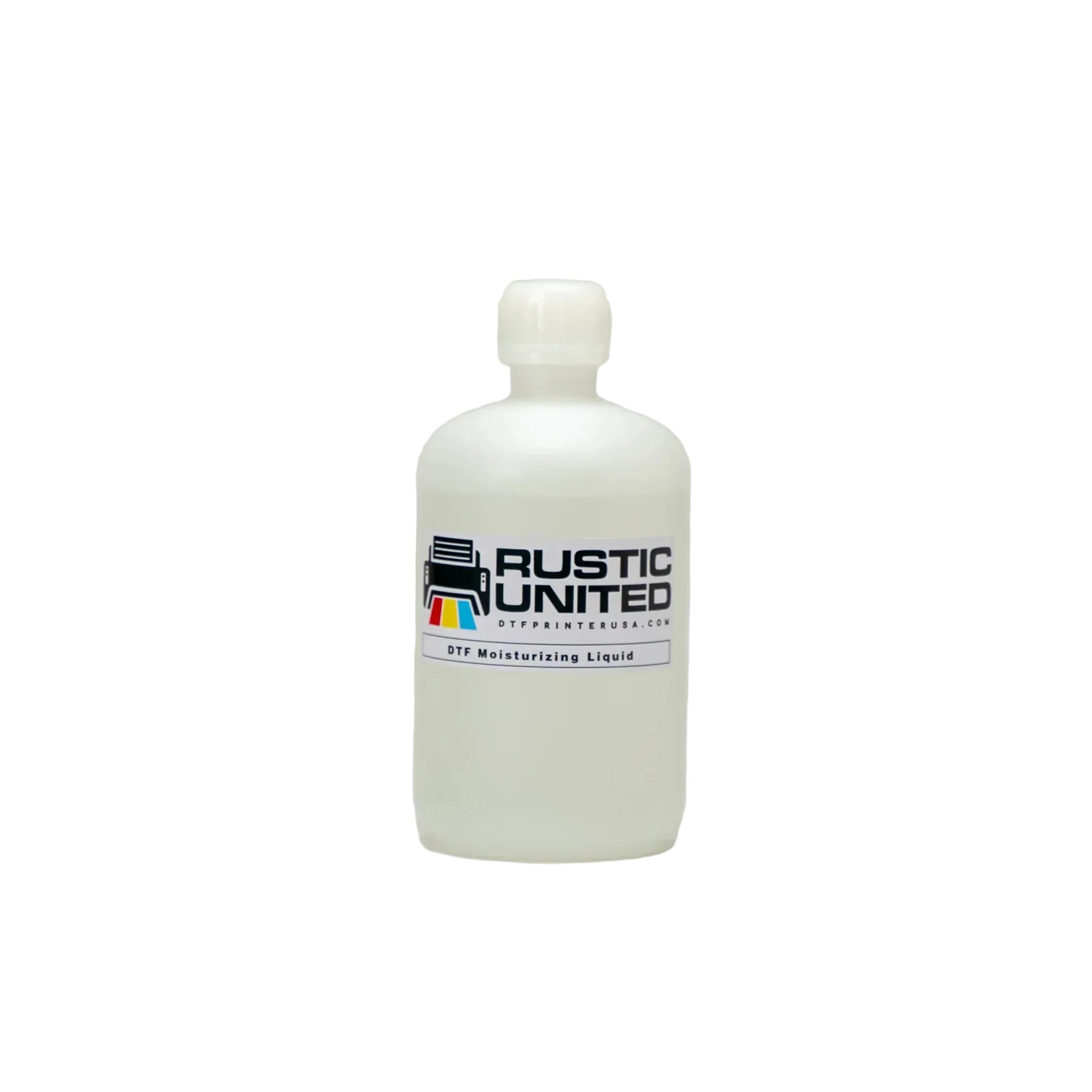
A liter of moisturizing fluid to protect the head through the quiet weeks between event seasons.
Check Availability
DTF powder is the adhesive layer, and on merch work the grade choice is visible rather than theoretical. Halftones and photographic tone are built from very small dots, and a coarse grain sitting across them reads as texture the design never had. Fine grain protects that detail on lighter cotton; premium goes under hoodies and heavier pieces. Both leave Stafford by the kilogram on the day you order them.
The stronger bond hoodies and heavier merch pieces need.
Small grain that keeps halftones and fine tone clean.
DTF transfer film, listed by some suppliers as DTF paper, is the sheet your artwork prints onto before heat moves it into the garment. On photographic and gradient work the film matters more than people expect, because a rough release drags tone and turns a smooth fade into a broken edge. Here is how the three we stock behave.
Also sold as instant peel. Undemanding about timing and the roll most benches keep on the machine day to day.
Cold peel, lifted only once the sheet is cool. The roll for merch that should finish matte and sit soft rather than shine.
The cleanest release we carry, which is what photographic tone and halftone work needs. In 12, 16.5, and 24 inch widths.
I have been ordering supplies regularly and the customer service has stayed consistent. The technical support has been genuinely useful every time we have had questions about the printers or the transfers.
The customer service was friendly and the technical support was surprisingly thorough. They helped us right away with printer settings and with quality problems on the transfers.
I bought ink for my DTF machine and everything came out perfectly. I was impressed by how attentive the staff were and by how quickly my products arrived. I recommend this company one hundred percent, one of the best.
Navasota print shops, event and merch producers, and Grimes County decorators mostly print things that could never justify screens: forty shirts, full color, artwork that changes with every act and every weekend. That is precisely the work DTF exists for, provided the consumables behind it are up to the artwork.
Beat the daily cutoff and the order is picked and gone that afternoon, with tracking in your inbox. Nothing is batched or held to fill a truck, which is what lets you take a merch job the week before the event rather than the month before.
OEKO-TEX certified, so the ink is tested safe against skin once pressed. On full-color work the properties that show are saturation across the whole gamut, a white opaque enough to carry an image on black, and flow steady enough that shirt forty matches shirt one.
Everything listed is inventory we hold rather than source once you order. For a shop whose busy weeks are set by a published calendar, that is what makes stocking ahead of a festival a plan rather than a hope.
The run from Stafford up to Grimes County is direct and the timing holds week to week. Stocking up before a festival weekend, or working out why a gradient broke up on press? Call or email in English or Spanish and we will work it through.
A merch order is the job that used to get quoted out of existence. Full color meant a screen per color, setup meant a minimum quantity, and forty shirts never covered it. DTF removes the setup entirely, so a photographic design across forty pieces costs the same per shirt as across four hundred, and the artwork can change every single weekend without a penny of extra preparation.
The Texas Legislature named Navasota the Blues Capital of Texas, and the town has earned it. Mance Lipscomb spent his life here, Blues Alley and the statue downtown mark it, and the music has pulled an arts and antiques revival through the historic Railroad District along with it. Add the Navasota Theatre Alliance, the Grimes County Fairgrounds and Washington-on-the-Brazos just down the road, and you have a small town with an unusually full calendar of published dates. For a print shop that produces a specific kind of order: merch. Forty shirts for a weekend, artwork that changes with every act and every event, photographic and poster-style designs that a screen shop would quote out of existence. It is exactly the work DTF was made for. Orders leave our Stafford warehouse the same day and run up into Grimes County.
Blues Alley, the venues around it and the festival calendar generate merch in the way live music always does: short runs, full-color poster art, tight deadlines and a design that will never be printed again. Ultra premium film and fine powder are what keep that artwork looking like the poster rather than an approximation of it.
Between the Navasota Theatre Alliance, the Grimes County Fairgrounds and the antiques and arts trade along the Railroad District, the rest of the calendar fills itself: production shirts, cast and crew pieces, fair and market merch, shop apparel for downtown businesses. Steady, modest and mostly dated.
Navasota is the largest town in the county and pulls work from Anderson, Brenham, Hempstead, Bryan and College Station, several of which have no printer of their own. Same-day dispatch from Stafford is what makes covering that reach realistic.
DTF Printer USA keeps Navasota and the wider Grimes County area supplied with ink, film, powder, cut sheets, printhead care and packaging. From Historic Downtown and Blues Alley out through Anderson, Brenham, Hempstead, Bryan and College Station, a Navasota print shop, merch producer or decorator is buying from a Texas shelf rather than waiting on an import.
Three things that decide whether merch work pays: printing gradients and photographic art without them breaking up, hitting a brand color that a customer will actually approve, and sizing a run for a weekend that happens once.
DTF prints photographs and gradients better than almost anything else available to a small shop, which is exactly why merch work suits it. There is one failure mode worth understanding before it costs you a run. A gradient that fades all the way to zero looks correct on screen and often looks correct on the printed film, then comes off the press with a broken, speckled or slightly gritty edge where the fade should have disappeared smoothly. The cause is straightforward once you see it. At very low ink density there is barely any white underbase being laid down, and powder needs ink to stick to, so the faintest part of the fade ends up with almost no adhesive holding it. What bonds is patchy and what does not simply lifts. The fix is equally simple: do not fade to nothing. Ending a gradient at a low percentage rather than at zero keeps enough density for the underbase and the powder to do their jobs, and the visual difference is almost nothing while the durability difference is total. Two related points. Halftones behave the same way at their sparse end, so very fine dot patterns in a highlight are worth checking on a test press rather than trusting. And fine powder rather than premium is the right grade for this work, because a coarse grain sitting across small dots adds a texture the artwork never had. Print one, press it, wash it, then commit the run.
Sooner or later a customer arrives with a brand color and an expectation, and the conversation goes badly unless you understand what is actually happening. DTF prints from cyan, magenta, yellow and black, and that combination cannot reach every color a spot ink can. Bright oranges, intense greens, and above all vivid blues and purples sit outside what the four-color process can mix, so a design that looks right on a backlit screen can come off the press noticeably duller. Nothing is broken when that happens; the color was never achievable in the first place. Three things keep the conversation reasonable. First, test on the actual garment rather than judging a printed film sheet, because the underbase and the fabric both affect how the color reads, and a color on white cotton is not the same color on black. Second, look at it in daylight, since shop lighting flatters and distorts in equal measure. Third, set expectations before you print rather than after: tell the customer plainly that you will get as close as the process allows and show them a pressed sample to approve. A small library of pressed swatches on your common garment colors is worth building for exactly this, because approving a physical piece is a completely different conversation from approving a number. Customers are almost always reasonable about this when it is explained first and almost never reasonable when it is explained afterwards.
Event merch is bought and sold in a single weekend, which makes the size curve the whole commercial question. Print too many extra larges and they sit in a box until next year. Print too few mediums and you turn away money at the busiest hour. There is no universal answer, but there is a reliable method. Start from what actually sold last time rather than from an even spread, because an even spread across six sizes is the single most common way to end a weekend with unsold stock. If there is no history, a workable opening assumption for general event merch is that the middle three sizes carry most of the volume and the extremes carry very little, then adjust to the audience: a family fair skews differently from a late-night blues bill. The bigger advantage DTF gives you is that the decision does not have to be final. Print your transfers ahead, size them to the design rather than the garment, and press to demand as the weekend goes rather than committing every shirt on Thursday. Cured transfers store flat for weeks, so what does not sell is not a box of finished shirts in the wrong sizes, it is a stack of transfers waiting for the next event. That single change turns leftover stock from a loss into inventory. Keep a written note of what sold and in what sizes, because two or three events in, that record is worth more than any rule of thumb.
What Navasota shops and Grimes County decorators most often want answered before a supply order goes in.