Volume here does not arrive evenly. It arrives in waves, and a shop that is short of white ink in the second week of a rush loses the whole run. Order ahead of the daily cutoff and the box leaves our Texas warehouse that afternoon. Ink, film, powder and cleaner, stocked deep enough to absorb a spike, all of it formulated for Epson i3200 and i1600 heads.
Responsive SupportPhone & email, replies in 1 hr usually
Stock Before the Rush
The Four That Decide Whether You Finisha Big Run.
Every high-volume week comes back to these four, and all of them are held in Stafford ready to travel north to Bryan, College Station, Navasota, Hearne and Caldwell. Film widths, powder grades, sheet packs, printhead fluids and packaging are all in the catalog below.
Best Value
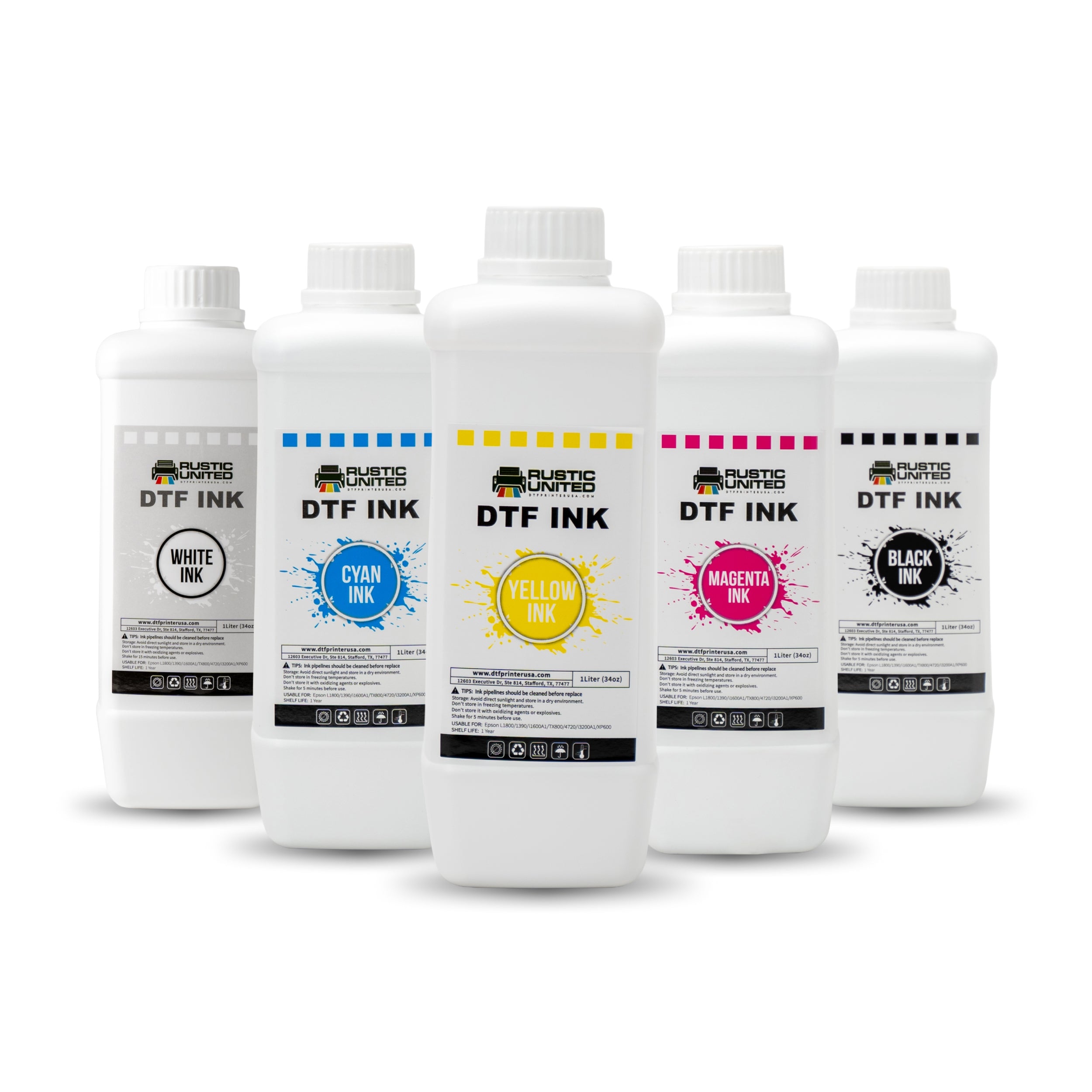
1 LT Batch DTF Ink
$110
Best for: full color setup and refills
Five liters covering the entire rack: White, Cyan, Magenta, Yellow and Black. The batch is where volume pricing starts to bite, which is exactly what you want going into a stretch where output climbs sharply.
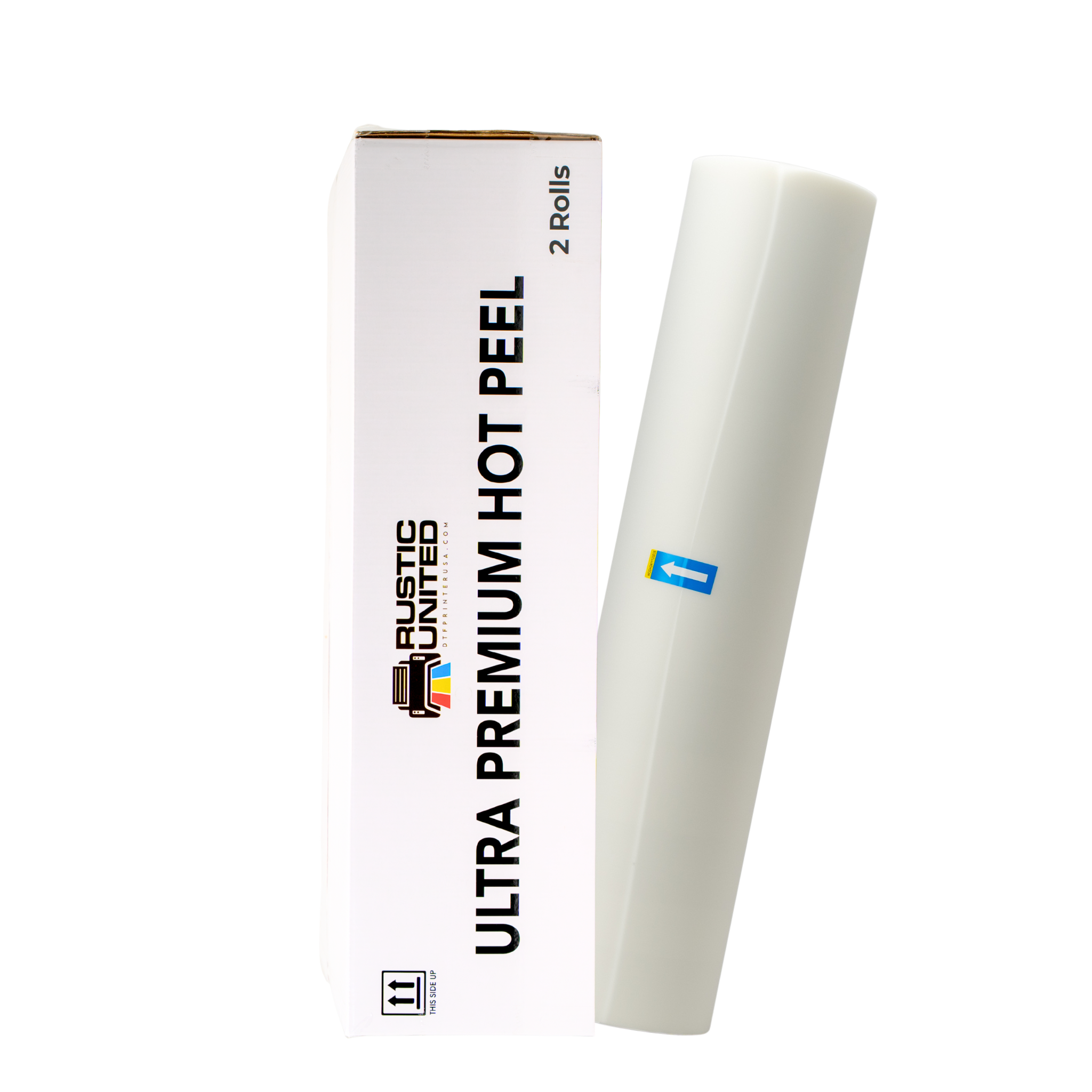
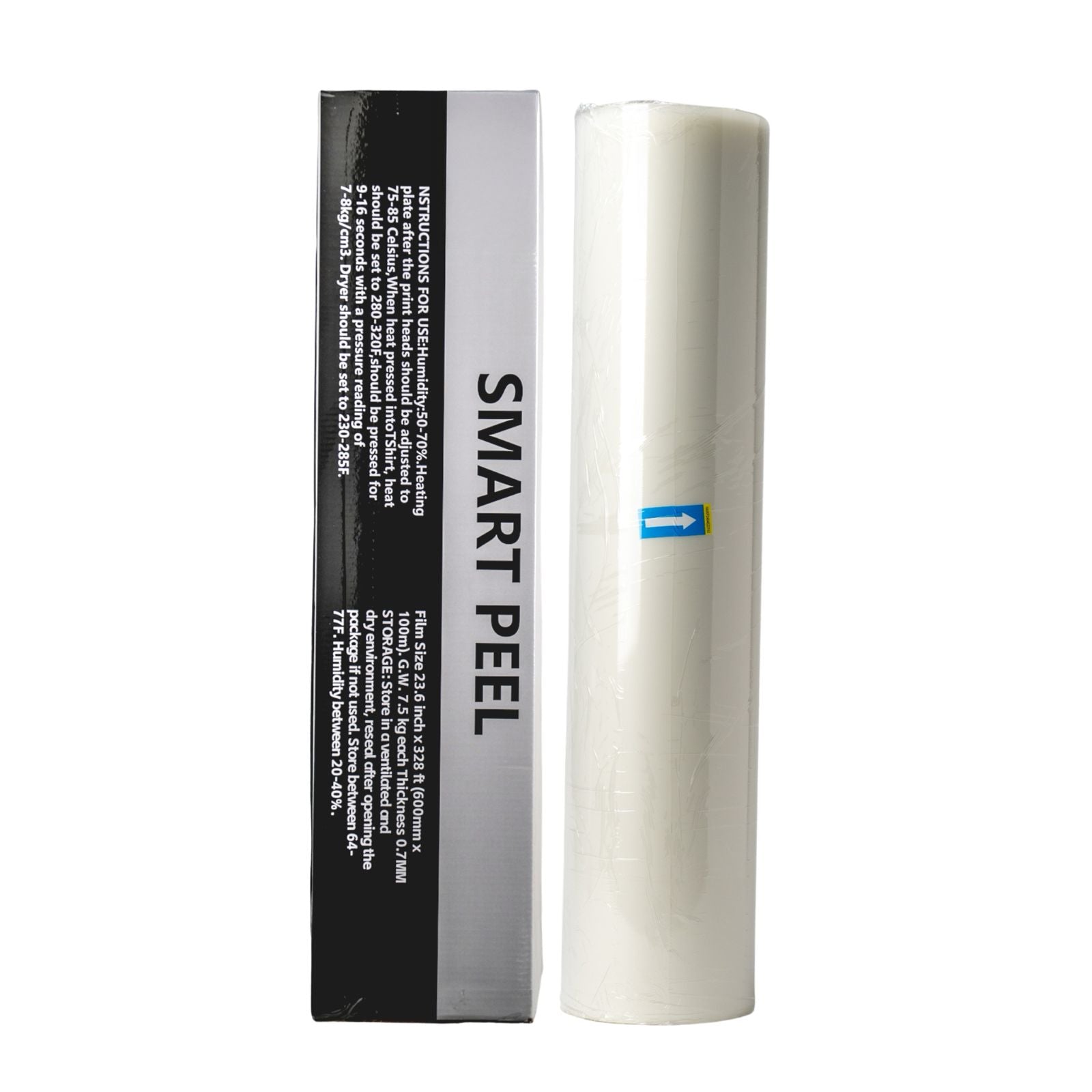
A 24 inch roll running 328 feet, and hot peel means you keep moving instead of waiting for sheets to cool. That difference is measured in minutes on a small job and in hours across a run of four hundred.
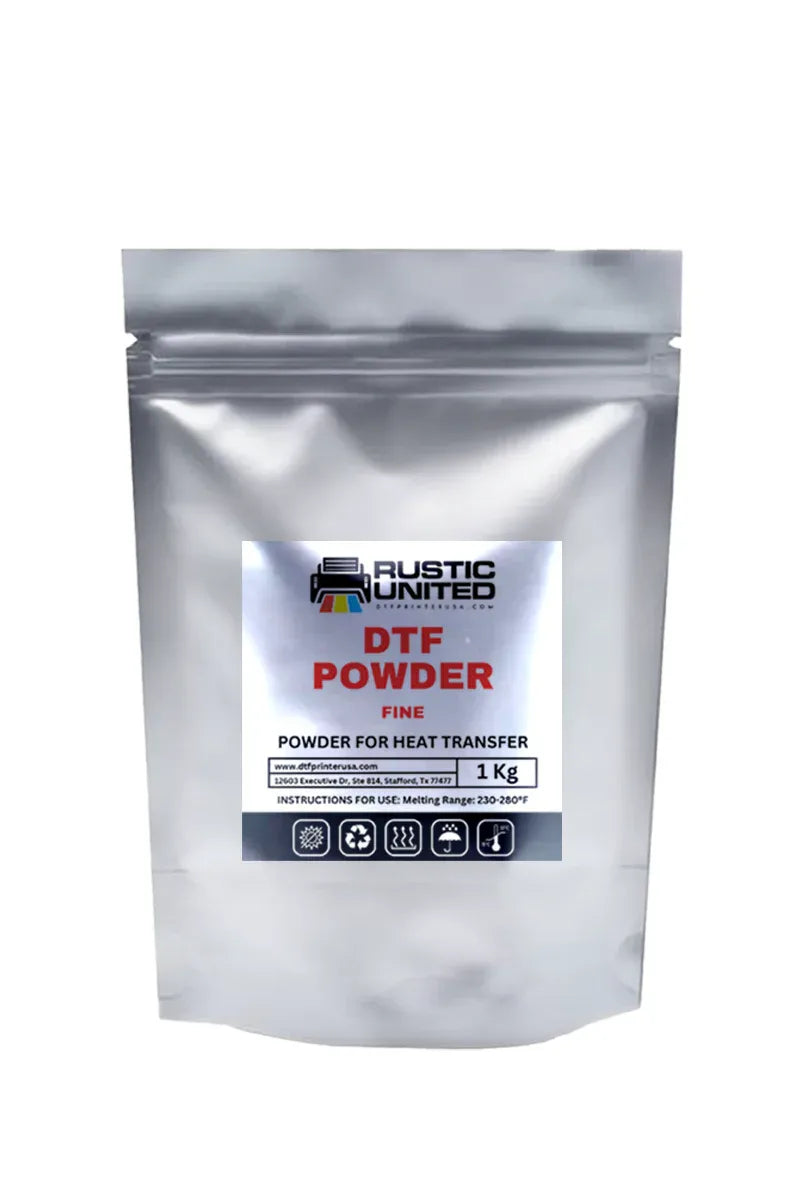
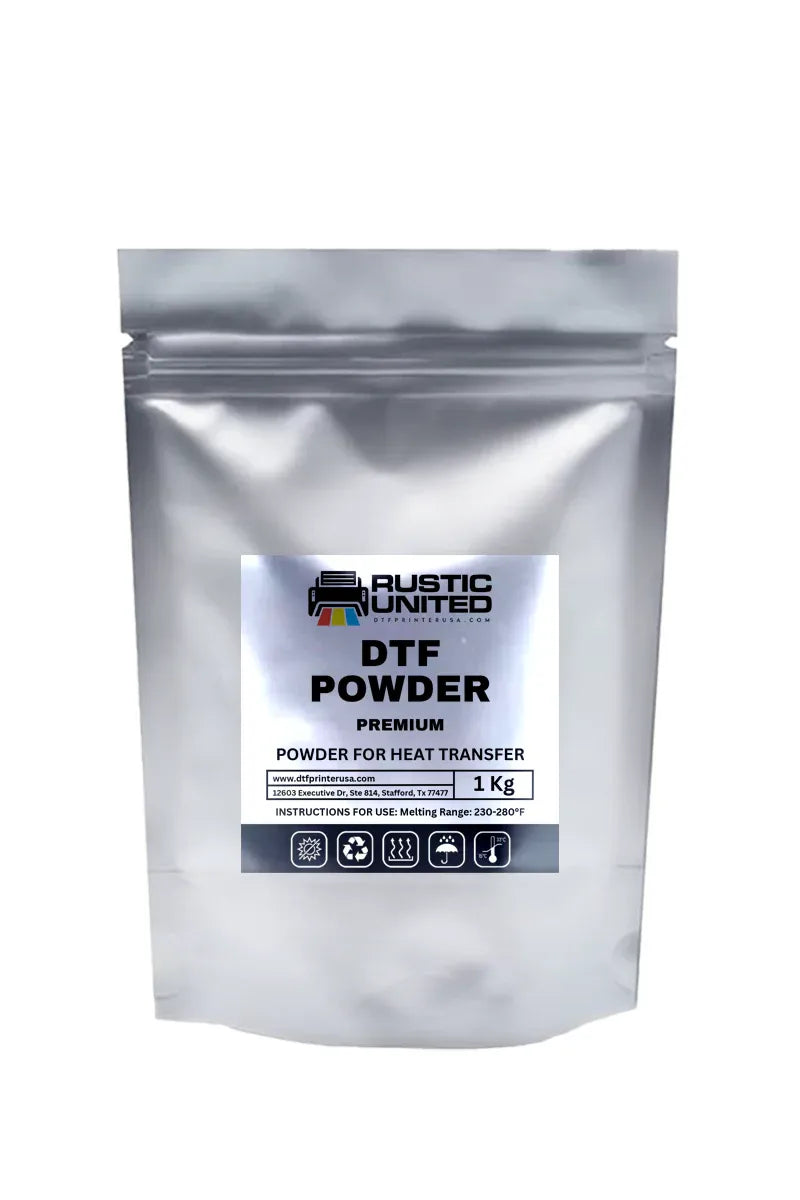
Sold by the kilogram in both grades. Fine carries the crest and script detail organization work is full of; premium anchors the bond on hoodies, jackets and the heavier pieces that get worn for years afterwards.
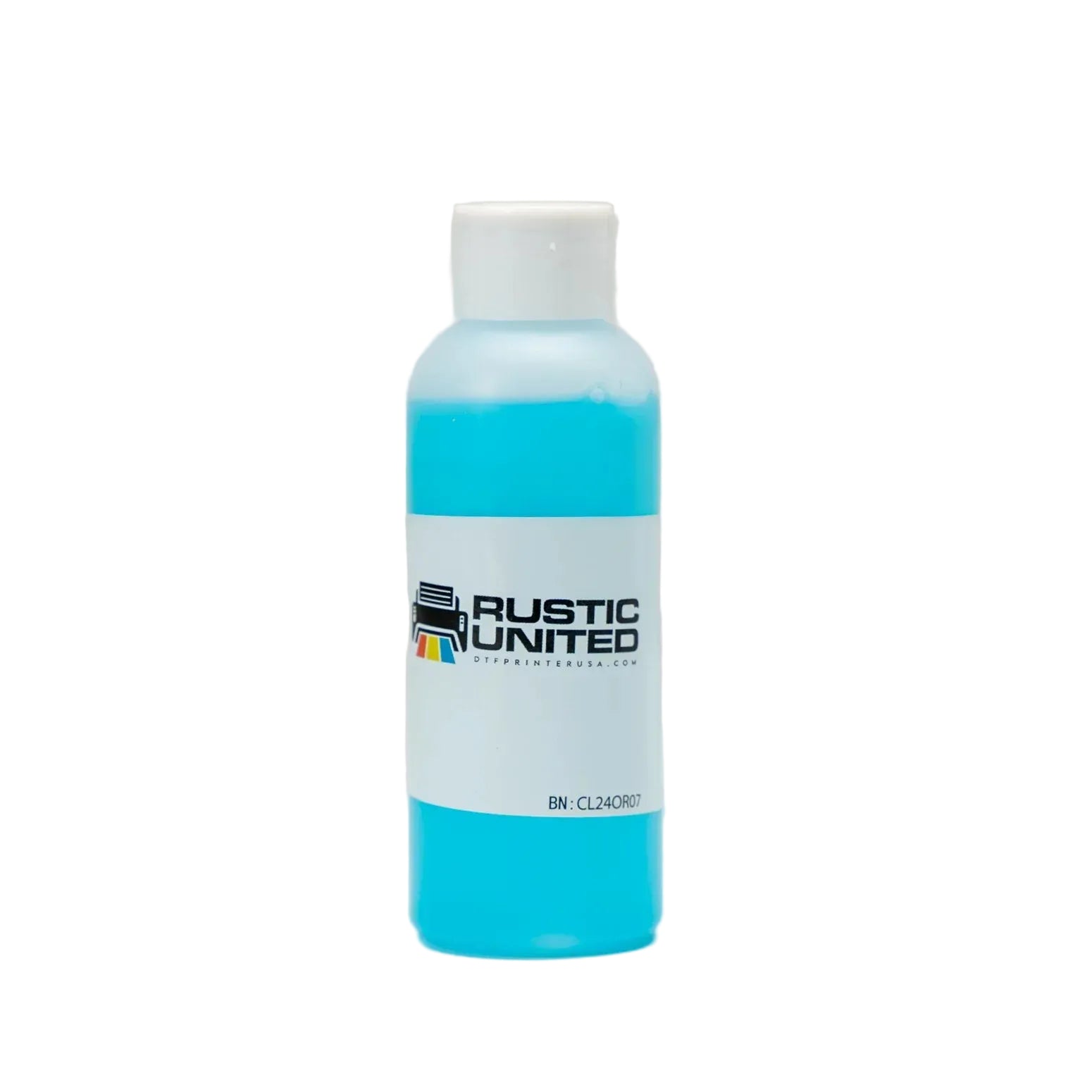
A 100 ml bottle that keeps nozzles open between sessions. Ten dollars against the risk of a clogged head appearing in the middle of the busiest fortnight of your year.
Single bottles handle a gap; the batch is what you order when a busy stretch is coming and volume pricing starts to matter. Same OEKO-TEX certified formula throughout, tuned for Epson i3200 and i1600 printheads.
DTF white ink lays the underbase under every design, so it drains at a multiple of any color and it scales with coverage rather than with shirt count. A run of five hundred hoodies with full front artwork can consume several times the white of five hundred left chest logos. Estimate from coverage before a large Bryan job rather than from the number of garments, and keep a spare bottle behind the one in use.
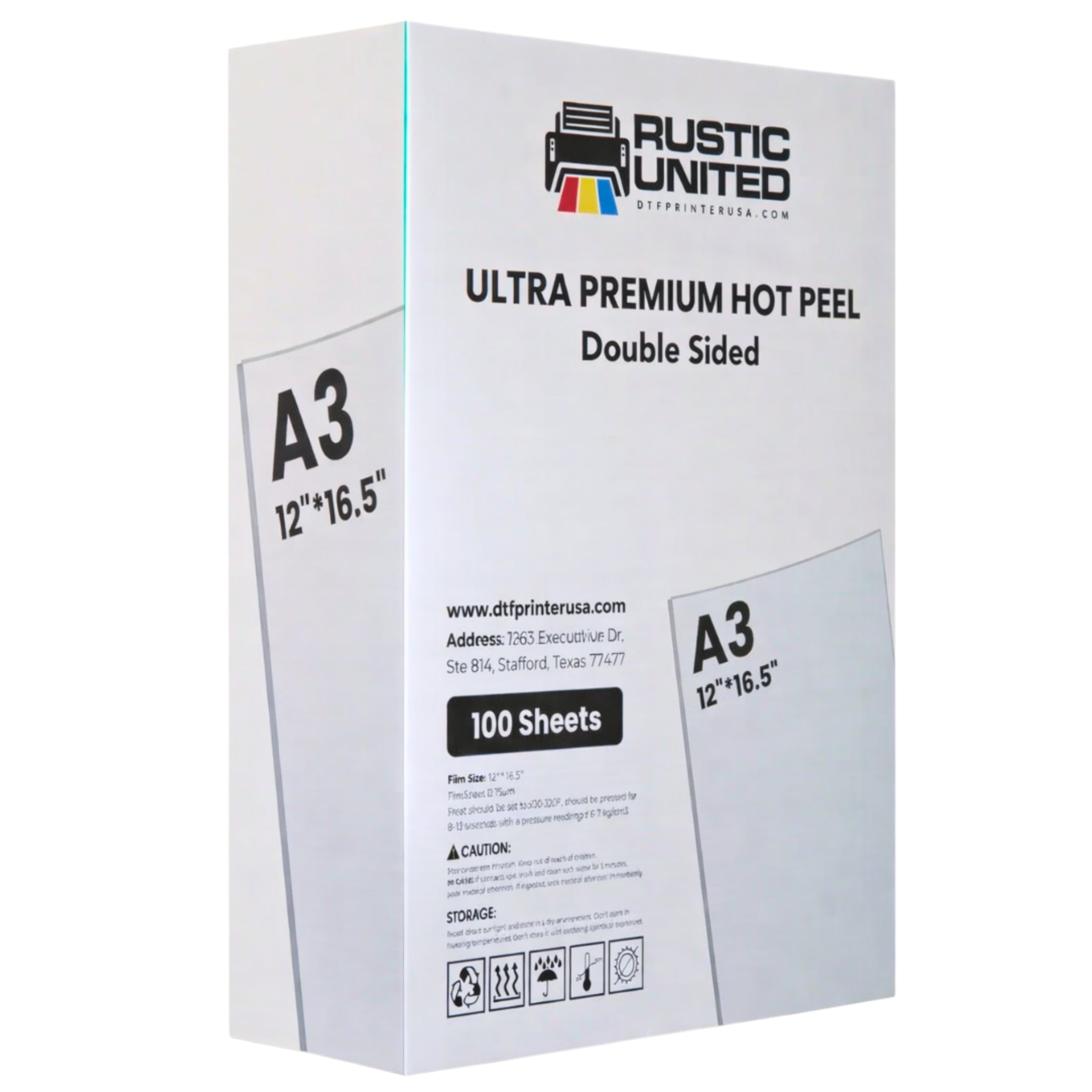
Open a category for the full list and live pricing. Films across every width, both powder grades, A3 sheet packs and printhead fluids, plus poly bags and boxes so packaging travels on the same invoice. All of it in Stafford, cleared to leave for Bryan the same working day.
Select a category to view stock
DTF Transfer Film
Instant Peel
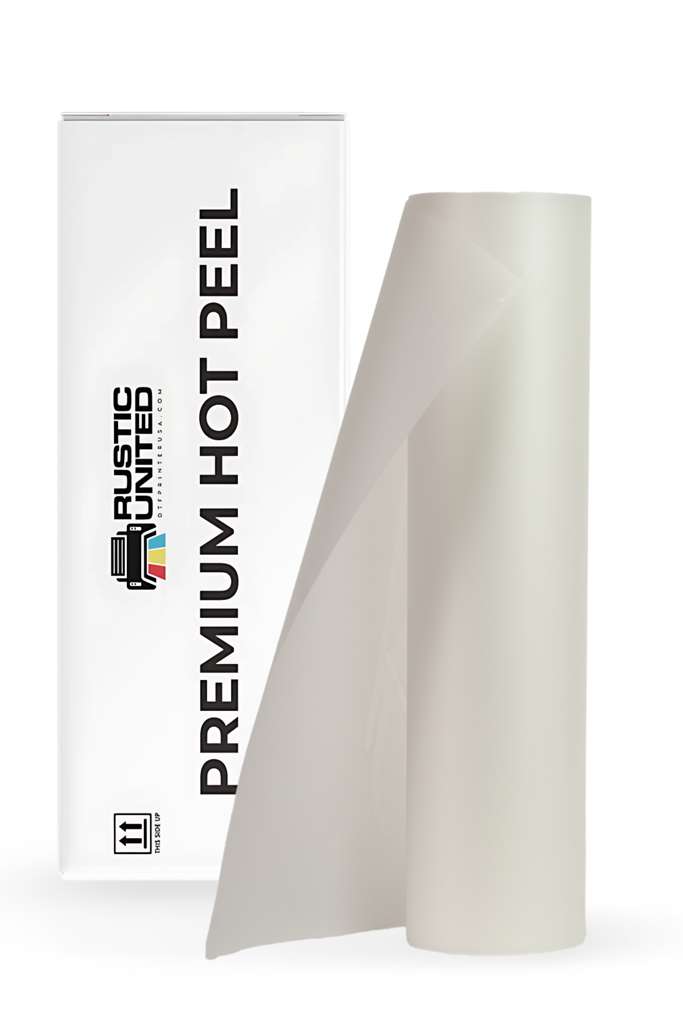
Premium Hot Peel Film
$69.55
A 24 inch by 328 ft roll built for throughput, lifting warm so the line keeps moving. The default choice when the order is large and the deadline is fixed.
The refined hot peel, releasing cleanly while holding crest and lettering detail intact. Available in 12, 16.5, and 24 inch widths to suit your printer.
A 24 inch by 328 ft roll that only lifts once the sheet has gone cold. Slower through a batch, but the right call whenever the artwork carries names or fine script.
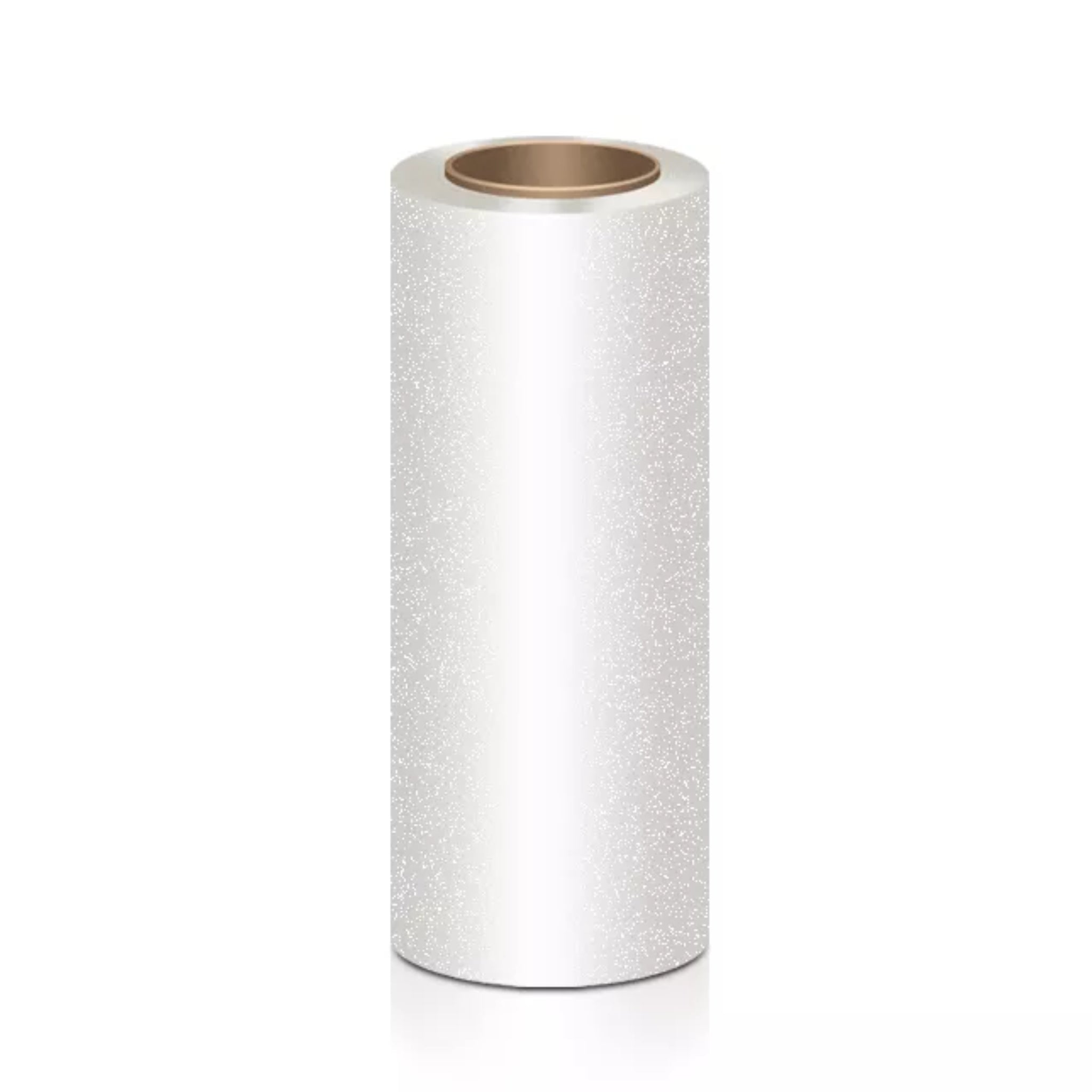
A 24 inch by 328 ft glitter roll for the pieces meant to be seen in a crowd. Loads and presses like any standard film, with no change to your workflow.
DTF powder is the adhesive that fuses the print into the fabric, and how far a kilogram goes depends on printed area rather than garment count. Full front artwork can burn through it several times faster than left chest work, which is worth knowing before quoting a large run. Fine grain for detail on cotton, premium for hoodies and heavier blanks. Both leave Stafford by the kilogram on the day the order lands.
Best Seller
Premium
$16.55
The bond hoodies, jackets and heavyweight garments actually need.
Fine
$15.55
Fine grain for crest detail, thin script and lighter cotton.
DTF transfer film, sometimes listed as DTF paper, carries your design until the press drives it into the garment. On a large run the peel type is a throughput decision as much as a finish decision, because waiting for sheets to cool across four hundred pieces adds up fast. Below is how the three rolls we carry actually differ.
Best for high volume
Premium Double Hot Peel
Listed elsewhere as instant peel. Lifting warm keeps a production line moving, which is what makes it the volume choice.
These DTF films, inks and powders have streamlined our workflow. The ease of use and the compatibility between the products make them a dynamic trio.
Hasan
Our customers cannot stop raving about the quality of the prints we produce using these DTF films, inks and powders. They have become our secret to success.
Jose Garcia
The combination of DTF films, inks and powders has elevated my printing. The synergy between these products delivers consistent and vibrant results every time.
Julia Romero
Why Bryan Shops Buy Here
Depth When It Spikes. Pricing When It Scales.
Bryan print shops, campus and organization suppliers, and Brazos Valley decorators run at two speeds: steady for most of the year, then flat out for a few weeks at a time. A supplier is worth having when it can absorb the second half of that without back-orders and without penalizing you for buying deep.
Same-Day Shipping
Orders clearing the cutoff are packed and gone the same afternoon, running north toward Brazos County with tracking in your inbox. Nothing is batched or held to fill a truck, which is the difference between topping up mid-run and stopping the line.
OEKO-TEX Certified Ink
OEKO-TEX certification means the ink is tested safe against skin once pressed. In production it shows up as dense pigment, dependable white coverage, and a formula steady enough that shirt number four hundred matches shirt number one.
Production-Ready Stock
Everything listed is held inventory rather than a catalog we source against. That matters when volume is uneven, because the point of buying deep before a rush is knowing the depth is actually there when you place the order.
Fast Local Delivery
The run from Stafford up to Bryan is direct and the timing holds week to week, so a restock timed against a known peak arrives when you planned it. Caught out mid-run? Get in touch and we will find the quickest route.
Where a Big Run Makes or Loses Money
Margin on Volume Is Won Before You Print.
On a four hundred piece order the price you quoted is fixed, so everything that goes wrong afterwards comes straight out of your margin. Running out mid-run, paying single-bottle prices on a bulk job, or wasting film on loose layout all cost more than any discount is worth. Buying deep at the volume tier before the run starts is where the profit on it is actually decided.
Same Day
Shipping
Ordered before the cutoff and gone the same afternoon, so a mid-run top-up does not become a stopped line.
Local
Stafford Warehouse
One Stafford, TX warehouse holding real depth, which is the only reason buying ahead of a peak works.
1 Call
To a Texas Team
Sizing a bulk order, or unsure how much white a full front run will take? A US-based team will work it through with you the same day.
Buying Bulk Jobs Retail
Paying single-bottle prices across a bulk order
Running out of white halfway through a large run
Discovering the depth was not there when you needed it run
Film wasted on loose layout across hundreds of designs
A fixed quote absorbing every problem that follows
VS
DTF Printer USA, Priced and Stocked for Volume
Same-day dispatch that keeps a run moving
Real depth held in one Stafford, TX warehouse
OEKO-TEX certified ink consistent from first to last
A US-based team who will help you size an order
Volume pricing that improves as the order grows
Printing in Bryan
The Older Half of a Two-CityMarket.
Bryan was here first. It grew up as a railroad and cotton town in the 1860s, and the university that later defined the area was built on land just south of it, which eventually became a separate city entirely. What Bryan kept is a real downtown: the Historic District, the Palace Theater, the Carnegie History Center and a working commercial core that is not campus-facing. What it shares is the calendar. Demand across the Brazos Valley moves with an academic year, so a Bryan bench sees long steady stretches broken by a few weeks where volume multiplies. That pattern is the defining fact for a print shop here, and it rewards buying depth ahead of a peak rather than reacting inside one. Orders leave our Stafford warehouse the same day and run north to Brazos County.
Downtown Business & Local Brands
The Downtown Bryan Historic District supports a genuine independent business scene: restaurants, breweries, venues and small retail brands that order staff apparel and merchandise on their own account rather than through a campus. These are steady, year-round orders in modest quantities, and they are what keeps a bench busy between the peaks.
Organization Runs at Volume
Then the volume arrives. Student organizations, clubs, teams and events across the valley order in the hundreds rather than dozens, on dark garments, often with individual names, and always against a fixed date. These runs are where the year is made, and they punish a shop that started the week without enough white ink and film.
Across the Brazos Valley
A Bryan shop reaches College Station, Navasota, Hearne, Caldwell and Snook without difficulty, and the smaller towns route work here because Bryan has the capacity. Same-day dispatch from Stafford is what makes taking on that spread realistic when several of them peak at once.
Serving Bryan & the Brazos Valley
DTF Printer USA keeps Bryan and the wider Brazos Valley supplied with ink, film, powder, cut sheets, printhead care and packaging. From the Downtown Bryan Historic District and Lake Bryan out through College Station, Navasota, Hearne, Caldwell and Snook, a Bryan print shop, apparel brand or decorator is buying from a Texas shelf rather than waiting on an import.
Local Delivery Area
Same-day dispatch and a direct run north into Brazos County and the towns around it. The same Stafford shelf also serves orders nationwide.
Three things that decide whether a big run pays: knowing what a job will actually consume before you quote it, getting hundreds of pieces through the press efficiently, and handling personalization without it eating the margin.
Estimating Consumption Before You Quote
The most expensive mistake on a large order is quoting from a per-shirt number that was never measured. Consumption in DTF does not track garment count, it tracks printed area, which means a full front design can use several times the ink, film and powder of a left chest logo on exactly the same shirt. Quote both from one figure and you will overcharge the small work and lose money on the large. Getting a real number takes one afternoon. Set up a full sheet of representative work at your normal settings, weigh your powder tub before and after, note the ink levels before and after, and measure how much film length the sheet consumed. Divide each by the number of designs on the sheet and you have a cost per design grounded in your machine, your artwork and your settings rather than a figure from a forum. Do that separately for a full front layout and a left chest layout, because those two numbers are what most quotes actually sit between. Then apply it deliberately. Before a four hundred piece run, multiply through and check the shelf covers it with margin rather than exactly, since running out at piece three hundred and ten costs far more than the extra bottle would have. Redo the measurement once a quarter or whenever you change film or powder grade, and keep it written down where whoever is quoting can see it.
Getting Four Hundred Pieces Through the Press
On a large order the press, not the printer, is the bottleneck, and the difference between an efficient shop and a slow one is almost entirely sequencing. The first principle is to separate the stages completely: print everything, cure everything, cut and sort everything, and only then start pressing. Switching between printing and pressing piece by piece is the single biggest time loss in a small shop, because both machines end up idle while you attend to the other. The second is to batch by setup rather than by order. Every change of garment color, garment type or platen costs a minute or two, and on four hundred pieces those minutes are hours, so group everything that presses identically and work through it before changing anything. Prepare garments in advance too, meaning unfolded, counted into stacks by size, and lint-rolled if the fabric needs it, because doing that between presses wastes the machine dwell time you already paid for. Hot peel film matters here more than anywhere else, since waiting for sheets to cool across hundreds of pieces adds up to real hours. Finally, build in a checkpoint rather than trusting the run: press one, inspect it properly, and only then commit, then spot check every fifty or so. A fault caught at piece ten is a reprint of ten. Caught at piece four hundred it is the whole job, and on a fixed quote that comes out of your margin rather than the customer.
Personalization Without Losing the Margin
Organization work usually arrives with a roster attached, and personalization is where a profitable job quietly turns into a loss. The production cost is not the printing, since DTF has no per-design setup and the hundredth name costs the same as the first. The cost is handling: matching a name to a garment, keeping sizes straight, and finding the one sheet you need out of four hundred. Handled badly it doubles the labor on a run. The workflow that fixes it starts at the file. Build the whole roster as gang sheets with the names nested efficiently, and print them in the same order the roster is written rather than whatever order the file happened to be in. Number the film margin as you go, so every piece carries its own position in the sequence. Cut and sort into size stacks before pressing anything, and keep the roster printed on paper beside the press in that same order, so matching becomes reading rather than remembering. Press the common artwork across a whole size batch first, then apply names, since that keeps platen setup changes to a minimum. Two other things save real time. Ask for the roster in a spreadsheet rather than a message thread, because retyping forty names is both slow and where errors enter. And build a proofing step where the customer signs off the spelling list before you print, since a misspelled name on a jersey is a reprint you pay for. None of this is complicated, but a shop that has it written down will finish a personalized run of four hundred in close to the time an unpersonalized one takes.
DTF Supplies FAQ
Bryan DTF Supply Questions, Answered.
What Bryan print shops and Brazos Valley decorators most often want settled before a big supply order goes in.
DTF Supplies in Bryan
DTF supplies in Bryan are the consumables a direct-to-film press runs on: DTF ink in white plus cyan, magenta, yellow and black, transfer film in rolls or A3 sheets, adhesive powder in fine and premium grades, and printhead cleaning and moisturizing fluid. DTF Printer USA stocks the full range at one Stafford, Texas warehouse and ships the same day up to Brazos County.
Yes. We ship DTF ink, film and powder to Bryan and the surrounding Brazos Valley, including College Station, Navasota, Hearne, Caldwell and Snook. Everything dispatches from one Stafford, Texas warehouse rather than a depot network, and a tracking number reaches you as soon as the order leaves.
Volume, Pricing & Speed
Yes. Recurring orders suit Bryan shops particularly well, because demand here follows an academic calendar with predictable peaks. Tell our team the cadence and quantities and we will time ink, film and powder to arrive ahead of the busy stretches rather than during them.
Yes. Bryan businesses get volume pricing on DTF ink, which lowers the cost per liter as order size climbs, and putting ink, film and powder on one shipment spreads a single delivery cost across the whole restock. For a shop that scales up sharply at certain points in the year, that is where the margin on a big run is protected.
Orders placed before our daily cutoff leave the Stafford, Texas warehouse the same afternoon and travel north into Brazos County. Everything ships from that one building, so the stock figure shown on the page is the stock that exists, and you receive tracking as soon as the box moves.
Planning a Large Run
It depends almost entirely on design size and how heavily the powder is applied, so a kilogram goes much further on left chest logos than on full front prints. Rather than working from a fixed number, weigh the powder used across one full sheet of representative work and divide by the number of designs, which gives you a figure grounded in your own machine and your own artwork.
Build the stock before the rush rather than during it, since a Bryan order book can go from steady to overloaded inside a fortnight. A workable approach is to raise your usual floor of ink, film and powder several weeks ahead of each peak, print recurring designs in advance and hold the cured transfers flat, and confirm your press settings on a test piece while there is still time to adjust them.
Yes. Alongside printing consumables we carry poly bags and boxes, so a Bryan shop can order packaging on the same invoice as ink, film and powder rather than running a separate supplier for it. That keeps one delivery and one restock cycle instead of two.
Choosing a selection results in a full page refresh.