Half the orders here arrive with a date attached that nobody can move, and most of them land on maroon. That combination rewards a shop with the right stock already on the shelf. Order ahead of the daily cutoff and it leaves our Texas warehouse that afternoon. Ink, film, powder and cleaner, every item formulated for Epson i3200 and i1600 heads.
Responsive SupportPhone & email, replies in 1 hr usually
The Daily Consumables
What Comes Off the Shelf in a College StationWeek.
Four items do most of the work, and all four sit in Stafford ready to go out to College Station, Bryan, Wellborn, Millican and Navasota. Widths, grades, sheet packs, printhead fluids and packaging are all set out in the catalog further down.
Best Value
1 LT Batch DTF Ink
$123.55
Best for: full color setup and refills
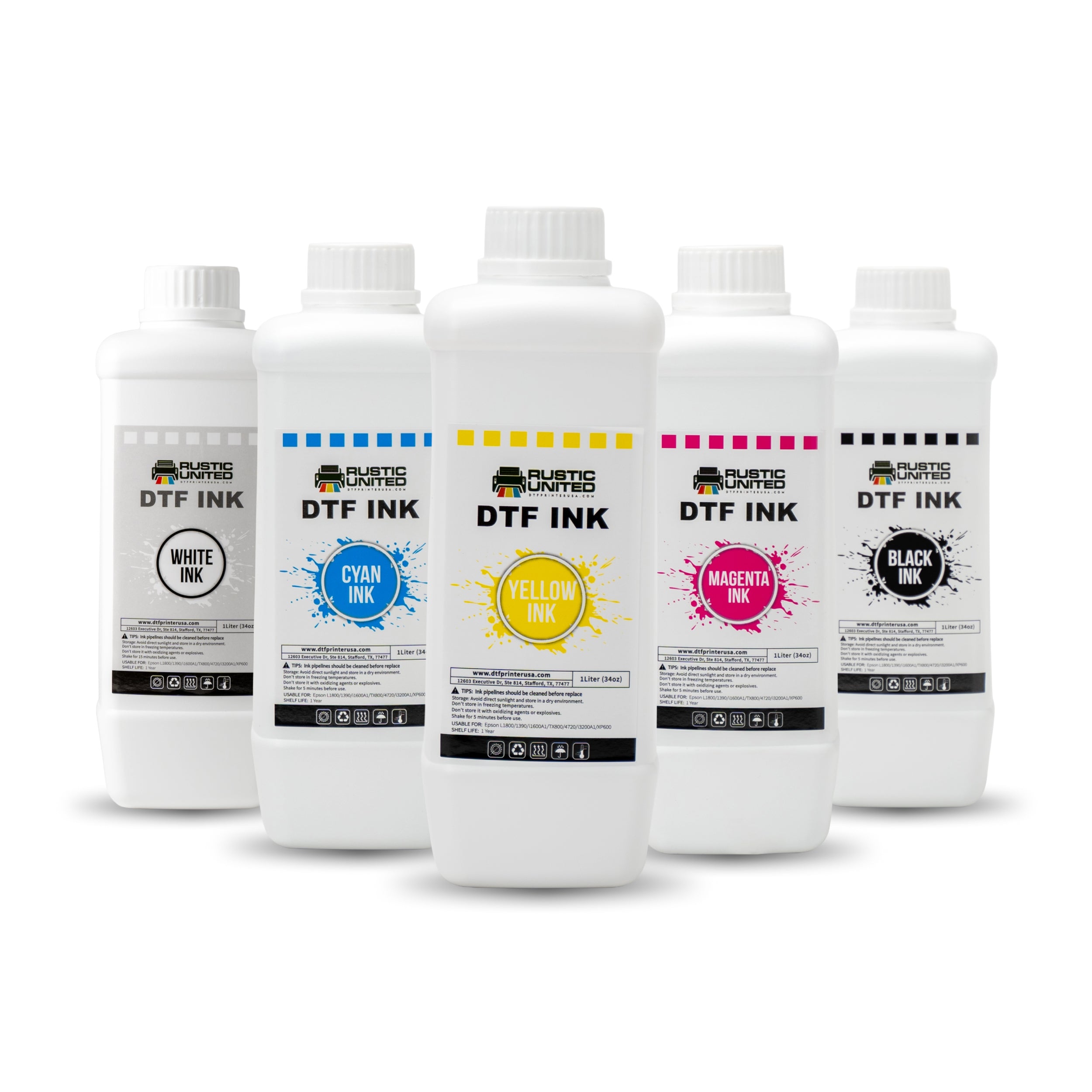
All five colors in one carton: White, Cyan, Magenta, Yellow and Black. Buying the set together keeps the whole rack matched, which is what you want when a design gets reprinted across a season rather than once.
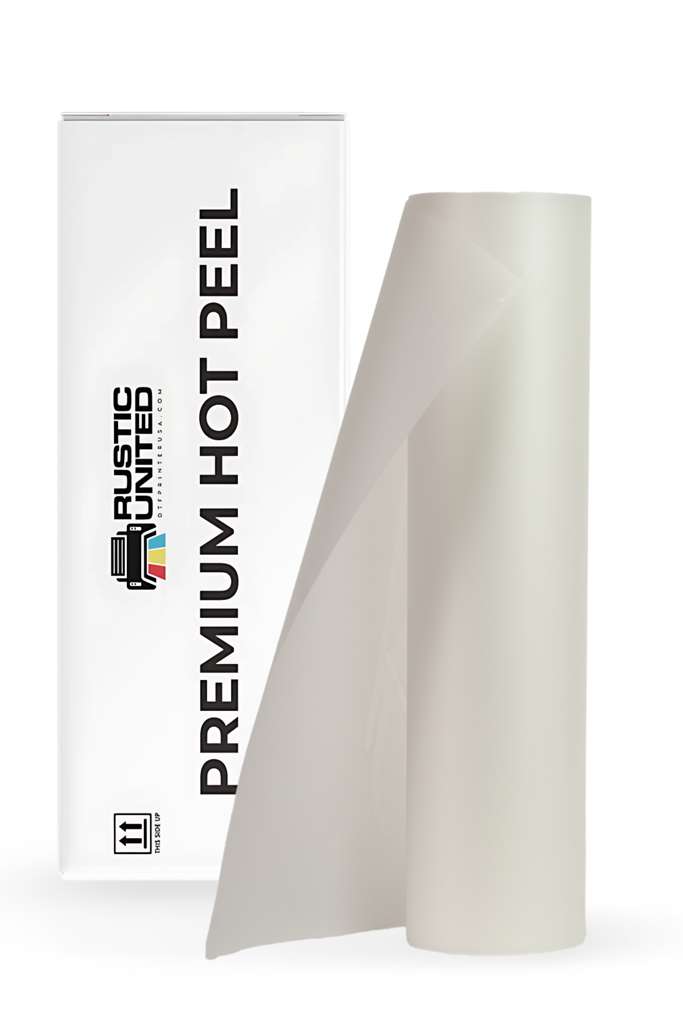
A 24 inch roll carrying 328 feet of film, forgiving about when you lift it and consistent from the first foot to the last. The roll to have loaded when the deadline is a specific Saturday.
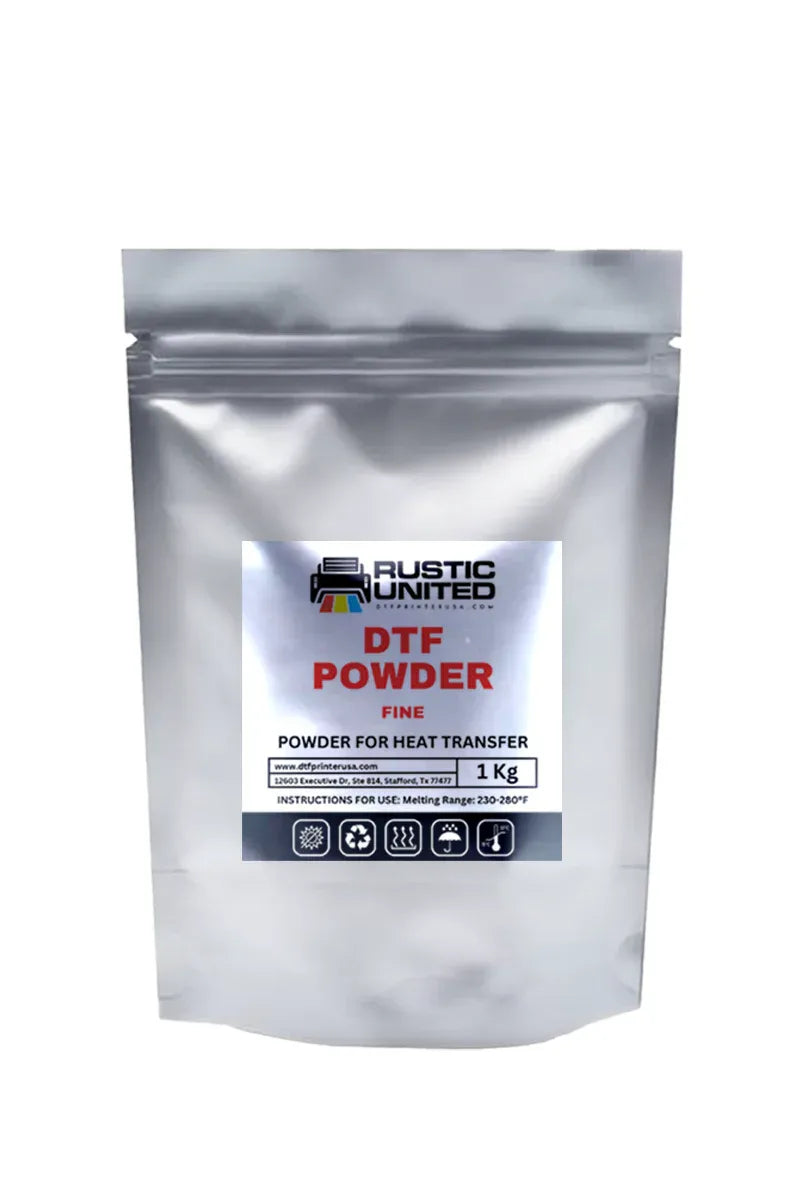
Fine and premium, by the kilogram. Fine holds the small type and thin lines that group and event designs are built around; premium is the grade for hoodies, quarter zips and anything meant to last past graduation.
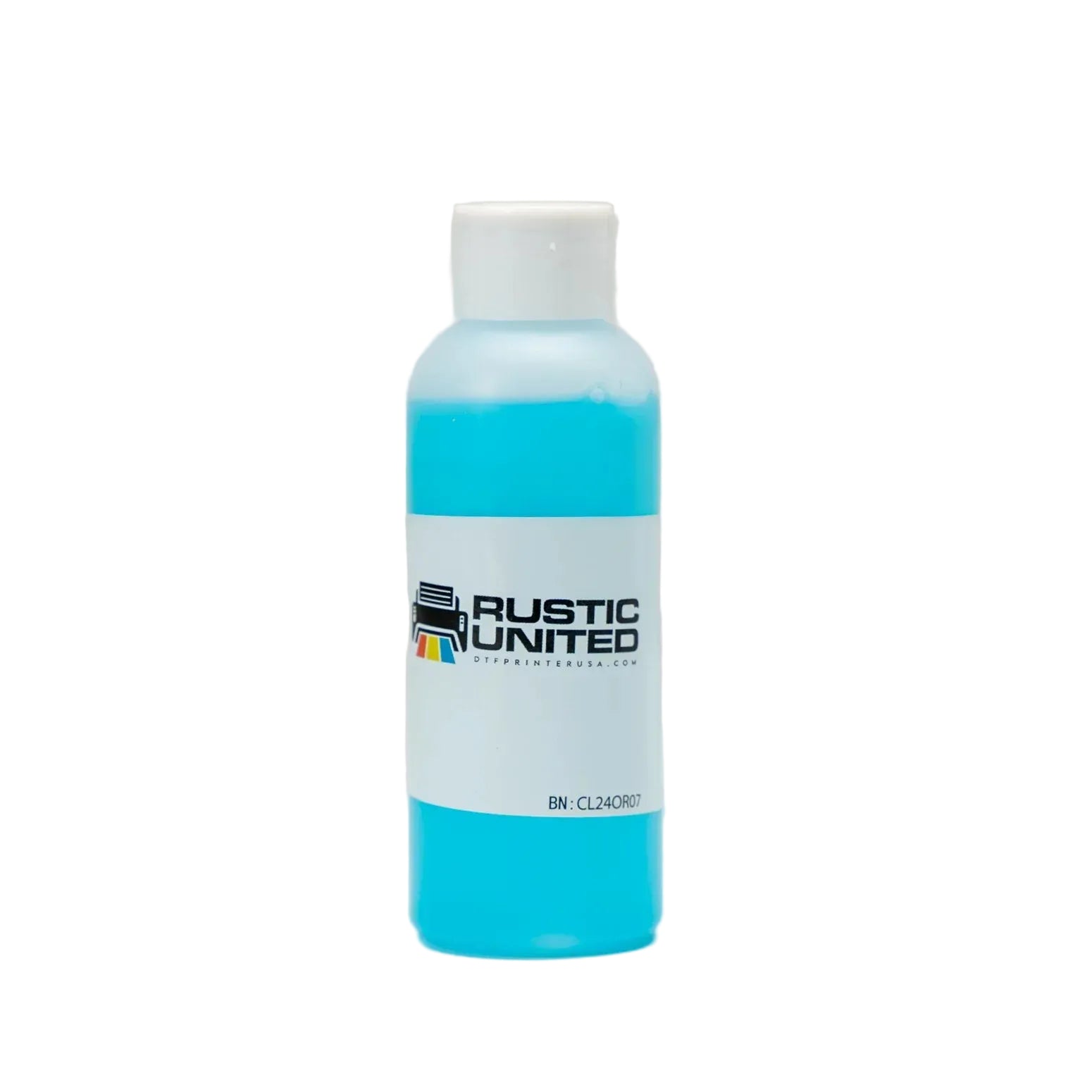
A 100 ml bottle of cleaner that keeps nozzles clear between runs. The least expensive item on this page and the one that protects every deadline on your calendar.
Take the one bottle you are short of or the full set at once. Every color is drawn from the same OEKO-TEX certified formula and built to resist nozzle clogging on Epson i3200 and i1600 heads.
DTF white ink is the layer that lets color read on a dark garment, and deep reds are unusually unforgiving about it. A thin underbase on maroon does not simply look duller, it pulls the whole design warm, and a design approved on black can come back looking wrong on maroon. Keep white agitated before every run, buy it in proportion to how fast it actually goes, and test on the exact garment before committing a College Station order.
Each category opens to the full list with current pricing. Every film width we carry, fine and premium powder, A3 sheet packs, printhead fluids and packaging, all of it held in Stafford and cleared to leave for College Station the same working day.
Open a category for the full list
DTF Transfer Film
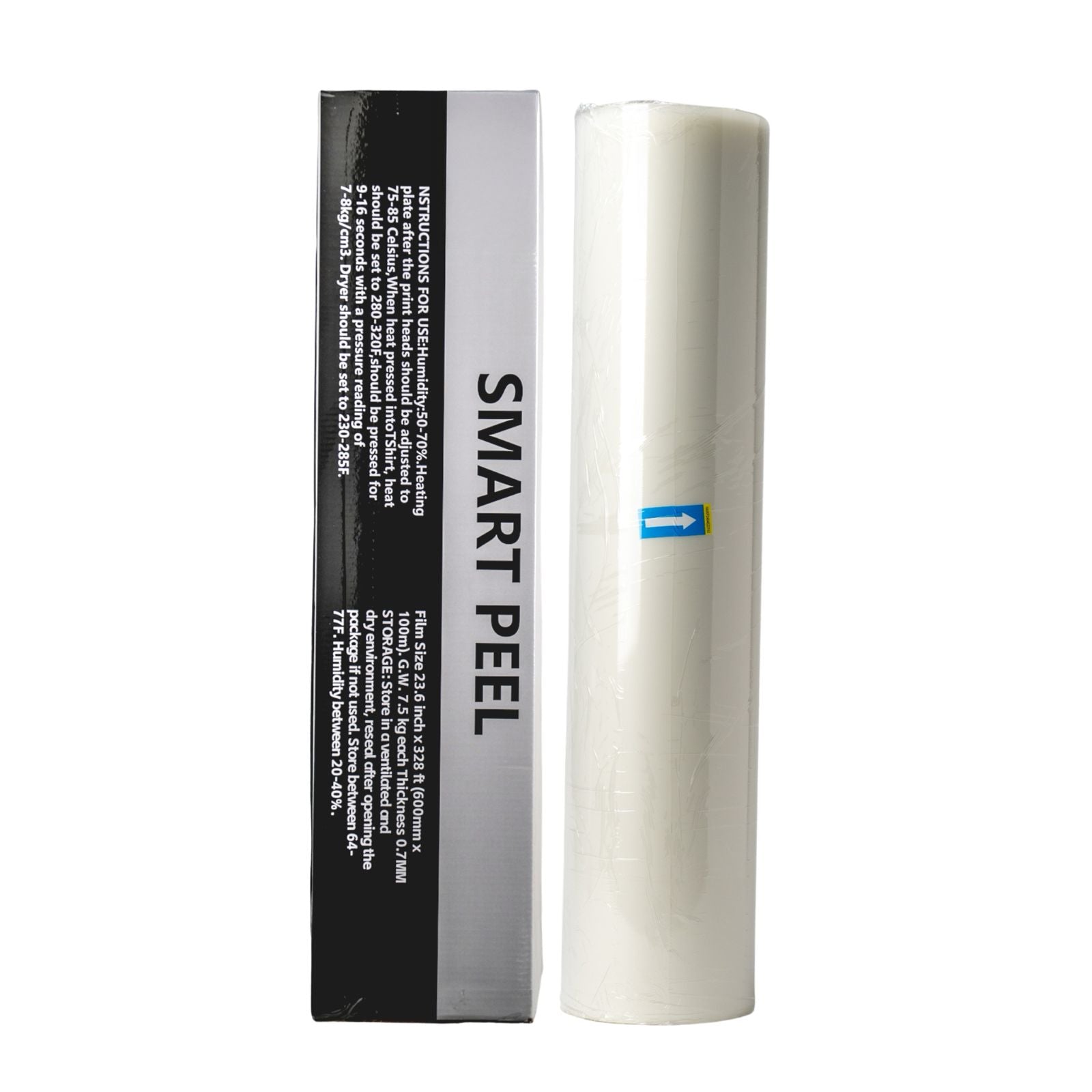
Instant Peel
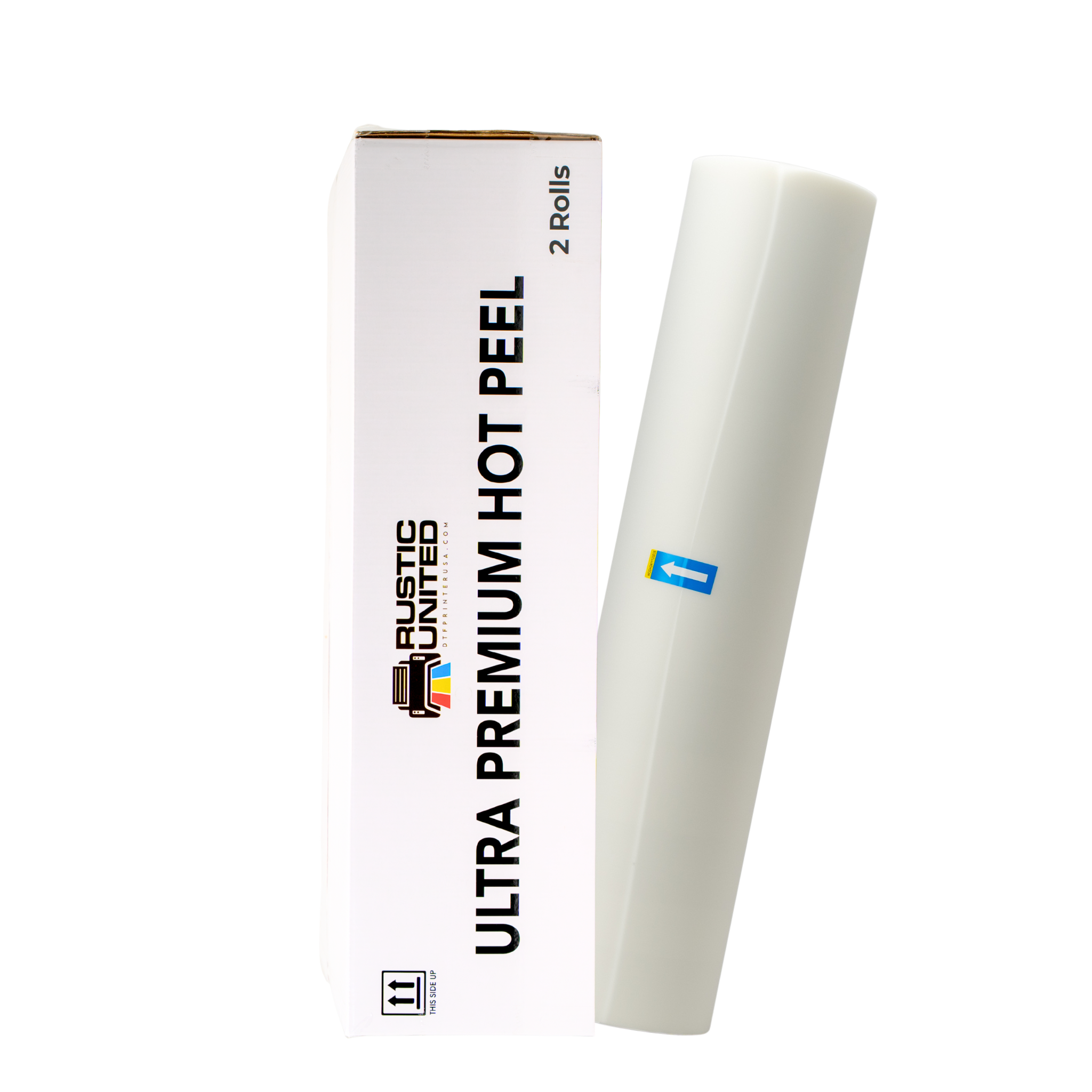
Premium Hot Peel Film
$74.55
A 24 inch by 328 ft roll that lifts warm or cold as the job requires. The all-purpose roll and the one most shops keep loaded as standard.
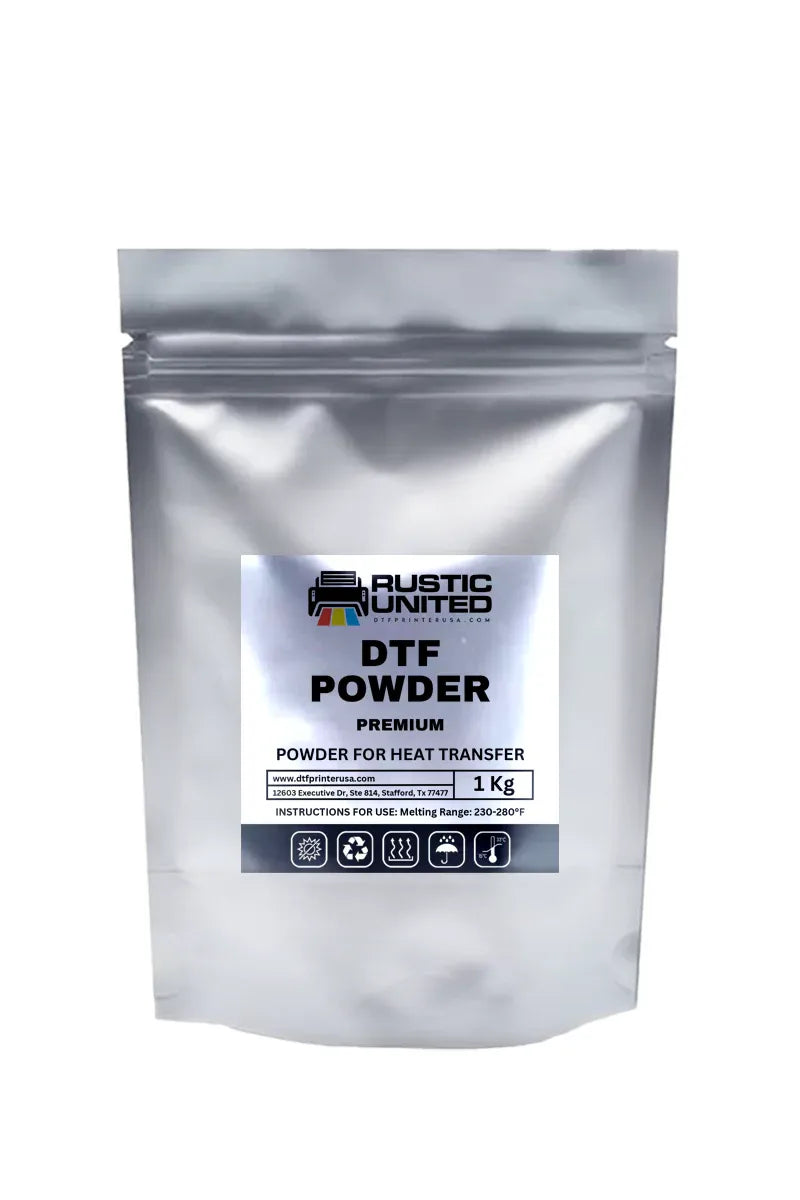
DTF powder is the adhesive that bonds the print into the fabric, and the failure mode is almost always uneven application rather than the wrong grade. Cover the design while the ink is still wet, then shed the excess properly, because loose grain around the artwork cures into a rough halo you cannot press out. Fine for detail on cotton, premium for hoodies and heavier blanks. Both leave Stafford by the kilogram the same day.
Best Seller
Premium
$16.55
The grip hoodies, quarter zips and heavier blanks require.
Fine
$16.55
A small grain protecting crest work and thin script on cotton.
DTF transfer film, occasionally sold as DTF paper, is the sheet your design sits on until heat moves it into the garment. The choice is mostly about detail: how fine the artwork runs and how the finished print should feel in the hand. Here is how the three rolls we stock behave in practice.
Best for high volume
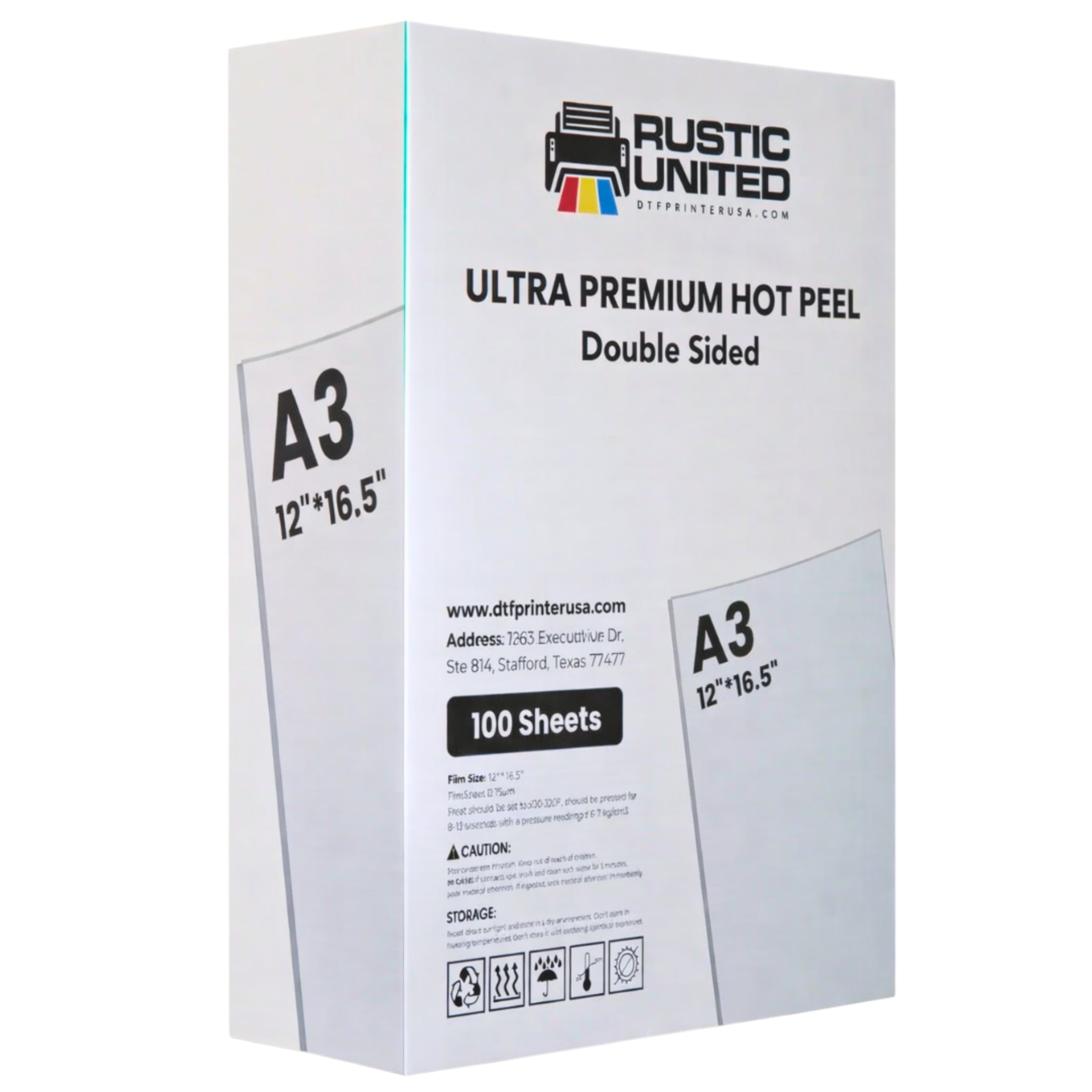
Premium Double Hot Peel
Marketed by some suppliers as instant peel. Relaxed about timing, which makes it the sensible everyday roll.
The hydraulic heat press we have been using is an absolute game changer. It delivers precise, even pressure, which makes it a must have for any serious heat transfer operation.
Gunel Taghiyeva
Our printing business has thrived with the help of these DTF films, inks and powders. The quality and the durability of the prints are unbeatable.
Melanie Z
We buy supplies and transfers from DTF Printer USA. They have a vast selection and provide reliable, fast service. If you are in a time crunch I definitely recommend them. Great company.
Mehmet Ekizoglu
Why College Station Orders Here
Held Stock. Honest Timing.Someone Who Answers.
College Station print shops, group and event suppliers, and Brazos County decorators work almost entirely to fixed dates. An order for a specific Saturday cannot be delivered on Monday, which makes reliable timing and real stock worth considerably more than a slightly cheaper bottle.
Same-Day Shipping
Beat the daily cutoff and the box is packed and moving the same afternoon, with tracking in your inbox before the day ends. Nothing is held back to fill a truck, so what you were told about timing is what actually happens.
OEKO-TEX Certified Ink
Certified to OEKO-TEX, which means the ink is verified safe against skin after pressing. In practice you get saturated color, a white opaque enough to carry a design on maroon or black, and predictable behavior on i3200 and i1600 heads.
Production-Ready Stock
Everything on this page is inventory we hold rather than source on demand. When a job is tied to an event date, a back-order is not a delay you absorb quietly, it is a job you have to give back, so we would rather carry the stock.
Fast Local Delivery
The lane from Stafford into Brazos County is direct and the timing stays steady, which is what lets you commit to a date rather than hedge on one. Working against a game weekend or a formal? Get in touch and we will sort the fastest option.
When the Date Cannot Move
A Late Delivery Is a Cancelled Order.
Most apparel here exists for one specific day. Shirts for a game, a formal, an event or a graduation have no value the following week, so a supplier that runs late does not cost you a delay, it costs you the entire order and usually the customer with it. Everything else about a supplier is secondary to whether the box shows up when it was supposed to.
Same Day
Shipping
In before the cutoff means out the same afternoon, which is how a date-locked job stays on schedule.
Local
Stafford Warehouse
One Stafford, TX warehouse and one inventory, so the stock you planned around is the stock that ships.
1 Call
To a Texas Team
Underbase reading thin on maroon, or unsure which film a job wants? A US-based team will answer the same working day.
A Supplier That Runs Late
Supplies arriving after the event they were for
A back-order discovered a week before the date
Shipping estimates that were never realistic run
A design approved on black that failed on maroon
Losing the customer along with the order
VS
DTF Printer USA, On Time or Not At All
Same-day dispatch against a fixed date
Held stock in one Stafford, TX warehouse
OEKO-TEX certified ink with white that covers darks
A US-based team reachable the day you need them
Volume pricing plus no minimum on any item
Printing in College Station
A City Built AroundOne Institution.
College Station took its name from a railroad stop beside a college, and the city that grew around it has never really separated from the institution. Texas A&M sits at the center, Kyle Field fills on autumn Saturdays, the Bush Presidential Library draws its own visitors, and Century Square and the Northgate district exist largely because of the traffic all of that generates. For a print shop the consequence is specific and worth naming plainly: almost every order is attached to an occasion. A game weekend, a formal, a philanthropy event, a graduation, a family weekend. Those dates are published months ahead and none of them move, which means the work is predictable in timing and completely unforgiving about delivery. Orders leave our Stafford warehouse the same day and run north into Brazos County.
Game Weekends & Event Dates
Home games at Kyle Field anchor an autumn calendar that is set long in advance, and the apparel around it follows the same schedule: group shirts, tailgate merchandise, event pieces and family weekend orders. Every one of them is worthless the following Monday, which is why timing rather than price is what customers here actually judge you on.
Groups, Formals & Philanthropy
Beyond game days there is a constant stream of group and organization work: chapter and club shirts, formal and mixer pieces, philanthropy event runs, intramural teams. These arrive in the dozens rather than hundreds, often personalized, and frequently with artwork that needs cleaning up before it will print properly.
Campus, Northgate & Beyond
A College Station shop serves the campus area, Century Square, Northgate, Wellborn and Millican, with Bryan next door and Navasota within reach. Same-day dispatch from Stafford is what makes committing to those event dates a plan rather than a hope.
Serving College Station & Brazos County
DTF Printer USA keeps College Station and the surrounding Brazos County area supplied with ink, film, powder, cut sheets, printhead care and packaging. From the Texas A&M campus, Century Square and Veterans Park out through Wellborn, Millican, Bryan and Navasota, a College Station print shop, apparel brand or decorator is buying from a Texas shelf rather than waiting on an import.
Local Delivery Area
Same-day dispatch and a direct run north to College Station and the towns around it. That same Stafford inventory ships anywhere in the US.
College Station 77840College Station 77845Texas A&M CampusCentury SquareNorthgateVeterans ParkWellbornMillicanBryan
DTF Supply Guide for College Station
Running a DTF Line in a University Town.
Three things that matter when the customer is a student group: printing dark garments properly, knowing what you are legally allowed to print, and working with artwork that arrives in whatever state it arrives in.
Printing on Maroon and Other Dark Garments
Almost everything that leaves a College Station bench is dark, and most of it is a deep red that behaves unlike black. The common complaint is that colors look muted next to the mockup, and the instinct is to push the color layer harder. That is the wrong lever nearly every time. On a dark garment the color is only as bright as the white underneath it, so a dull print is usually telling you the underbase is thin rather than that the CMYK is weak. Two things cause a thin underbase. The first is settled pigment, because white separates faster than any color and a bottle that has stood over a weekend lays down noticeably less opaque than the same bottle properly agitated. Shaking before every run, not every few runs, removes most of the variation on its own. The second is treating one setting as universal. Black, navy and maroon absorb light differently, and maroon in particular tends to warm anything sitting on top of it, so a design signed off on a black sample can come back looking off on maroon even though nothing changed on the machine. The routine that prevents the awkward conversation is short: print one test of new artwork on the exact garment and color the order will use, press it, and look at it in daylight rather than under shop lighting. Ten minutes there is considerably cheaper than reprinting eighty shirts the week of an event.
Licensed Marks and What You Cannot Print
University names, logos, marks, mascots and slogans are registered trademarks, and printing them commercially requires a license from the institution rather than a customer saying it is fine. This catches out a lot of shops in a town like this, because the request usually arrives from somebody entirely genuine: a student officer ordering chapter shirts, a club treasurer, a parent organizing family weekend. None of them are trying to cause a problem, and most have no idea a license exists. The liability, however, sits with the shop that produced the garments rather than with the person who asked, which makes this worth understanding rather than assuming. Two things reduce the risk to nearly nothing. First, ask every customer to confirm in writing that the artwork is either their own original design or covered by a license they hold, and keep that confirmation with the job record. It costs one line in an email and it establishes what you were told. Second, learn to recognize the difference between a design that references a place and one that reproduces a mark. Colors are not protected, and a shirt that is simply maroon and white is not infringing anything, while a logo, a specific wordmark or a mascot likeness is a different matter entirely. When a design sits somewhere in between and you are not sure, the honest move is to say so and offer to adapt it rather than print and hope. Customers are generally far more reasonable about this than shops expect, particularly if you can suggest something that gets them close legitimately.
Fixing Artwork That Arrives From a Student Officer
A shop serving student organizations spends more time repairing files than one serving established businesses, because the person sending artwork is usually doing it for the first time and will have handed the role to somebody else by next year. What arrives is typically a logo pulled off a phone screenshot, a design built in a presentation tool, or an image with a white box behind it. None of that prints well no matter which film you load, and the fix is almost always upstream rather than at the press. Four requirements cover most of it. Resolution needs to be roughly 300 DPI at the size it will actually print, so a small image blown up to a twelve inch chest print will look soft however carefully it is pressed. The background must be genuinely transparent rather than merely white on screen, since DTF prints exactly what it is given and a white rectangle will press as a white rectangle. Color mode matters because artwork built in RGB can shift when it goes to print, and it is far better to catch that on a test than across sixty shirts. And vector source files are worth asking for above everything else, because a vector logo scales from a left chest to a full back with no loss and costs nothing to set up again next semester. The practical move is to write those four points into a short note you send with every quote, alongside a request for the roster as a spreadsheet if the job is personalized. Customers ordering for the first time are not being difficult, they simply do not know, and the shop that tells them plainly gets cleaner files, fewer revisions and far fewer arguments about why a print looks blurry.
DTF Supplies FAQ
College Station DTF Questions, Answered.
The questions College Station shops and Brazos County decorators ask most before placing a supply order.
DTF Supplies in College Station
DTF supplies in College Station are the consumables behind a direct-to-film press: DTF ink in white plus cyan, magenta, yellow and black, transfer film in rolls or A3 sheets, adhesive powder in fine and premium grades, and printhead cleaning and moisturizing fluid. DTF Printer USA holds all of it at one Stafford, Texas warehouse and ships the same day into Brazos County.
College Station customers can order White, Cyan, Magenta, Yellow and Black in 1-liter bottles, or the five-color batch set for a complete refill, with volume pricing as quantities rise. Every color is formulated to resist nozzle clogging and carries a 12-month sealed shelf life, and all of it dispatches the same day from Stafford.
Film, Compatibility & Supply
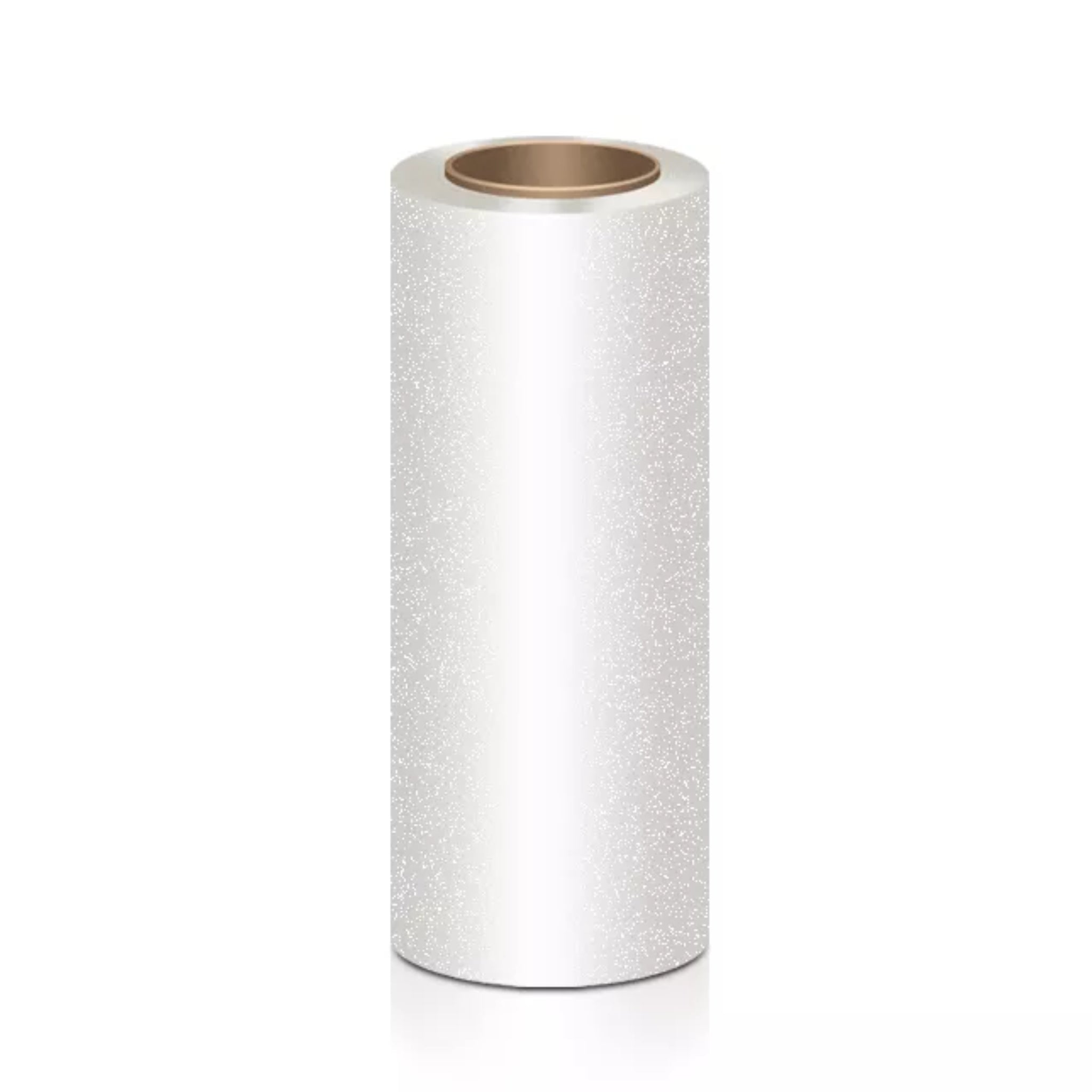
It comes down to how much detail the artwork carries and how fast you need to move. Premium and ultra premium hot peel films lift while the sheet is still warm, which keeps a long run going, while the double matte smart peel is a cold peel that protects fine lettering and finishes softer. Glitter film covers anything needing shine, and A3 cut sheets suit small jobs. Rolls come two to a box and our team can match a width to your printer.
Our inks are formulated for Epson i3200 and i1600 printheads, and the films and powders work across a broad range of machines, which is why many College Station customers run them on printers bought elsewhere. Tell us the model you run and the width you need, and we will verify compatibility before the order goes out.
Because the stock is real, the pricing scales, and the shipping is predictable. Everything leaves one Stafford, Texas warehouse the same afternoon it is ordered, ink earns volume pricing as quantities climb, and there are no minimums on any item. For a College Station shop working against event dates that will not move, that combination matters more than a headline price.
Technique, Waste & Licensing
A powder shaker dryer gives the most consistent result because it coats and cures in one controlled pass. Applying by hand works well too: cover the design generously while the ink is still wet, since powder will not adhere evenly to a sheet that has started to dry, then lift the sheet and tap it firmly from behind to shed every loose grain before curing. Work over a tray so recovered powder goes back into the tub.
Most waste is film rather than ink, and it leaves as blank margin around designs. Nesting artwork tightly on a gang sheet instead of centering each piece is where the biggest saving sits. Beyond that, apply powder evenly and recover the excess, store ink and powder sealed so nothing degrades, and buy quantities matched to your actual annual volume rather than to the largest available discount.
University names, logos, marks and slogans are protected trademarks, and printing them commercially requires a license from the institution rather than just a customer request. A student group asking for shirts does not itself grant that permission. Ask any customer to confirm their design is either original or covered by an existing license before you print, since the liability sits with the shop that produced the garments.
Choosing a selection results in a full page refresh.