In a town this size the print shop is usually one person doing every job in it, and a supplier that wastes your time costs more than one that charges a little more. Order before the daily cutoff and it leaves our Texas warehouse that afternoon, no minimums, no chasing. Ink, film, powder and cleaner, all built for Epson i3200 and i1600 heads.
Responsive SupportPhone & email, replies in 1 hr usually
The Short Shopping List
Four Items, One Order,One Delivery.
A working restock is mostly these four, and every one of them is held in Stafford ready to travel west to Schulenburg, La Grange, Flatonia, Weimar and Columbus. Film widths, powder grades, sheet packs, printhead fluids and packaging are all set out in the catalog below.
Best Value
1 LT Batch DTF Ink
$123.55
Best for: full color setup and refills
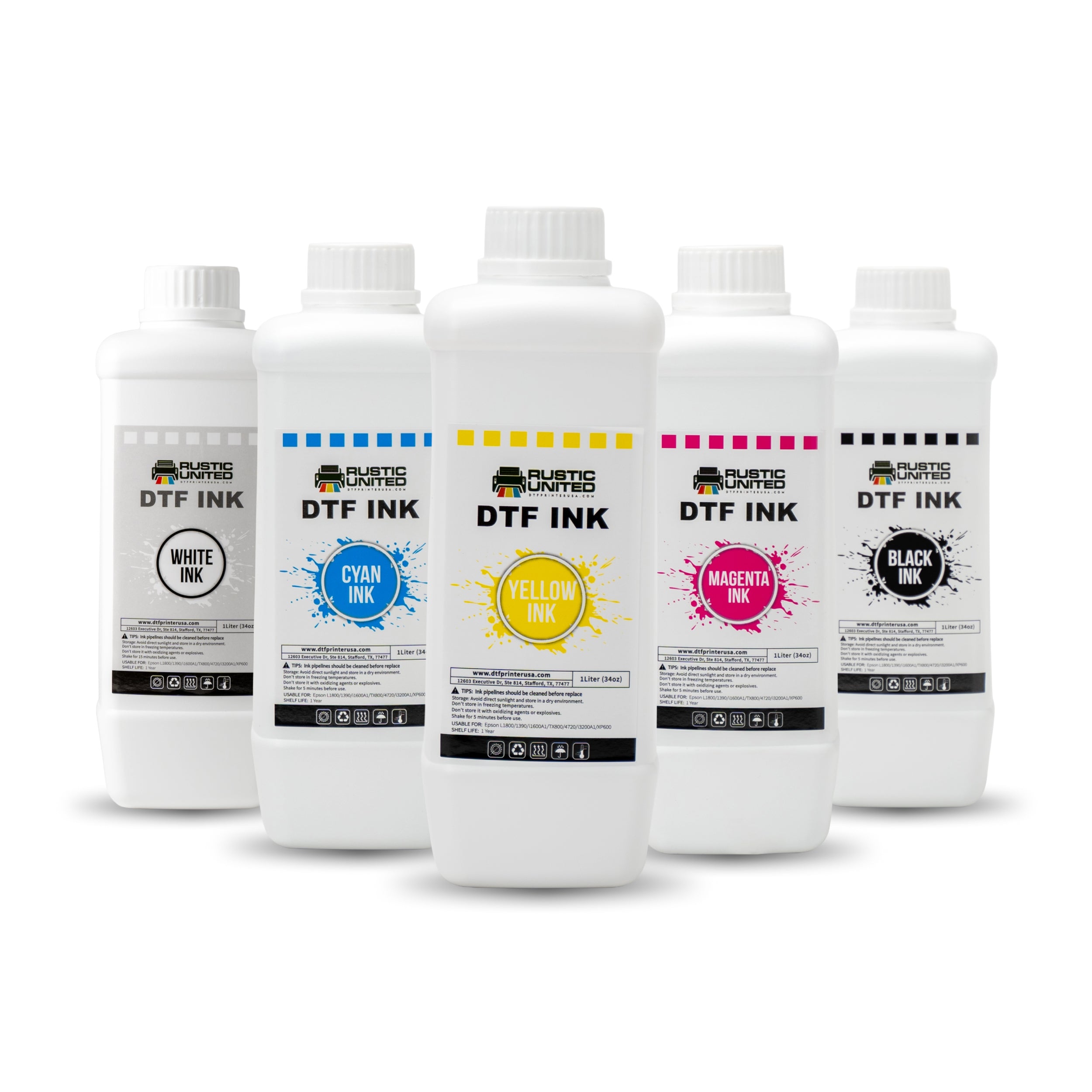
A liter each of White, Cyan, Magenta, Yellow and Black in one box. For a small shop the batch is worth more than the discount alone, because it is one decision, one invoice and one thing arriving rather than five.
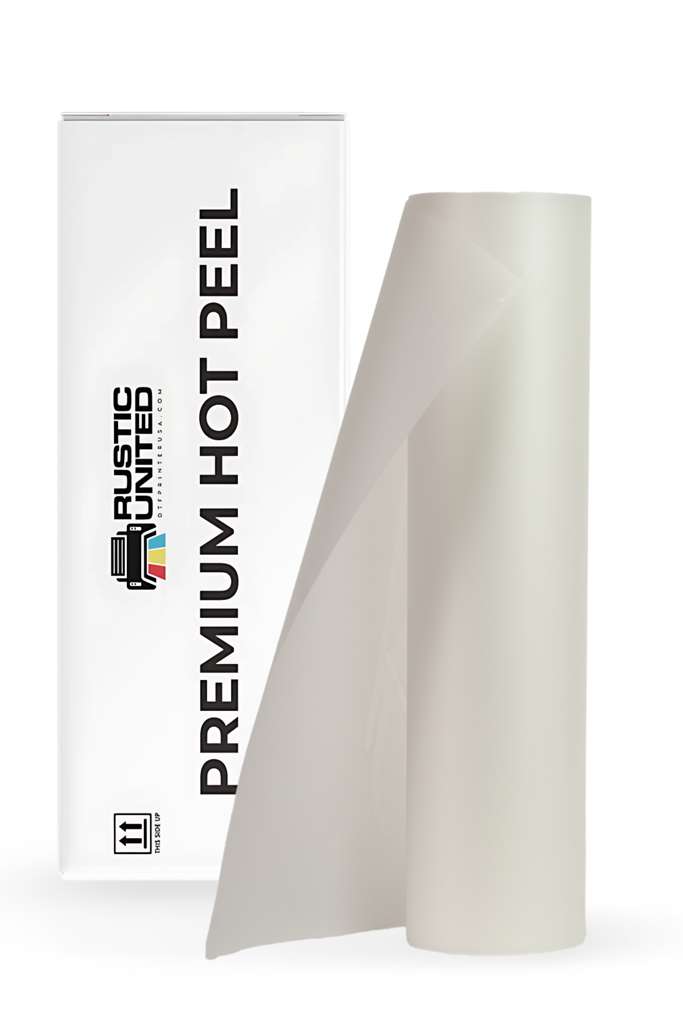
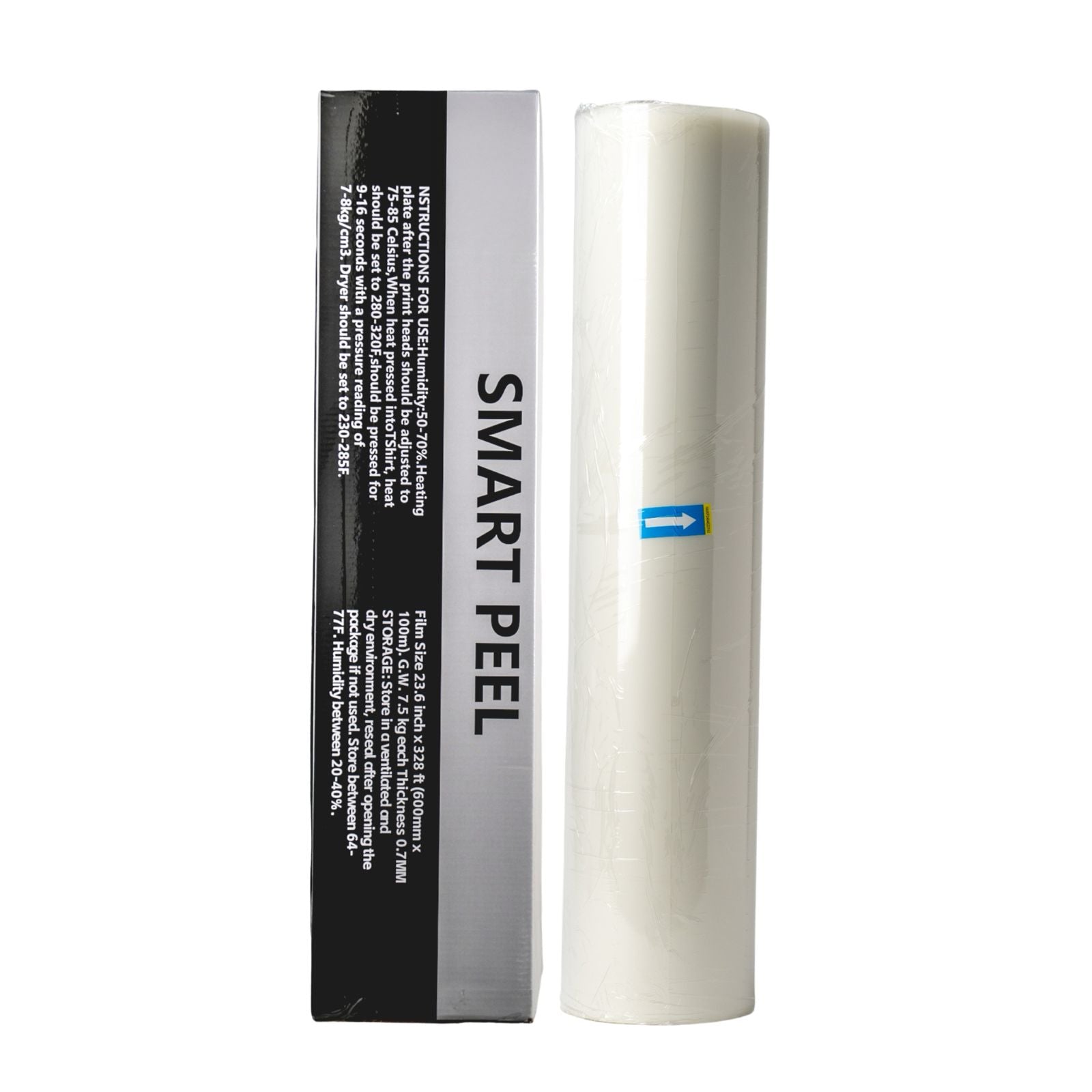
A 24 inch roll carrying 328 feet, easygoing about peel timing and even from the first foot to the last. In a one-person shop the value is not just the price, it is not having to stop and reload halfway through an afternoon.
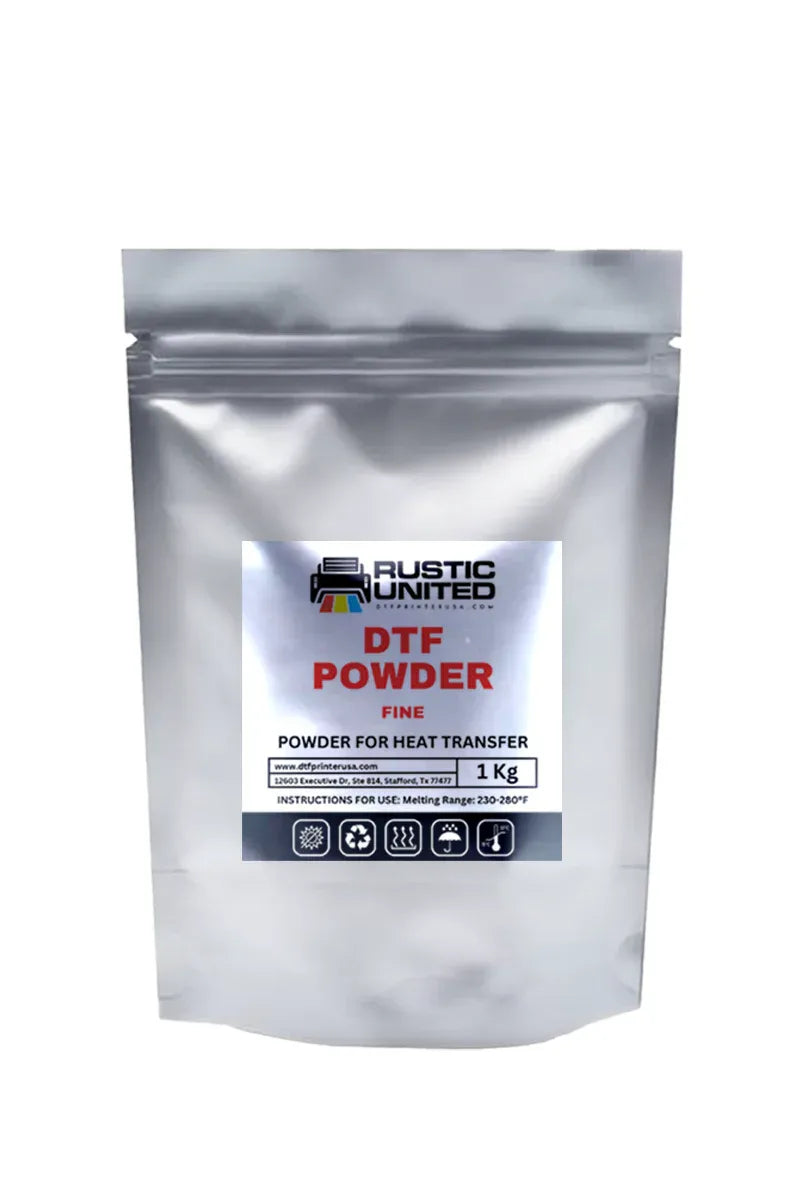
Two grades by the kilogram, which is the whole decision. Fine holds the thin line work that heritage and hand-drawn artwork is full of; premium goes under jackets, aprons and anything a customer expects to keep for years.
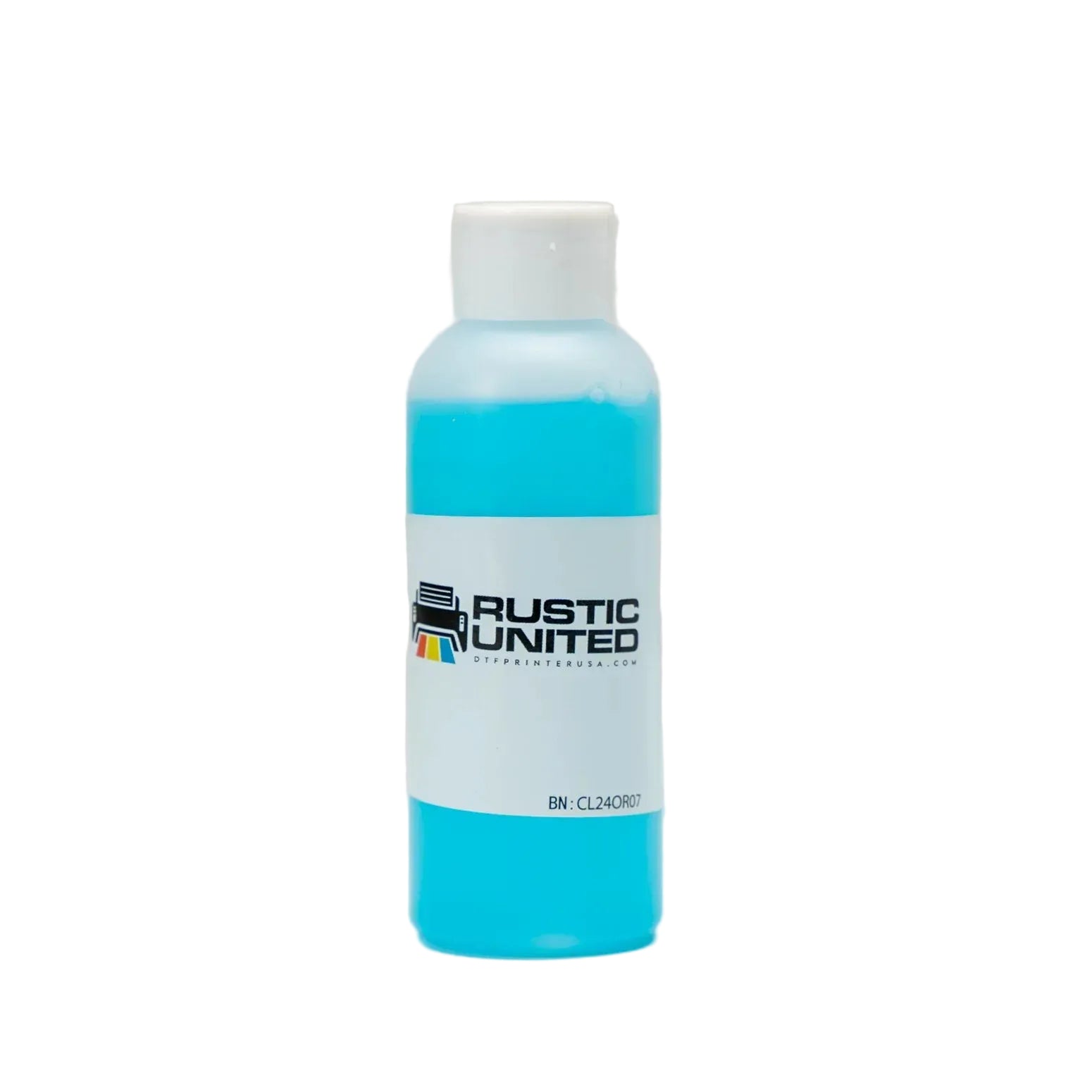
A 100 ml bottle of cleaner for the printhead. When there is nobody else to hand the machine over to, the maintenance you can do yourself is the only maintenance there is.
One bottle is a real order here, and so is the full set. Every color comes off the same OEKO-TEX certified formula, made to resist nozzle blocking on Epson i3200 and i1600 printheads.
DTF white ink empties several times faster than any color, because it is printing the underbase beneath every design. In a town where the nearest alternative is a long drive, running out of white is not an inconvenience, it is a lost afternoon and possibly a lost job. A spare bottle costs a fraction of what one missed deadline does, and agitating properly before every run keeps the one in use behaving.
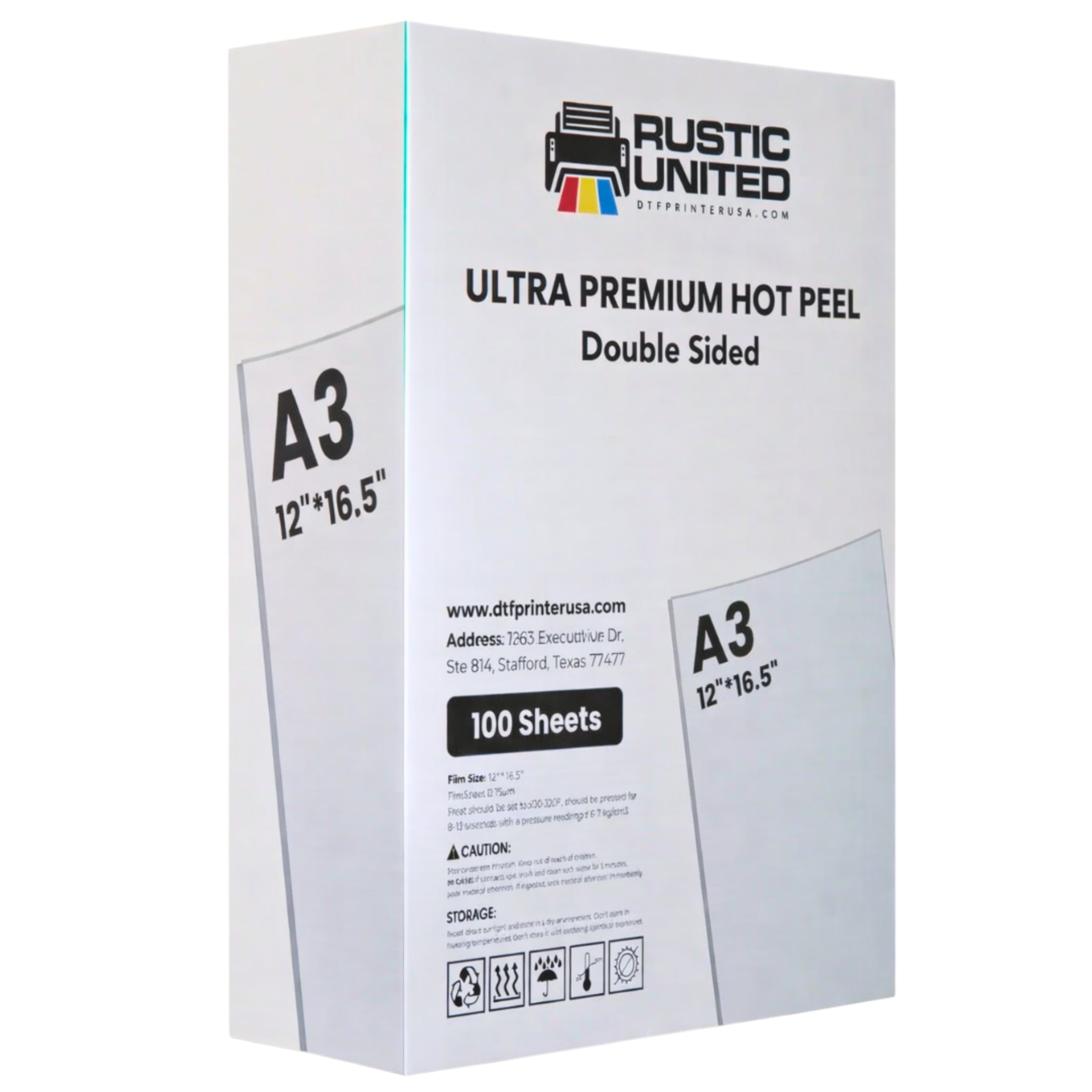
Each category opens to show what is in stock with live pricing. Films across every width, fine and premium powder, A3 cut sheet packs, printhead fluids and packaging, all of it in Stafford and cleared to leave for Schulenburg the same working day.
Open a category to view the list
DTF Transfer Film
Instant Peel
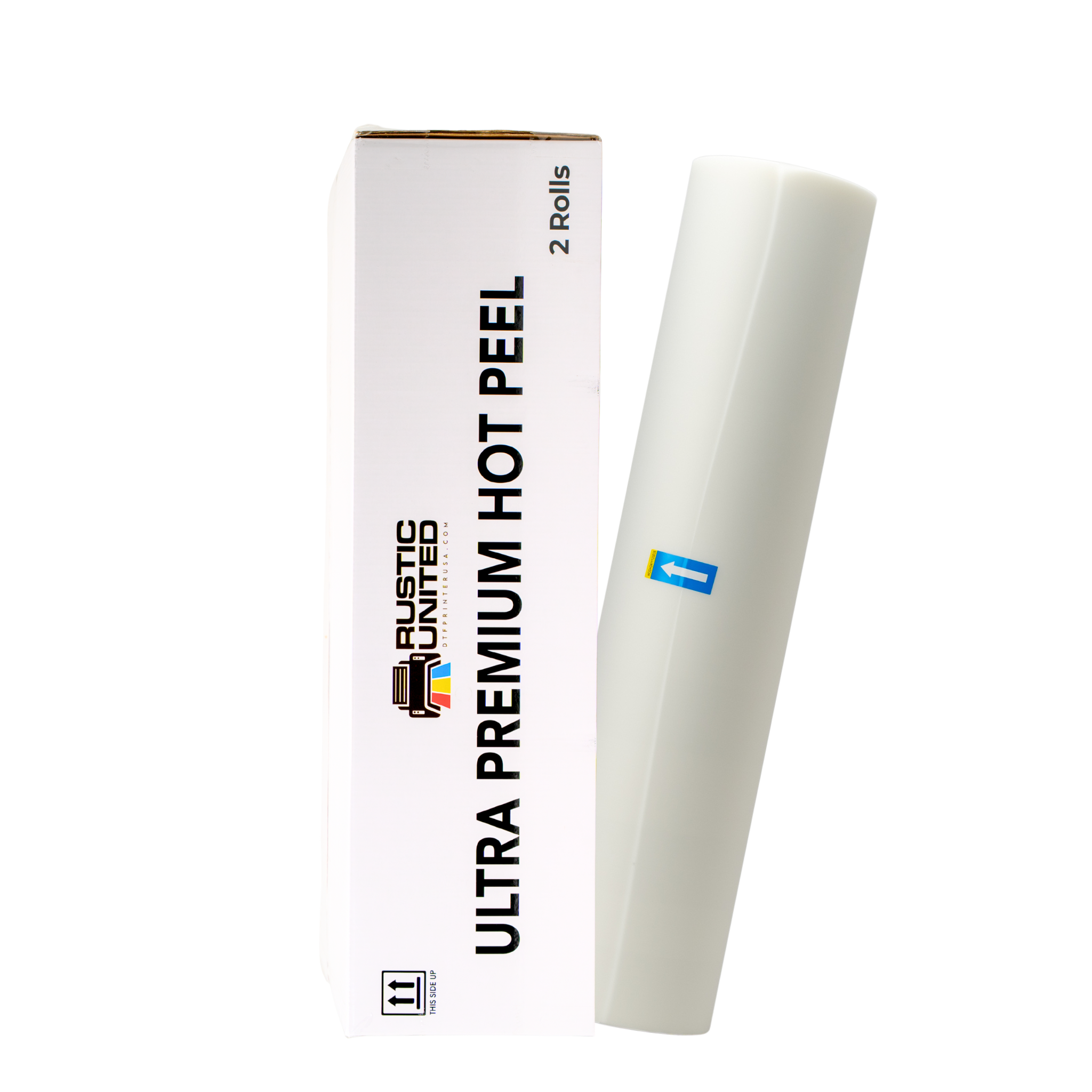
Premium Hot Peel Film
$74.55
A 24 inch by 328 ft roll that peels warm or cold, your call. If you only keep one roll on the machine, this is the one to keep.
The refined option, releasing cleanly and holding the thin strokes that old logos and hand-drawn artwork are built from. In 12, 16.5, and 24 inch widths.
A 24 inch by 328 ft cold peel roll, lifted only once the sheet has gone cold. Worth having for small type and for anything that should finish flat rather than shiny.
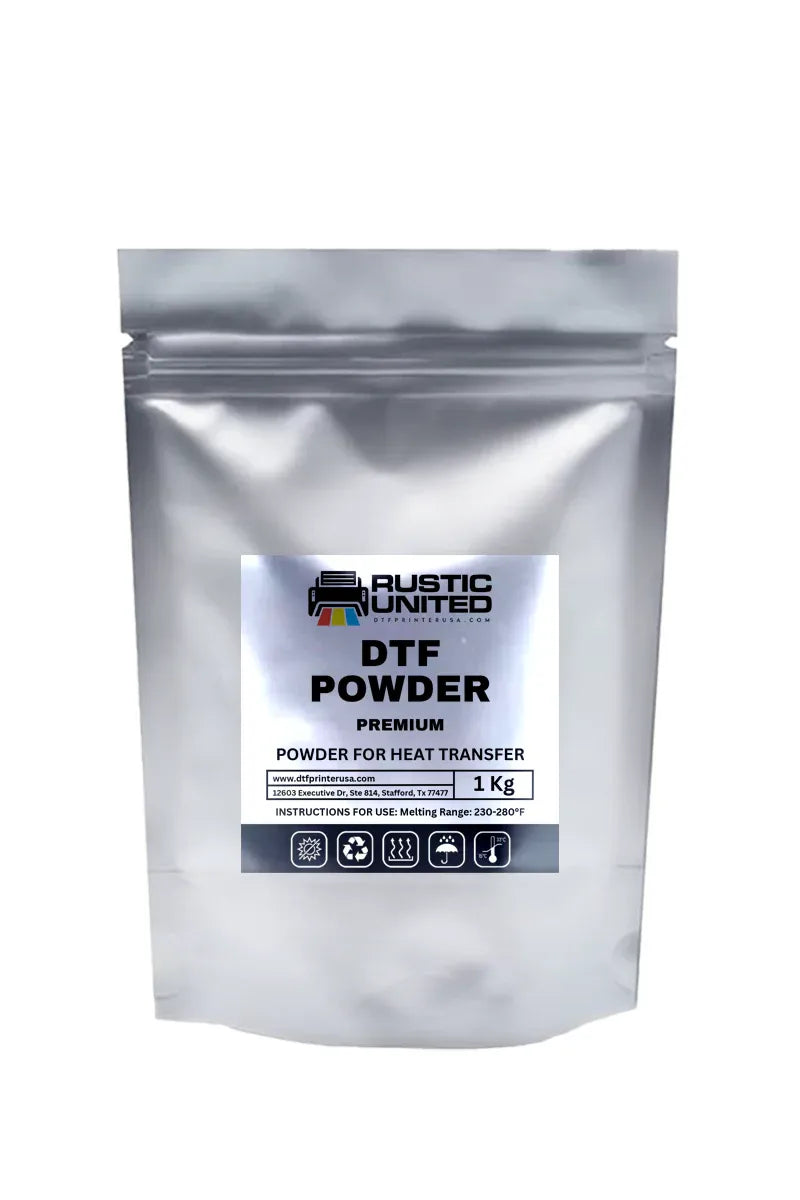
DTF powder is the adhesive that fuses a print into the fabric, and a shop carrying only one grade is compromising on half its work. Fine keeps thin line work and small lettering crisp on light cotton. Premium is what a jacket or an apron needs to still look right in three years. A kilogram of each is a small shelf cost against never having to say no. Both ship by the kilogram from Stafford.
Best Seller
Premium
$16.55
The bond jackets, aprons and long-service pieces require.
Fine
$16.55
Fine grain that protects thin strokes and small type.
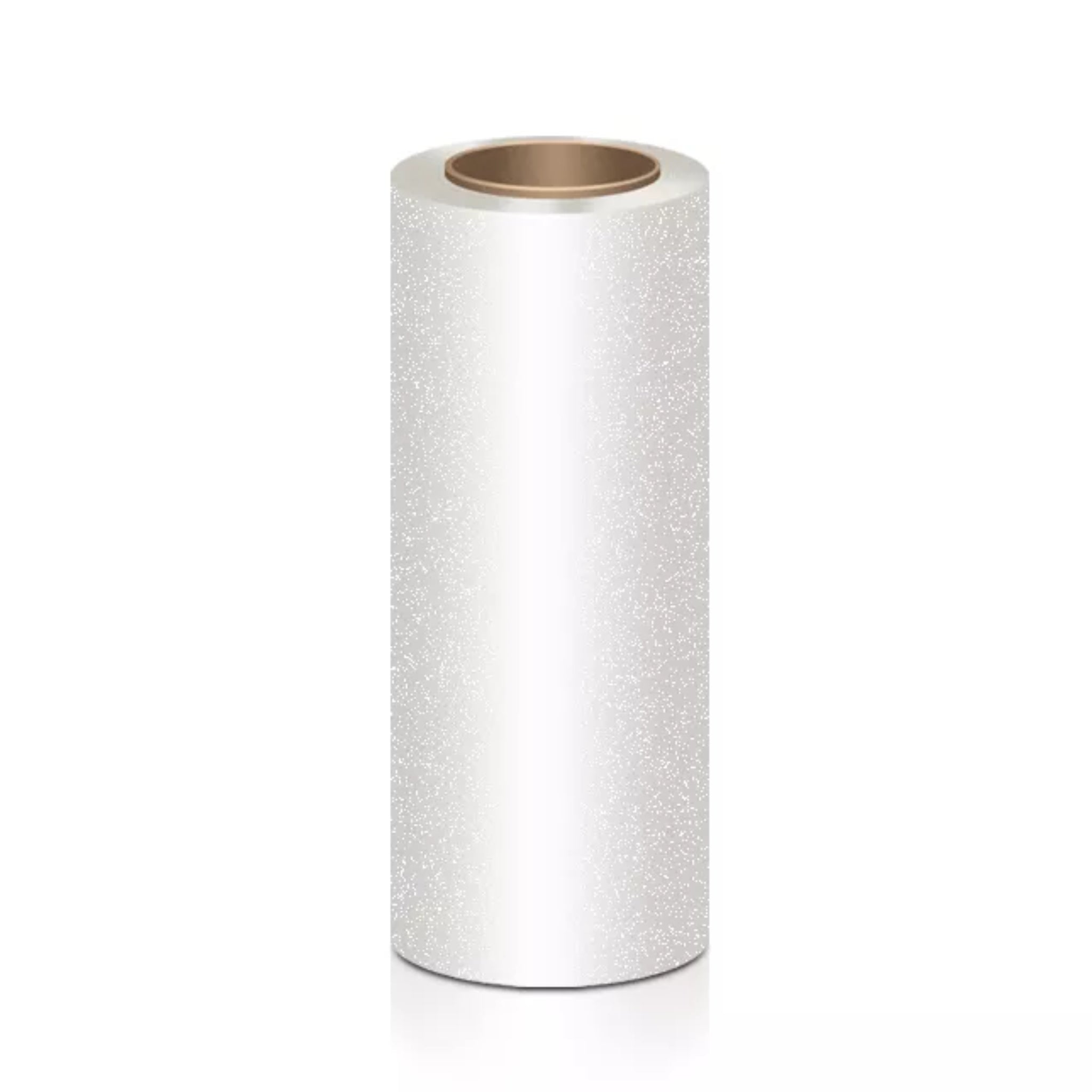
DTF transfer film, sold in places as DTF paper, is the carrier your artwork sits on until the press drives it into the garment. A small shop rarely needs every film made; it needs one dependable everyday roll and one that handles the jobs the first cannot. Below is what actually separates the three rolls we carry.
Best for high volume
Premium Double Hot Peel
Listed by some suppliers as instant peel. Undemanding about timing, and the roll to buy first if you are buying one.
I would definitely recommend DTF Printer USA to anyone looking for high-detail, colorful design supplies such as ink and film. Great job.
Z Yaman
Works well. Very pleased with the film and with how fast the shipping was.
Stacy Chachkes
Amazing DTF supplies and great customer service.
Cole Xylina
Why Schulenburg Shops Order Here
No Minimums. No Waiting.No Runaround.
Schulenburg print shops, home-based decorators and Fayette County apparel makers are usually running the whole operation between one or two people. Every hour spent chasing a supplier is an hour not spent printing, which is why availability and a straight answer are worth more here than a slightly better line price.
Same-Day Shipping
Clear the daily cutoff and the order is packed and gone that afternoon, tracking already in your inbox. Nothing is batched or held back, which is what lets one person plan a week without building slack into it for a delivery that might not turn up.
OEKO-TEX Certified Ink
Certified to OEKO-TEX, which verifies the ink as safe against skin once the transfer is pressed. It is also formulated to resist nozzle blocking, which matters more when there is nobody else to hand a jammed printer to on a Friday afternoon.
Production-Ready Stock
Every item listed is inventory we keep on the shelf. With no minimum on any of it, a Schulenburg shop can buy exactly what the next job needs rather than committing to a quantity somebody else decided was worth shipping.
Fast Local Delivery
The run from Stafford west into Fayette County is direct and the timing stays consistent. Setting a press up for a new blank, or trying to work out why a print lifted? Call us, and you will get somebody who has actually used the products.
What a Small Shop Cannot Absorb
One Person, One Press,No Slack in the Week.
A large shop absorbs a bad delivery by moving somebody onto another job. A one-person operation has nowhere to move. A supplier that ships late, sends the wrong width, or takes three days to answer a question does not cost you a small inconvenience, it costs the whole afternoon and sometimes the customer. That is the real currency here, and it is why availability beats headline price every time.
Same Day
Shipping
Ordered before the cutoff and gone the same afternoon, so a restock is a decision rather than a delay.
Local
Stafford Warehouse
One Stafford, TX warehouse holding the full range, so the width and grade you need are actually there.
1 Call
To a Texas Team
Print lifting at the edge, or unsure of a press setting? A US-based team answers the same working day.
A Supplier Built for Big Shops
A minimum order you have no use for
The wrong film width arriving on a deadline
A back-order nobody mentioned until you chased it run
A technical question answered three days later
A lost afternoon you cannot hand to anybody else
VS
DTF Printer USA, Sized for a Small Shop
Same-day dispatch so a week stays plannable
No minimums on any item, down to one bottle
Clog-resistant ink that keeps a lone press running
A US-based team who will actually troubleshoot with you
Volume pricing when you do want to stock up
Printing in Schulenburg
A Small Town on a Very BigHighway.
Schulenburg sits almost exactly halfway between Houston and San Antonio, which has shaped it since long before the interstate arrived. Czech and German families settled the country around it and left behind the Painted Churches of Fayette County, whose hand-painted interiors still bring visitors out from both cities, along with Sengelmann Hall, the Von Minden and a calendar of heritage festivals. The Stanzel brothers built the first mass-produced radio-controlled model aircraft here, and there is a museum for that too. For a print shop the picture is specific: a small resident population, a steady stream of visitors, and almost certainly one person running the whole operation. That last part is the fact that matters. When you are the printer, the designer, the invoicer and the delivery driver, what you need from a supplier is not a better price on one line, it is never having to think about it twice. Orders leave our Stafford warehouse the same day and run west into Fayette County.
Heritage, Churches & Visitors
The Painted Churches, the dance halls and the Czech and German festival calendar bring visitors through all year, and visitors buy printed things. Much of that artwork is old: a scanned church detail, a hand-drawn crest, a logo that has existed since before anyone had a digital file of it. Getting those to print properly is a file-preparation job before it is a printing one.
One Person, Every Job
A shop this size has no second pair of hands. The same person quotes the job, fixes the artwork, prints, presses, packs and answers the phone, which puts a hard ceiling on how much interruption a week can take. Consumables that arrive when promised and a press that starts cleanly are not conveniences here, they are the whole margin.
Along the I-10 Corridor
The towns strung along this stretch, La Grange, Flatonia, Weimar, Hallettsville and Columbus, are small and close together, and work moves between them easily. Same-day dispatch from Stafford is what makes serving that spread possible without a supply run eating a day.
Serving Schulenburg & Fayette County
DTF Printer USA keeps Schulenburg and the wider Fayette County area supplied with ink, film, powder, cut sheets, printhead care and packaging. From the Painted Churches and Sengelmann Hall out through La Grange, Flatonia, Weimar, Hallettsville and Columbus, a Schulenburg print shop, home decorator or apparel maker is buying from a Texas shelf rather than waiting on an import.
Local Delivery Area
Same-day dispatch and a direct run west to Schulenburg and the towns along the corridor. The same Stafford stock also ships anywhere in the country.
Three things that decide whether a small shop runs smoothly: getting old scanned artwork ready to print, dialing in a heat press properly rather than trusting the dial, and organizing a day when you are the only person in the building.
Getting Old Scanned Artwork Ready to Print
A town built on Czech and German heritage produces a particular kind of file: a photograph of a church detail, a scan of a fifty-year-old business card, a hand-drawn crest somebody found in a drawer. None of it prints well as it arrives, and the work is almost entirely in preparation rather than at the press. Start with the background, because this is the one that catches people out most. A scan of anything printed on paper has a paper-colored background, not a transparent one, and DTF prints exactly what it is given, so that faint cream rectangle will press onto the shirt as a faint cream rectangle. It has to be genuinely removed rather than lightened. Next comes scan noise. Old paper and old ink produce speckle, and once the background is gone that speckle sits around every fine line as loose dots which press as grit. Clean it at high magnification rather than trusting the thumbnail. Then resolution: a scan at 300 DPI of a two inch logo is not a 300 DPI file at ten inches, and enlarging it will show every soft edge. Scan at the highest setting the machine offers, or rescan larger if you can. The step worth taking whenever the artwork will be reused is redrawing it as vector. It is an hour of work that turns a fragile scan into something that prints at any size for as long as the customer keeps coming back, and for a heritage design that reappears every festival, that hour pays for itself many times over.
Dialing In a Heat Press Properly
Three settings decide whether a transfer bonds properly, and most shops adjust one of them when the problem lies with another. Temperature, time and pressure work as a set. The first thing worth knowing is that the number on the press is not necessarily the temperature at the platen. Presses drift as they age, heating elements wear unevenly, and a machine reading three hundred can be delivering rather less at the corners than in the middle. An inexpensive infrared thermometer or a set of heat strips will tell you in five minutes what your press is actually doing, and checking it once or twice a year is worth more than any amount of guesswork. Pressure is the one people judge worst, because firm feels like correct and it usually is not. Too much pressure crushes the fabric, leaves a platen outline on knits, and can push adhesive out past the edge of the design. Too little and the bond never fully forms even at the right temperature. Aim for firm enough that the press closes with resistance but not so much that you are fighting the handle. Time is the safest of the three to adjust, and generally the right one: if a print is not bonding, extending the dwell at a slightly lower temperature is usually better than pushing the heat up. When you introduce a new blank, treat it as a new setting rather than an assumption. Press one, wash it, look at the edges, and write the numbers down on a card by the machine, because a setting you remembered wrong is indistinguishable from a setting that was never right.
Organizing a Day When You Are the Only One
Working alone changes what good workflow looks like, because the constraint is not machine capacity, it is attention. The single biggest gain is separating stages rather than following each shirt from file to finish. Print everything, cure everything, cut and sort everything, then press everything. Bouncing between printer and press leaves both idle while you attend to the other, and on a forty-piece job that alone can cost an hour. The second is protecting the parts of the day where a mistake is expensive. Artwork preparation and setting up a new job want your full attention, so put them where the phone is quietest rather than squeezing them between other tasks. Pressing, by contrast, is repetitive once dialed in and tolerates interruption, which makes it the right thing to be doing when customers are likely to walk in. Third, build checkpoints in deliberately, because there is nobody else to catch an error. Press one and inspect it properly before committing a run, then spot check every twenty or so rather than discovering a fault at the end. Fourth, write things down while you are doing them rather than afterwards: press settings, film and powder used, the customer approval on a spelling. A note takes ten seconds and remembering takes a phone call. Finally, keep a floor of stock and reorder when you touch it rather than when it runs out, because in a one-person shop an emergency supply run is not an inconvenience, it is the entire afternoon.
DTF Supplies FAQ
Schulenburg DTF Supply Questions, Answered.
What Schulenburg shops and Fayette County decorators most often want confirmed before a supply order goes in.
DTF Supplies in Schulenburg
DTF supplies in Schulenburg are the consumables a direct-to-film press runs on: DTF ink in white plus cyan, magenta, yellow and black, transfer film in rolls or A3 sheets, adhesive powder in fine and premium grades, and printhead cleaning and moisturizing fluid. DTF Printer USA holds all of it at one Stafford, Texas warehouse and ships the same day west into Fayette County.
Because a small shop cannot afford to be waiting. Everything ships from one Stafford, Texas warehouse rather than a depot network, orders beating the daily cutoff go out the same afternoon, and there are no minimums on any item. Add volume pricing on ink and a US-based team who will answer a technical question properly, and a one-person operation in Schulenburg is not building its week around somebody else's lead time.
Powder, Stock & Ordering
We carry two grades in 1 kg quantities: fine and premium. Fine grain suits detailed artwork and gives a softer hand on lightweight cotton, while premium delivers the stronger bond heavier garments and repeat-wash work need. Two grades cover the range properly, and both leave Stafford the same day a Schulenburg order is placed.
Yes. Adhesive powder stays in steady supply for Schulenburg and the wider Fayette County area in both grades, sold by the kilogram. Because everything ships from a single Stafford warehouse, the stock figure shown on the page is the stock that actually exists, and orders placed before the daily cutoff move the same afternoon.
Yes. Ink, film, powder and cut sheets all go on one order, which keeps a restock to a single invoice and a single delivery rather than three separate ones. That matters more for a small shop than a large one, since the delivery cost is spread across the whole order and larger ink quantities pick up volume pricing.
Ink, Pricing & Artwork
Yes, our inks are formulated to resist nozzle blocking. That said, formulation is only half of it: agitating white before every run, letting the printer complete its own cleaning routine rather than cutting the power, and keeping the capping station clean do the rest. A shop that runs in bursts rather than daily should be especially careful about the shutdown routine.
Yes. Volume pricing on DTF ink lowers the cost per liter as order size climbs, which is worth planning around even for a small operation. Buying to a realistic annual figure rather than to the largest available discount matters too, since ink carries a 12-month sealed shelf life and stock thrown away unopened was never a saving.
Yes, provided the file is prepared properly first. Scanned or photographed artwork usually arrives low resolution with a paper-colored background rather than a transparent one, and DTF prints exactly what it is given. Rebuild the background as genuinely transparent, clean up scan noise around fine lines, and where possible redraw the artwork as vector so it can be reused at any size for years afterwards.
Choosing a selection results in a full page refresh.