1 LT Batch DTF Ink
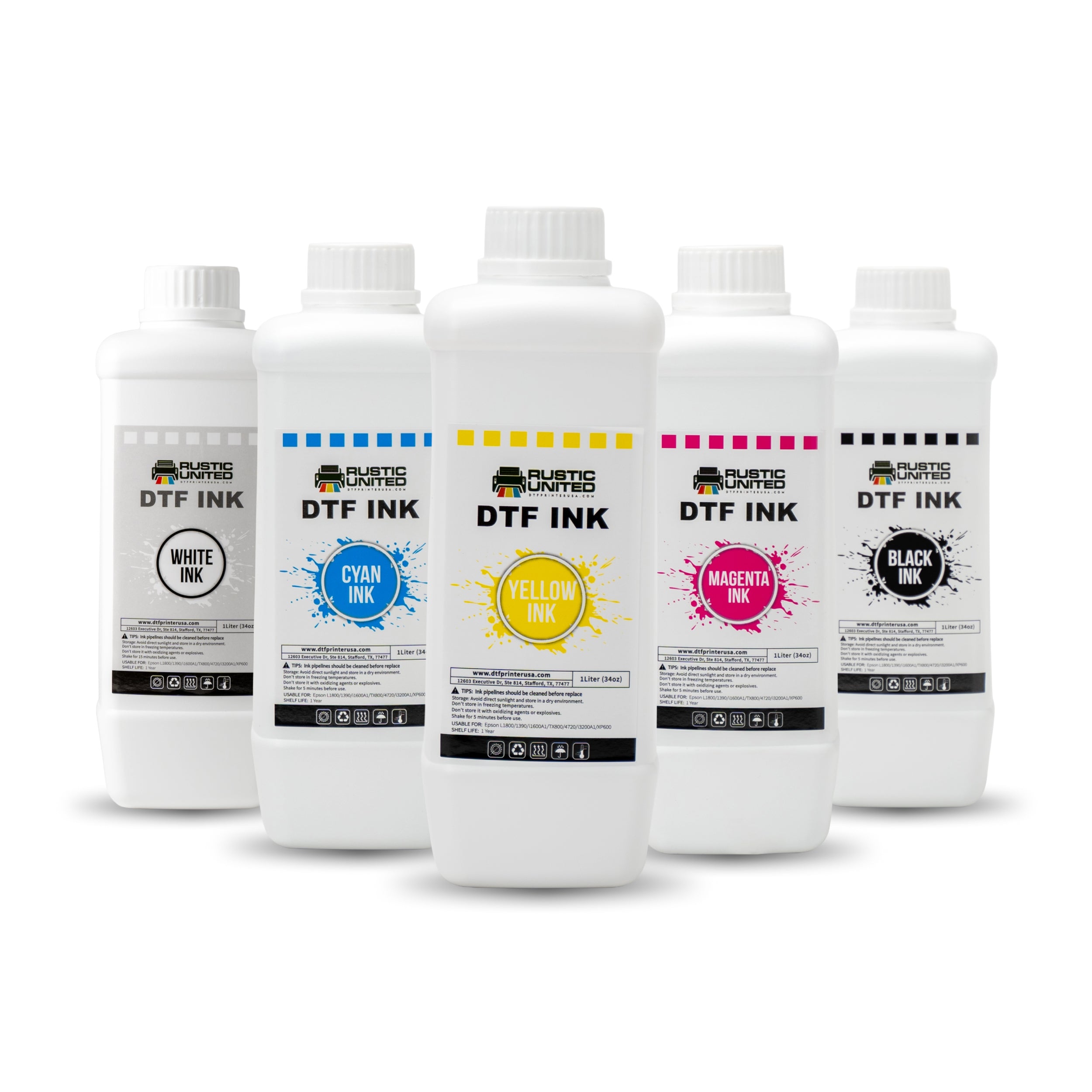
A liter of White, Cyan, Magenta, Yellow and Black in a single carton. Buying the set together is what keeps the whole rack matched, which matters when the same design is reprinted through a season rather than once.
Get the SetDown here the shirt is the souvenir, and it sells because it looks like something a shop would stock rather than something run off in a back room. Getting there is mostly consumables and finishing. Order before the daily cutoff and it ships from our Texas warehouse that afternoon, every item formulated for Epson i3200 and i1600 heads.
A rack of shirts that sells is built on these four, and every one is held in Stafford ready to travel down to Matagorda, Wadsworth, Sargent, Bay City and Palacios. Film widths, powder grades, sheet packs and printhead fluids all appear in the catalog below.

A liter of White, Cyan, Magenta, Yellow and Black in a single carton. Buying the set together is what keeps the whole rack matched, which matters when the same design is reprinted through a season rather than once.
Get the Set
A 24 inch roll running 328 feet, forgiving about peel timing and even the whole way through. Staying on one roll across a season is part of what keeps a reprint looking like the original.
Check Stock
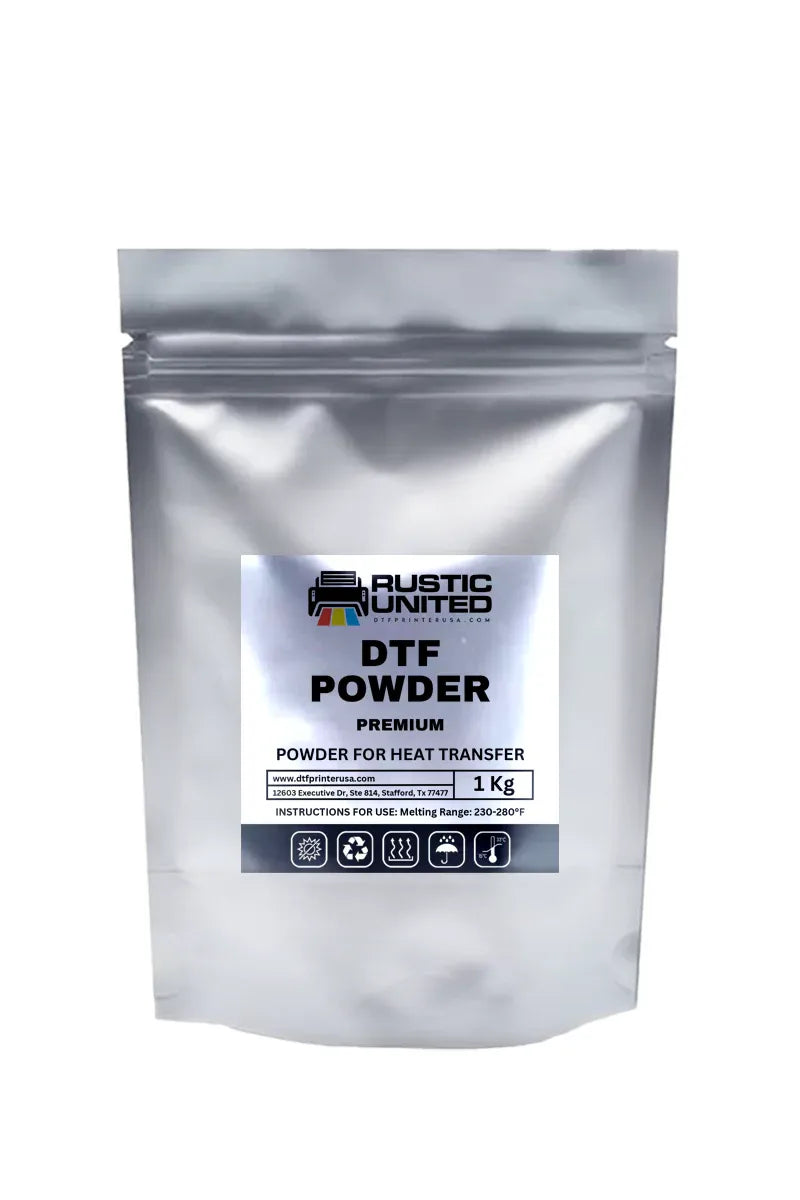
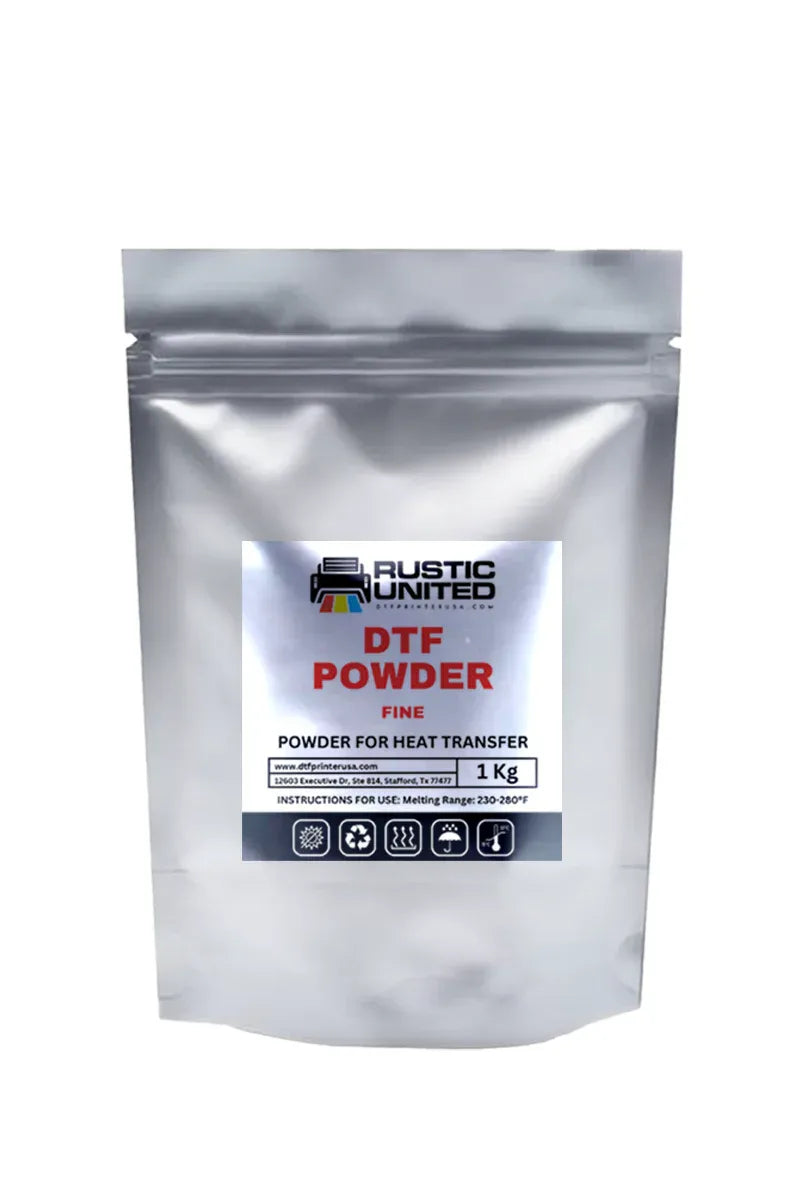
Two grades, priced by the kilogram. Fine is what a printed neck label needs, since a coarse bond inside a collar is felt every time the shirt is worn; premium goes under hoodies, bags and the heavier pieces on the rack.
View Options
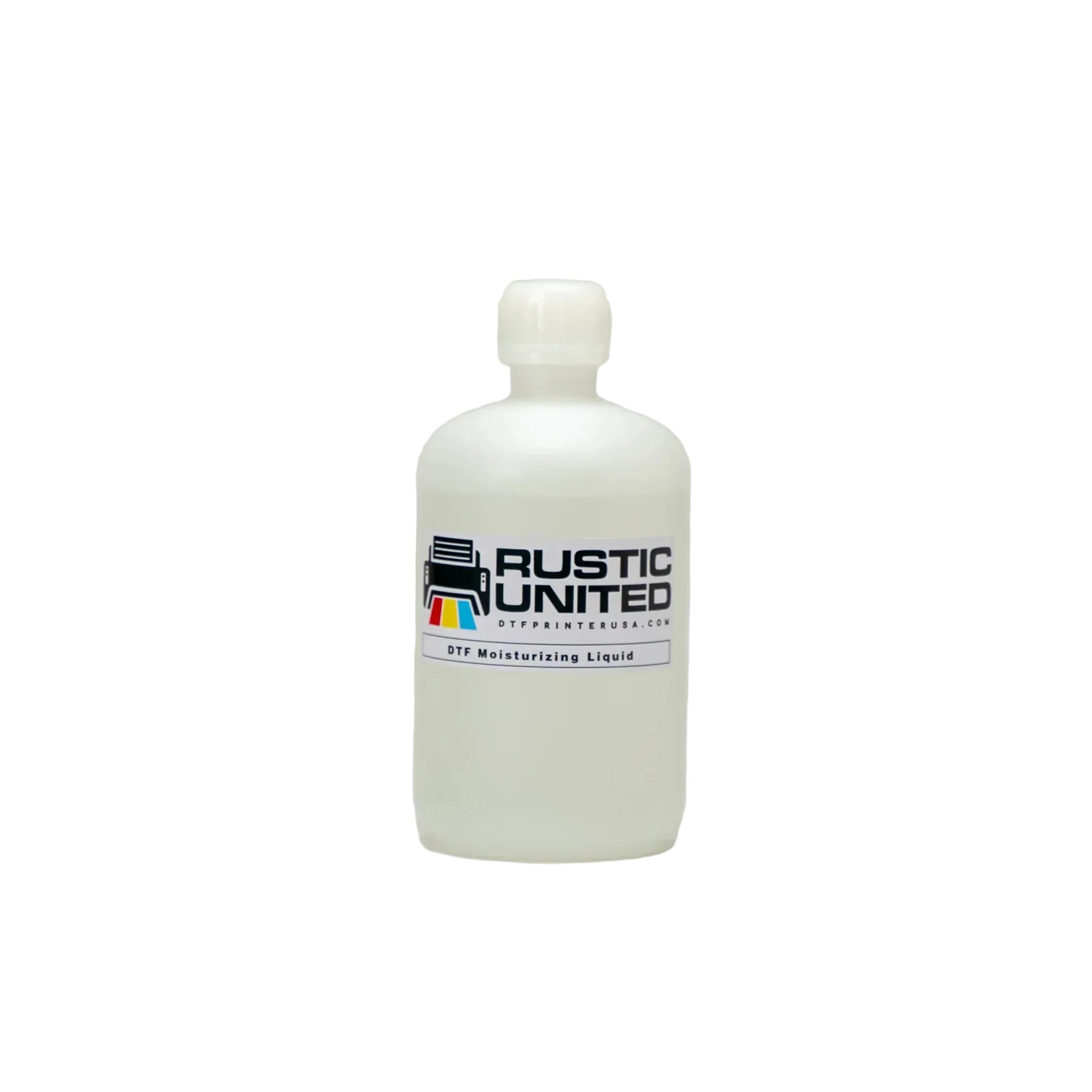
One small bottle, 100 ml, for the printhead. Easy to forget and important enough that forgetting it costs a season, particularly on a press that stands idle through the winter.
View OptionsTop up one color or refill the whole rack. What matters for merchandise is that the formula does not drift between orders, and it does not: one OEKO-TEX certified specification, built for Epson i3200 and i1600 printheads.
DTF white ink is the underbase beneath every design, and it quietly decides whether a shirt printed in June matches one printed in September. A thin or unevenly mixed white makes the colors above it read differently, and on a rack where the same design hangs in several sizes that difference is visible at a glance. Agitate thoroughly before every run, and keep a spare bottle behind the one in use.
Open a category for the complete list and live pricing. Films in every width we carry, fine and premium powder, A3 cut sheet packs, printhead fluids and packaging, all in Stafford and cleared to leave for Matagorda the same working day.

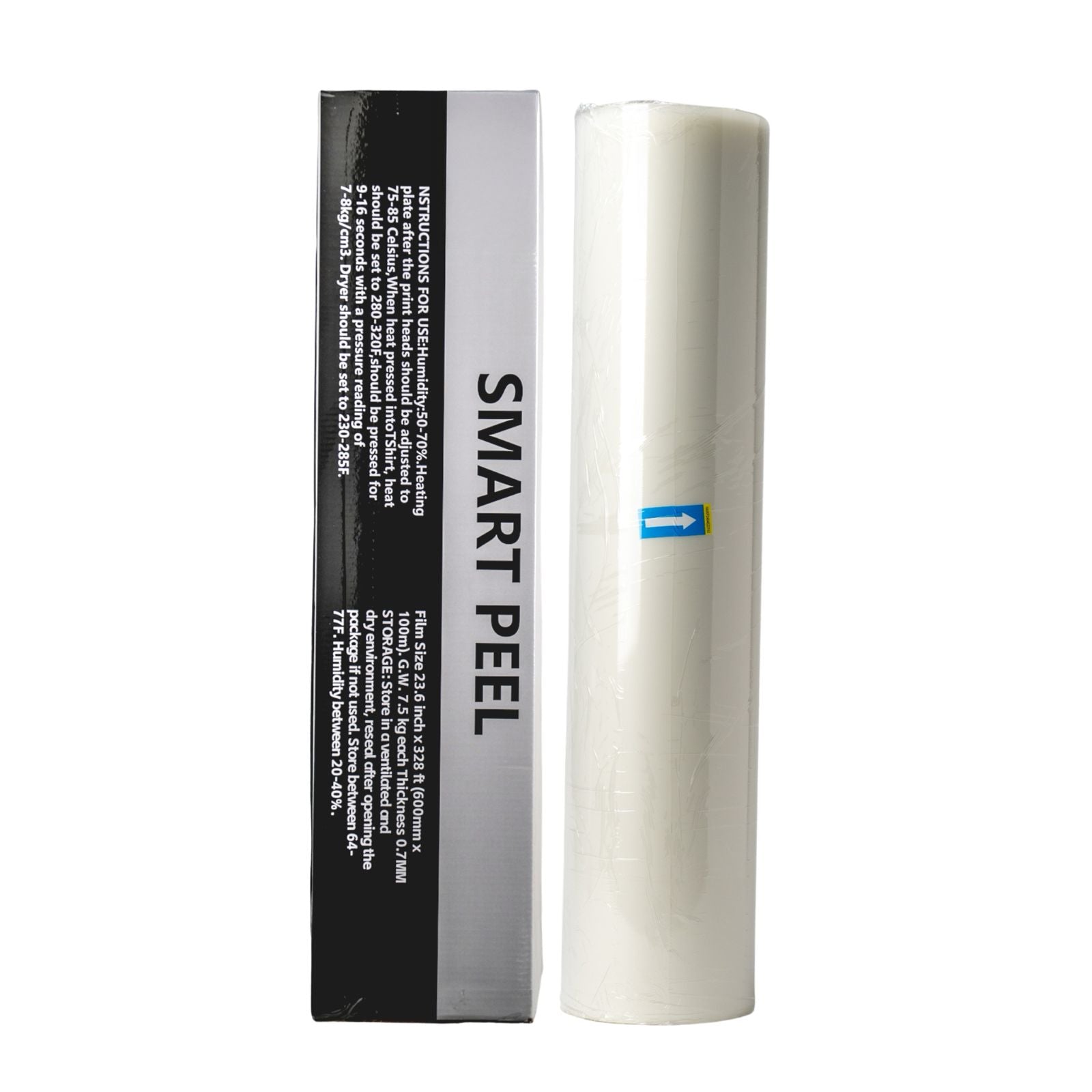
A 24 inch by 328 ft roll that comes off warm or cold as you prefer. The steady default, and the roll to standardize on for stock printing.
Check Stock
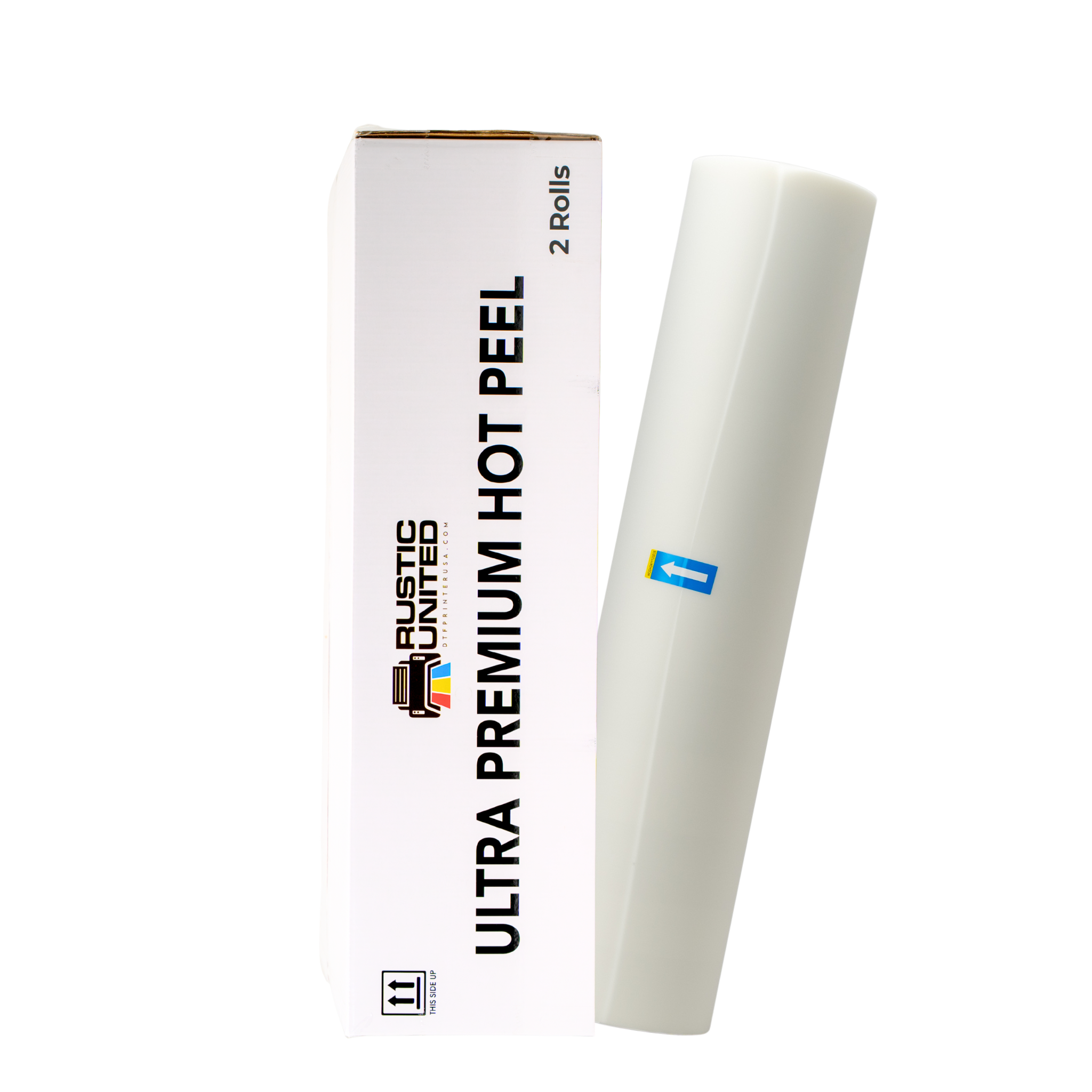
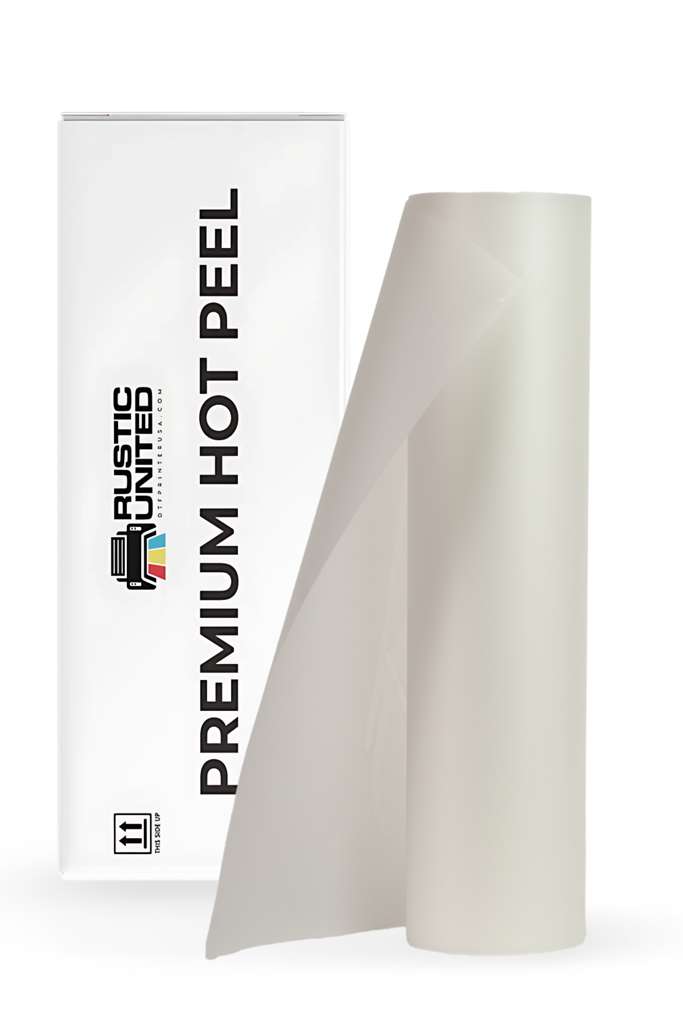
A refined hot peel with a cleaner release and better fidelity on small type, which is what a printed neck label needs. In 12, 16.5, and 24 inch widths.
View Sizes
Twenty-four inches by 328 feet of cold peel film, lifted once the sheet has gone cold. The matte finish is what keeps a retail piece from looking plastic on the hanger.
Shop Film
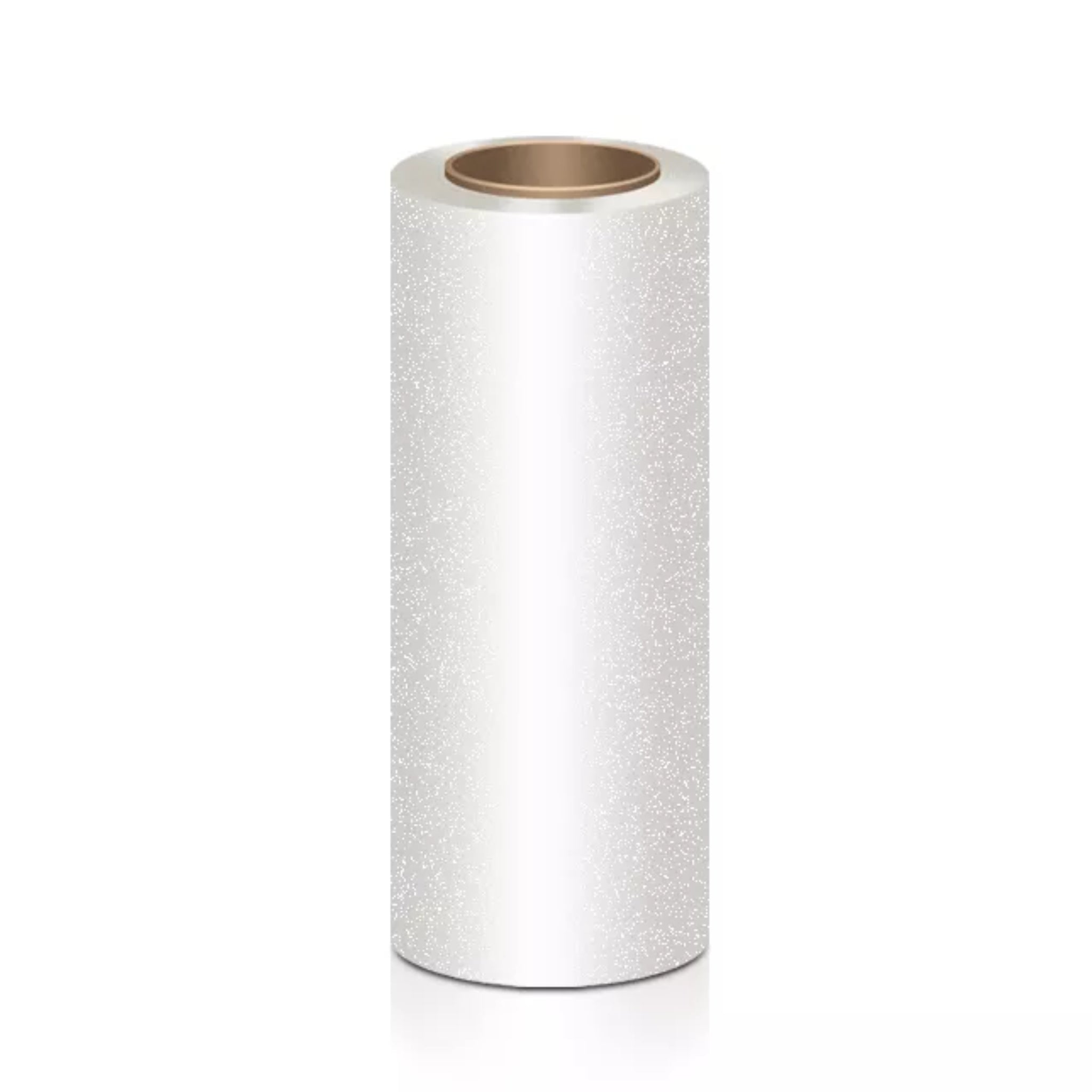
A 24 inch by 328 ft glitter roll for the piece on the rack that needs to catch the eye. Runs on the machine like any standard film.
Shop Film
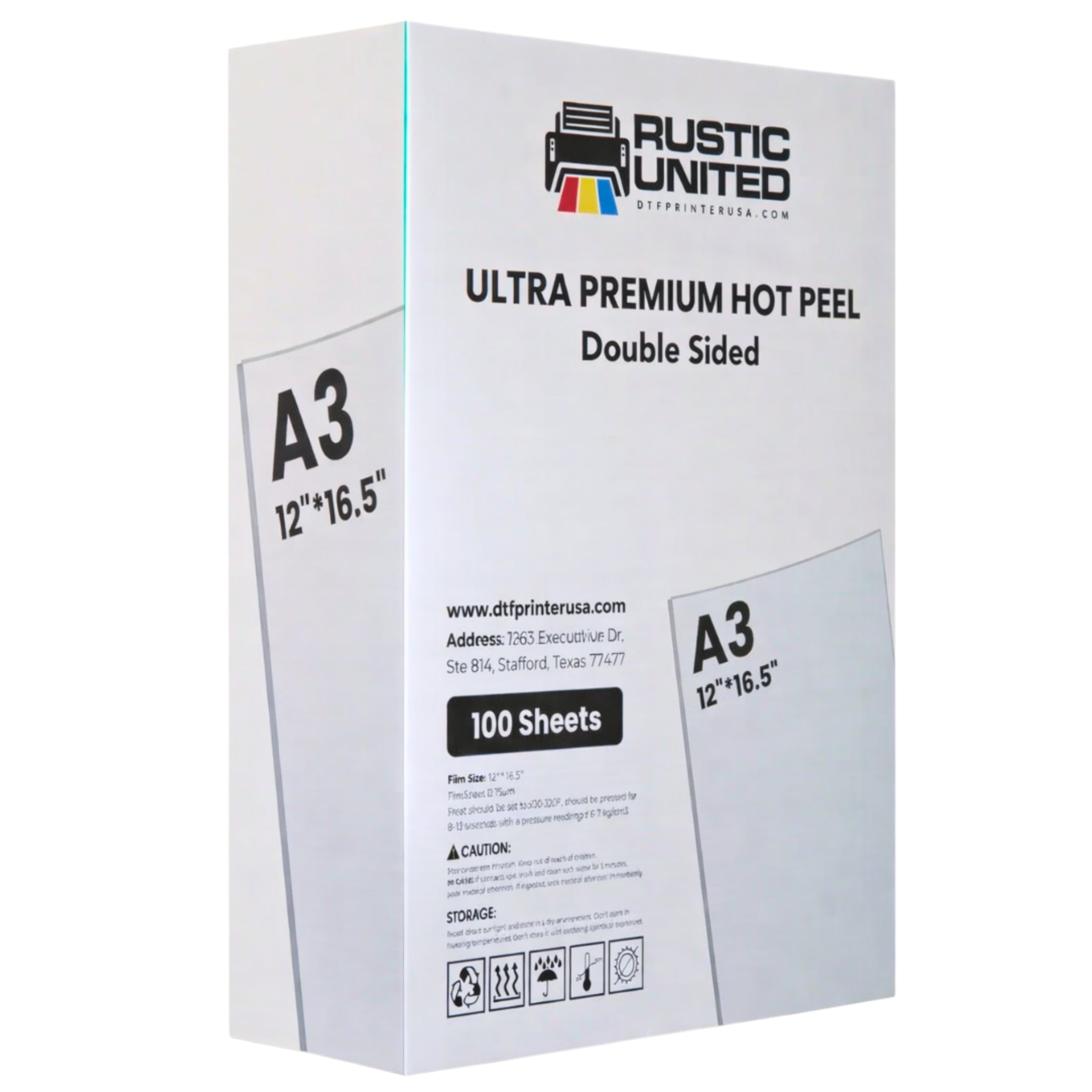
One hundred A3 sheets to a pack, which is the right way to proof a new design before committing a season of stock to it.
Get Sheets
The stronger grade by the kilogram, for hoodies, totes and heavier rack pieces.
Stock Up
A kilogram of fine grain for small type and neck labels, curing flat so nothing is felt against the skin.
Check Stock
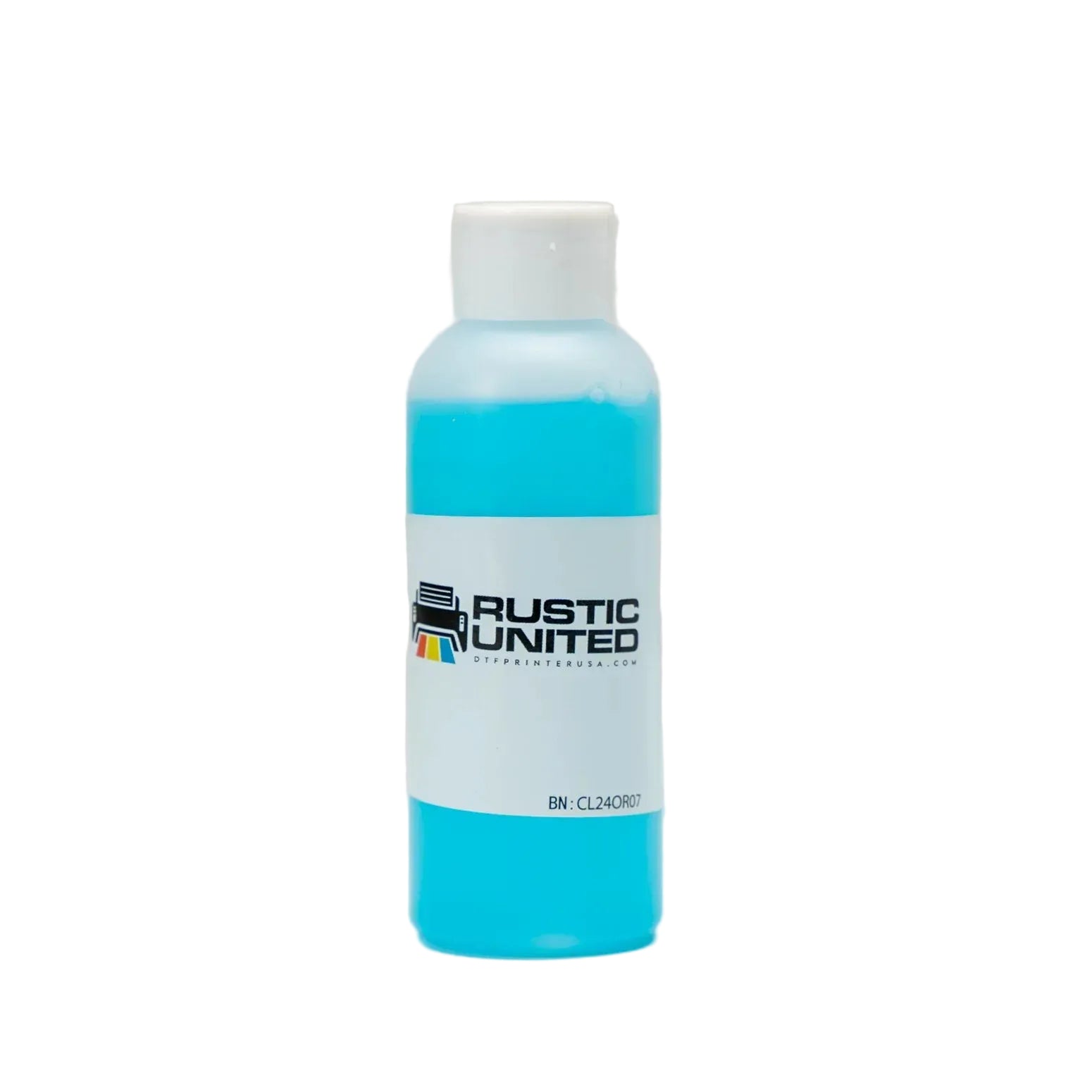
Concentrated cleaner in a 100 ml bottle for end-of-session maintenance. Worth using properly before a press sits through a quiet stretch.
View Options
A full liter of moisturizing fluid, and close to essential where printing follows a season rather than a working week.
Check Availability
DTF powder is the adhesive that fuses your print into the garment, and on merchandise it decides something a customer notices before they read the design: how the shirt feels. A heavy bond on a lightweight tee reads as a plastic patch on the hanger. Fine grain keeps the front print soft and is essential inside a collar; premium belongs on hoodies and totes. Both by the kilogram from Stafford.
The bond hoodies, totes and heavier rack pieces need.
Fine grain for a soft hand and for printed neck labels.
DTF transfer film, sold by some suppliers as DTF paper, is the sheet your artwork prints onto before the press drives it into the garment. A shop printing merchandise to stock benefits from settling on one film and staying with it, because switching rolls mid-season changes the finish even when nothing else has. Here is how the three we carry differ.
Also listed as instant peel. Undemanding about timing, which is why it makes a sensible standing choice.
The double matte, lifted only after the sheet has cooled. Its flat finish is what keeps a retail piece looking made rather than printed.
The most refined roll we stock, holding the small type a neck label needs. In 12, 16.5, and 24 inch widths.
Great product. This DTF film is as good as what the company I bought my DTF machine from sells, and DTF Printer USA is much cheaper.
Love the fast shipping and the quality of the film. I will only be ordering this from now on.
The film is top quality. It prints well, presses well, and the colors are fantastic.
Matagorda print shops, charter and marina suppliers, and shoreline decorators mostly print the same designs repeatedly through a season. That makes consistency the thing worth buying: the same film, the same powder grade and the same ink specification, so the shirt reprinted in August still matches the one that sold in May.
Clear the daily cutoff and the order is packed and gone that afternoon, with tracking in your inbox before the day is out. Nothing waits to fill a truck, so a mid-season restock arrives while the rack is still selling rather than after it emptied.
OEKO-TEX certification confirms the ink is tested safe against skin once pressed, which is worth knowing on anything printed inside a collar. Just as important for stock printing, the formula does not shift between batches, so color you approved in spring is the color you get in autumn.
Everything on this page is inventory we hold ourselves. For a shop printing merchandise, that means the exact film width and powder grade you standardized on are still here next season rather than quietly replaced with whatever was available.
The run from Stafford down to the shoreline is direct and the timing holds week to week. Setting up a printed neck label, or trying to work out why a reprint reads slightly different? Call or email and somebody who handles this stock every day will pick it up.
A visitor buying a souvenir is comparing your shirt against everything else they have ever bought in a shop, not against other locally printed shirts. What separates the two is rarely the artwork. It is a soft print rather than a plastic patch, a printed neck label instead of a scratchy tag, sizes that all match each other, and a design that still looks right on the eighth reprint. Every one of those is a consumables and process decision rather than a design one.
Matagorda sits at the point where the Colorado River finally reaches the Gulf, and it is the smallest place on this list by a wide margin. A few hundred people live here. Several thousand more arrive at weekends, because Matagorda Beach is one of the few stretches of Gulf shoreline you can drive onto, the harbor sends out charter boats most days it is fit to, and the Bay Nature Park and the coastal birding trail bring their own steady traffic. For a print shop the picture is unusually clear cut. There is almost no local order book in the ordinary sense. What there is instead is merchandise: shirts with the place name on them, charter and marina branding, pieces sold through bait shops, rentals and whoever else has a counter. That work rewards a very particular discipline, because a souvenir buyer is comparing your shirt against everything they have ever bought in a shop. Orders leave our Stafford warehouse the same day and run down to the shoreline.
Matagorda Beach and the charter fleet out of the harbor drive most of what gets printed here: place-name tees, charter and guide branding, hats and totes sold to people who came for a weekend. Short runs, the same designs repeatedly, and a buyer who will notice if the shirt feels stiff.
With so few residents, much of the trade runs through somebody else business: bait and tackle shops, rentals, the RV park, cafes with a rack by the till. That means finished goods rather than jobs, which puts printed neck labels, matched sizing and consistent restocks ahead of almost everything else.
Wadsworth, Sargent, Bay City, Palacios and Blessing are all within reach, and the same seasonal pattern runs through every one of them. Same-day dispatch from Stafford is what makes covering that stretch of coast realistic from a very small base.
DTF Printer USA keeps Matagorda and the surrounding shoreline supplied with ink, film, powder, cut sheets, printhead care and packaging. From Matagorda Beach and the harbor out through Wadsworth, Sargent, Bay City, Palacios and Blessing, a Matagorda print shop, charter operator or decorator is buying from a Texas shelf rather than waiting on an import.
Three things that separate merchandise from a printed shirt: a proper neck label, a design that still matches on the eighth reprint, and stock that somebody else can sell for you without any explaining.
Printing a label inside the collar is the single cheapest change that makes merchandise look like it came from a shop, and most decorators never bother. The method is simple. The label goes inside the back of the collar, roughly an inch below the seam, printed small and in one color more often than not. Use the smallest platen you have or a dedicated label platen, because the difficulty is entirely in getting the collar area flat without the rest of the shirt landing under the press. Fine powder matters more here than anywhere else on the garment: a coarse bond inside a collar is felt against the neck every time the shirt is worn, which is exactly the complaint a scratchy manufacturer tag produces in the first place. Now the part that catches people out. If you cut out the manufacturer tag, you take on the information it carried. Fiber content, country of origin and care instructions are required to remain on the garment, so your printed label has to include them rather than just a logo. That is not difficult, it simply has to be designed in from the start rather than discovered later. Two practical notes. Press the label before the front design rather than after, since a finished front print does not want to go back under a press. And buy tearaway-tag blanks where you can, because removing a printed-on manufacturer mark is considerably harder than removing a stitched label.
A design printed once is easy. A design printed forty times across a season, in six sizes, sold from a rack where several of them hang side by side, is where small inconsistencies become visible. The habit that fixes it is physical rather than digital. When a design is approved, press one garment, write the date on the inside with a laundry marker, and keep it somewhere dark as your reference. Every reprint gets compared to that garment, not to the file on screen, because a screen tells you nothing useful about how a white underbase laid down last Tuesday. Record what produced it alongside the sample: the film, the powder grade, the press temperature, time and pressure, and roughly where in the bottle the ink was. Then change as little as possible. Staying on one film roll through a season matters more than people expect, since release characteristics vary slightly between rolls and that shows up as a subtly different finish. The same is true of powder grade, and of switching ink mid-design. If something does have to change, change one variable at a time and press a test against the reference before committing stock to it. Finally, watch white ink specifically, since it drifts fastest: a bottle that has stood over a slow fortnight and been shaken casually will lay down thinner, and every color above it will read slightly duller as a result. That single factor explains most of the mismatches shops blame on everything else.
In a town with very few residents, the shops that survive sell through other people counters: a rack in a bait and tackle shop, a shelf at the RV park, a few hangers by the till of a cafe. That is a different business from taking orders, and it works when the goods arrive ready to sell with nothing left for the retailer to do. Start with presentation, because it is what gets a rack accepted. Every piece should be folded or hung consistently, bagged if it will sit out, and carry a size label somebody can read without unfolding it. A printed neck label does more for this than anything else. Then agree the commercial terms plainly and in writing before delivering anything. Wholesale outright or consignment are very different arrangements and both are workable, but only if it is clear who owns the stock, what the split is, and who absorbs a piece that gets shopworn over a season. Keep a simple written record of what went where and when, since three racks in three shops becomes impossible to track from memory by the second month. Then think about the size run rather than printing evenly across every size, because the middle sizes carry most of a visitor trade and the extremes sit unsold. Check the racks yourself rather than waiting to be called, restock the sizes that moved, and pull anything looking tired. A rack that always looks stocked keeps its place; one that empties and stays empty quietly loses it.
What Matagorda shops and shoreline decorators most often want answered before a supply order goes in.