Dayton is growing faster than its order book can settle, which means the next job rarely looks like the last one. Order before the cutoff and your consumables leave our Texas warehouse that afternoon, headed east on 90. Ink, film, powder and cleaner, held in real quantity so you can say yes to work you did not see coming, all of it built for Epson i3200 and i1600 heads.
Responsive SupportPhone & email, replies in 1 hr usually
The Working Stock
Four Consumables Behind Every DaytonPrint Job.
No matter what walks through the door, production comes back to these four. All of them sit in Stafford, cleared to move out to Dayton, Liberty, Crosby, Mont Belvieu and Cleveland. Film widths, powder grades, sheet packs and printhead fluids are all in the catalog below.
Best Value
1 LT Batch DTF Ink
$123.55
Best for: full color setup and refills
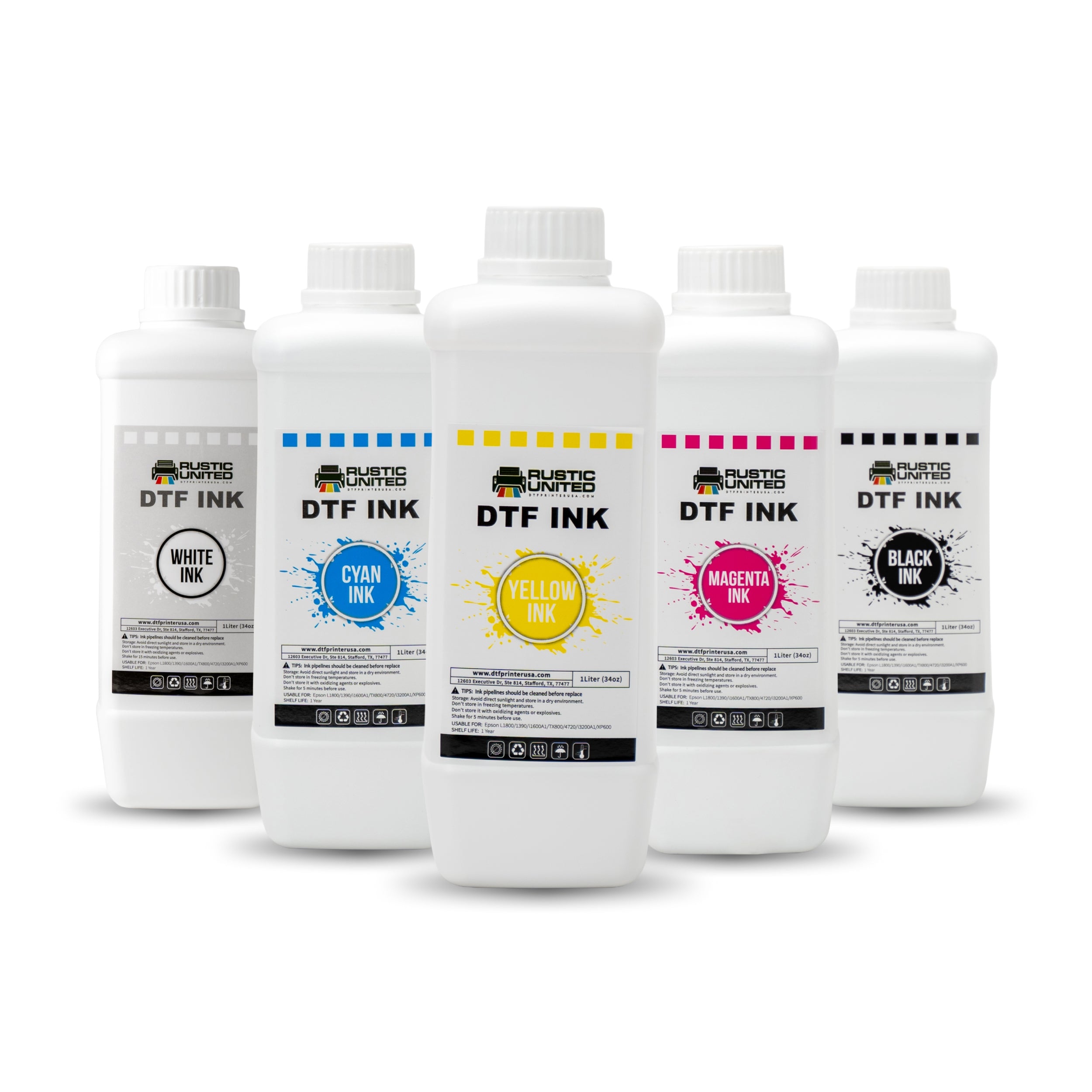
Five liters in one box: White, Cyan, Magenta, Yellow and Black. Enough to take a Dayton press from empty to fully loaded in a single order, all OEKO-TEX certified and mixed for i3200 and i1600 heads.
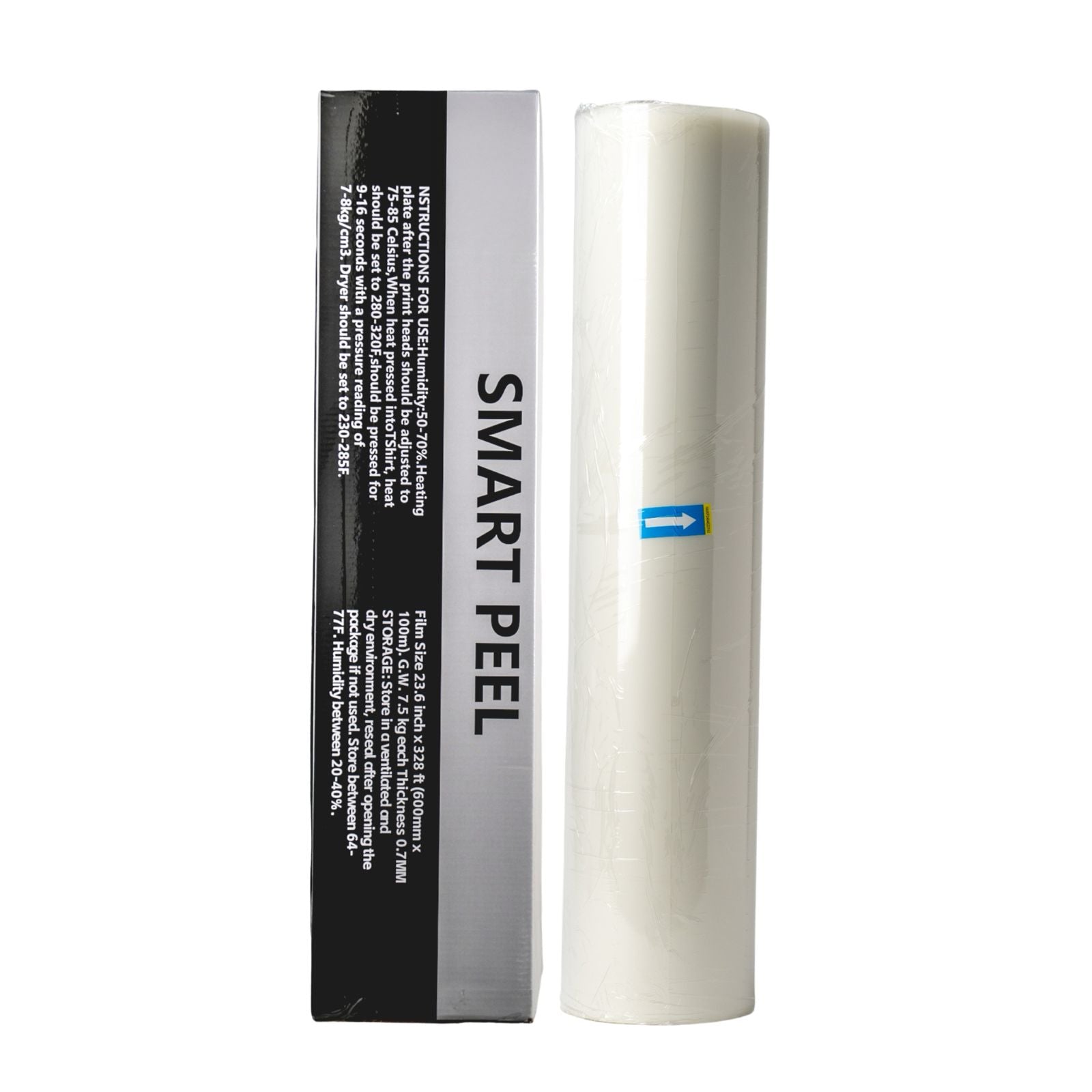
A 24 inch roll carrying 328 feet of film, enough to work through a contractor order and a league run without a reload in the middle. Predictable release and edges that stay clean.
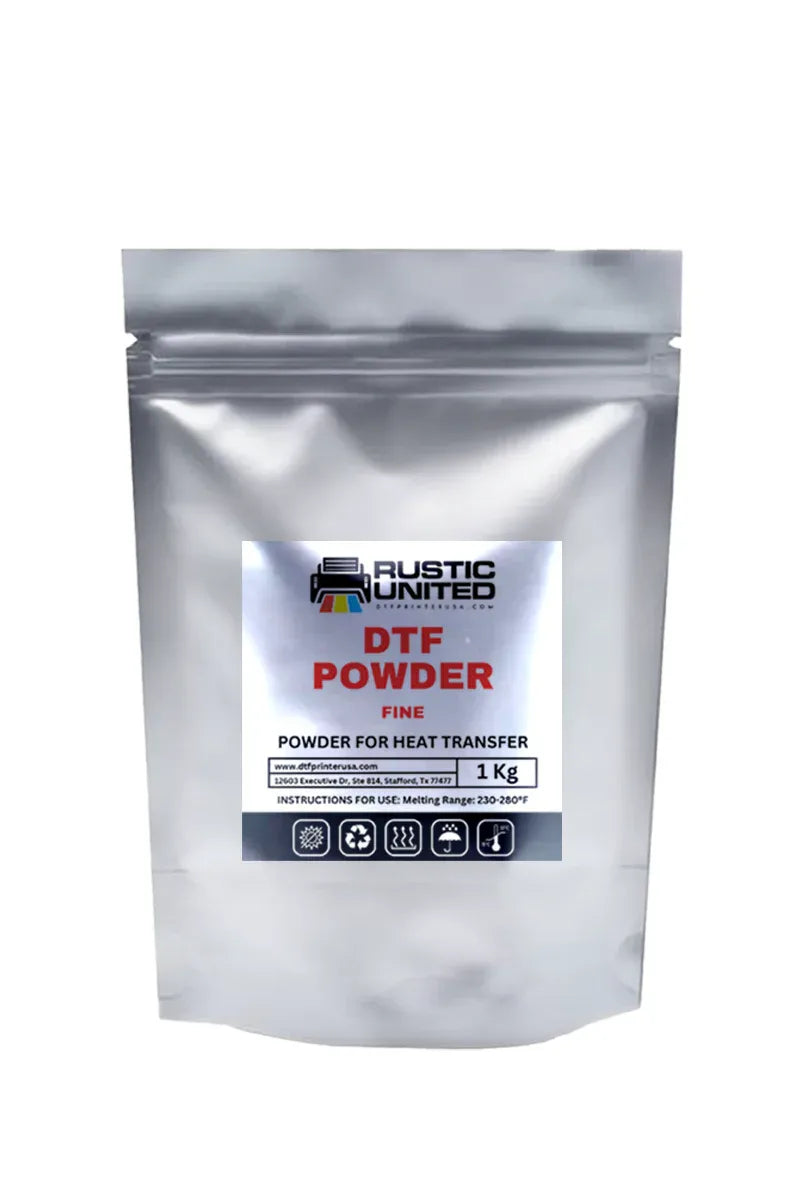
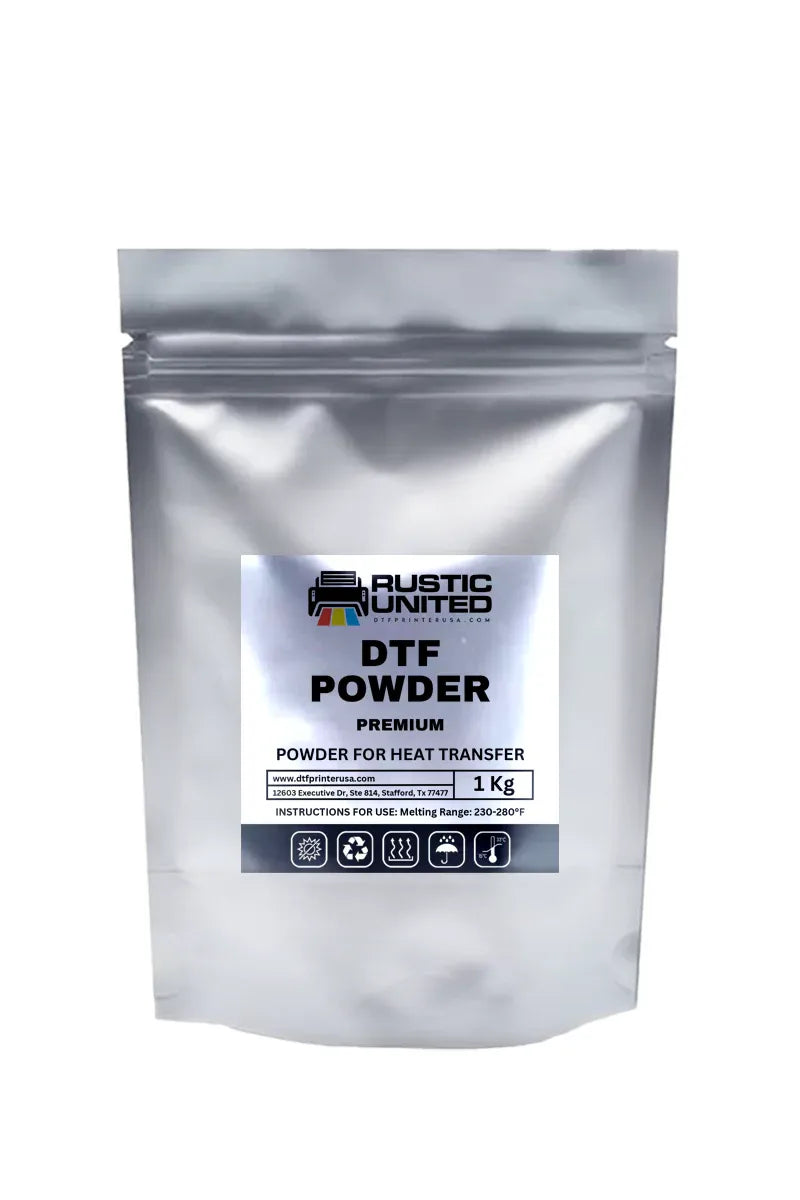
Two grades, sold by the kilogram. Fine handles logo detail and light cotton; premium is the one for hi-vis, workwear and trade apparel that spends its life outdoors and in a truck bed.
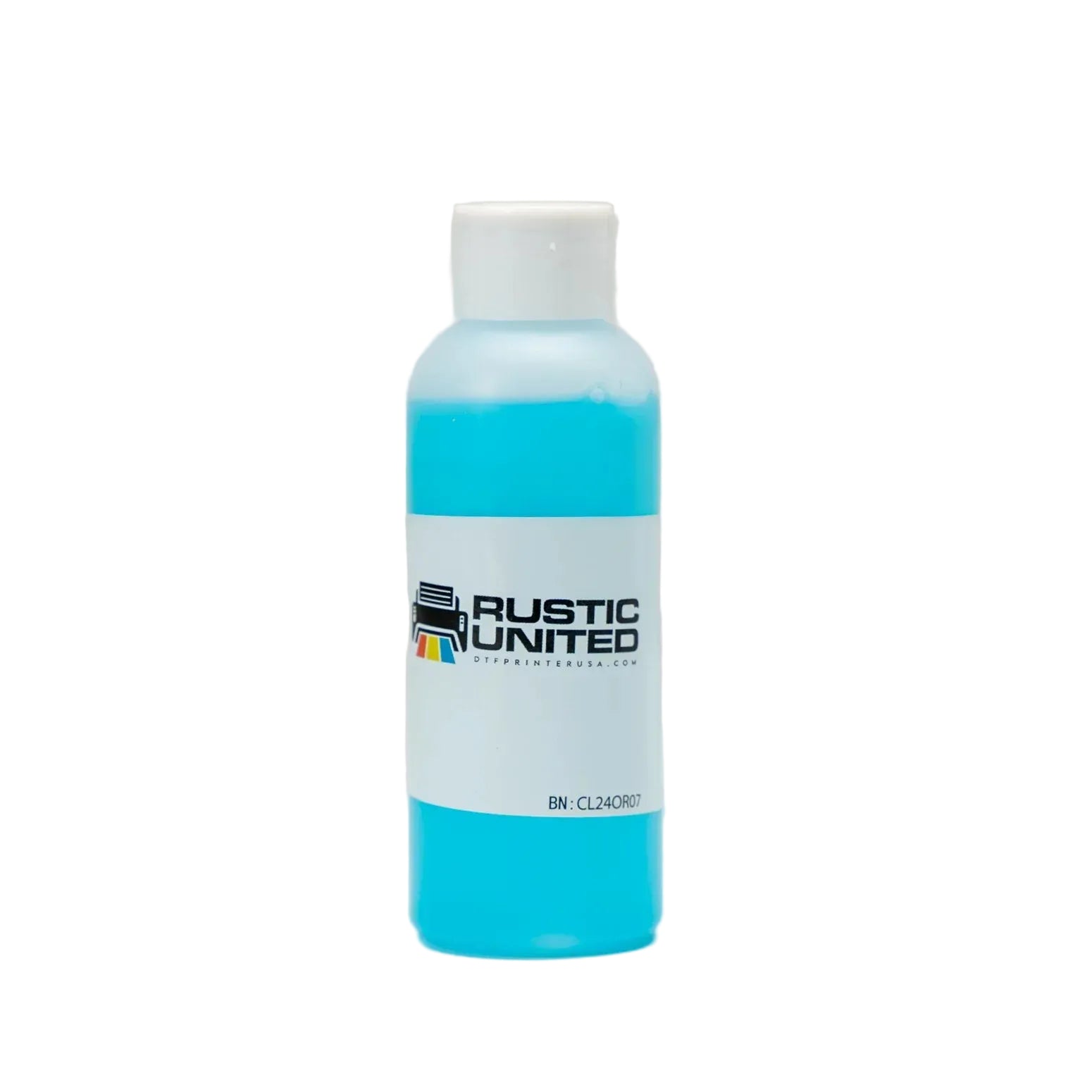
A 100 ml bottle of cleaner that keeps nozzles clear between sessions. The cheapest thing on this page and the one that prevents the most expensive kind of downtime.
Grab the one bottle standing empty, or reset the whole rack in a single order. Every color comes from the same OEKO-TEX certified formula, developed around Epson i3200 and i1600 printheads.
DTF white ink prints under every design and behind every colored area, which is why it runs down at several times the pace of any single color. In a Dayton shop taking unpredictable work, an empty white bottle is the one shortage that stops everything at once, regardless of how full the rest of the rack looks. Buy it in a ratio that matches how it is actually consumed, not one of each.
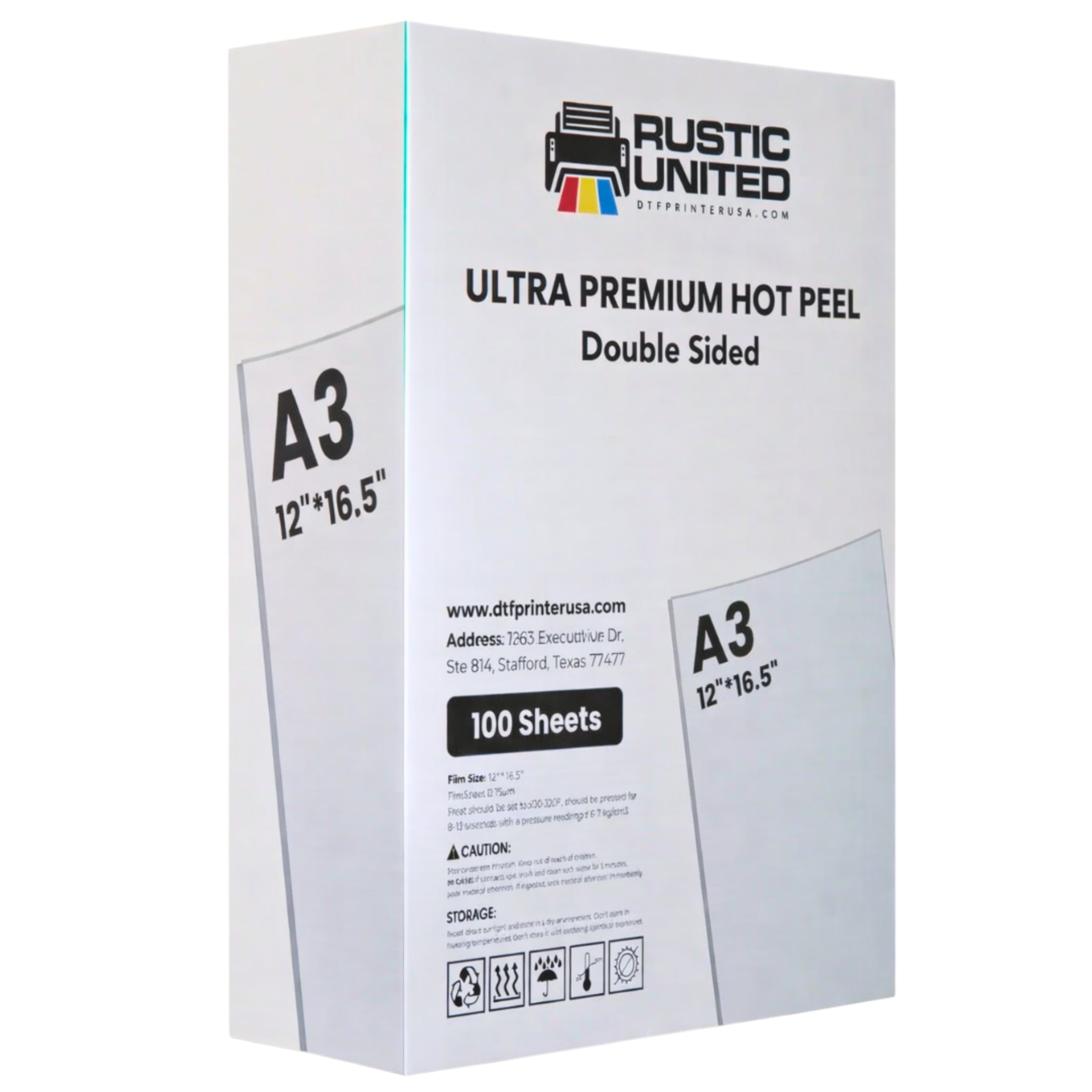
Open any category for the complete list and current prices. Every film we hold, both powder grades, A3 sheet packs and maintenance fluids, all of it physically in Stafford and cleared to ship to Dayton the same working day.
Expand a category to browse
DTF Transfer Film
Instant Peel
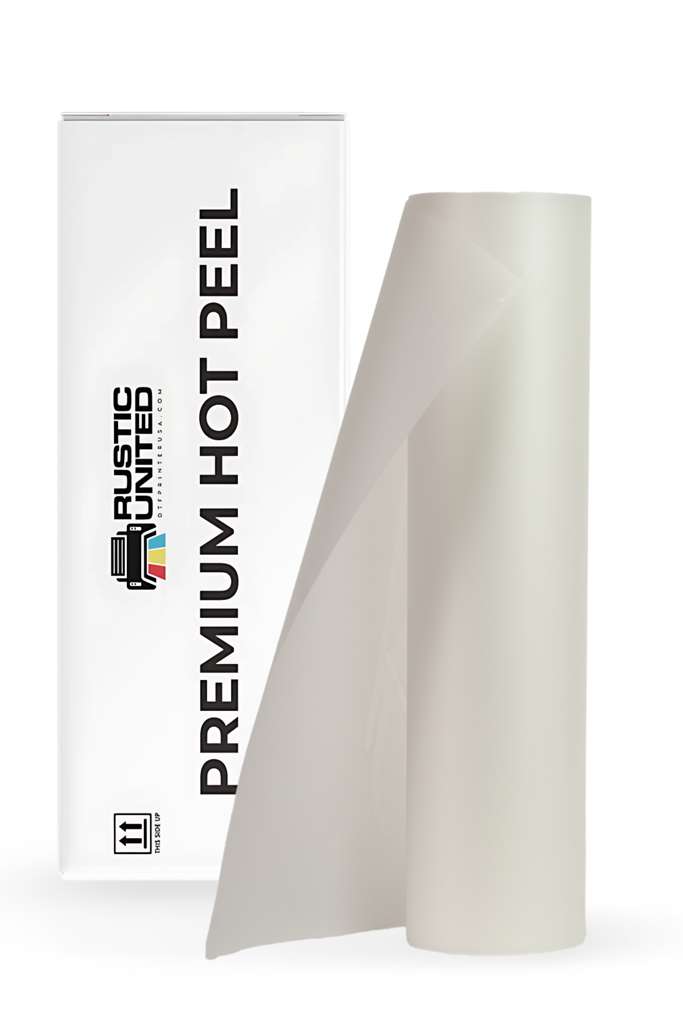
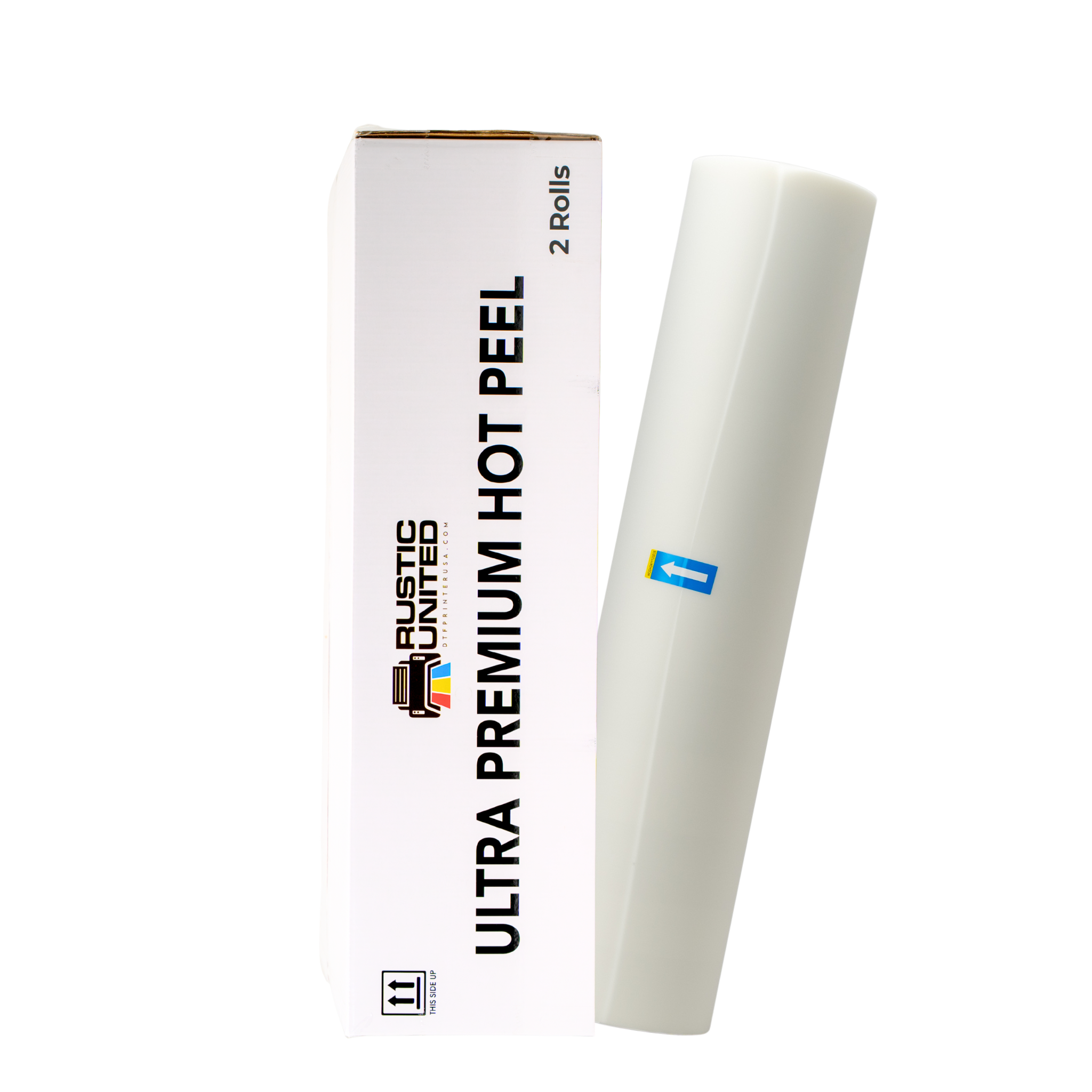
Premium Hot Peel Film
$74.55
A 24 inch by 328 ft roll that lifts warm or cold, your call. The dependable everyday roll when the week could bring anything through the door.
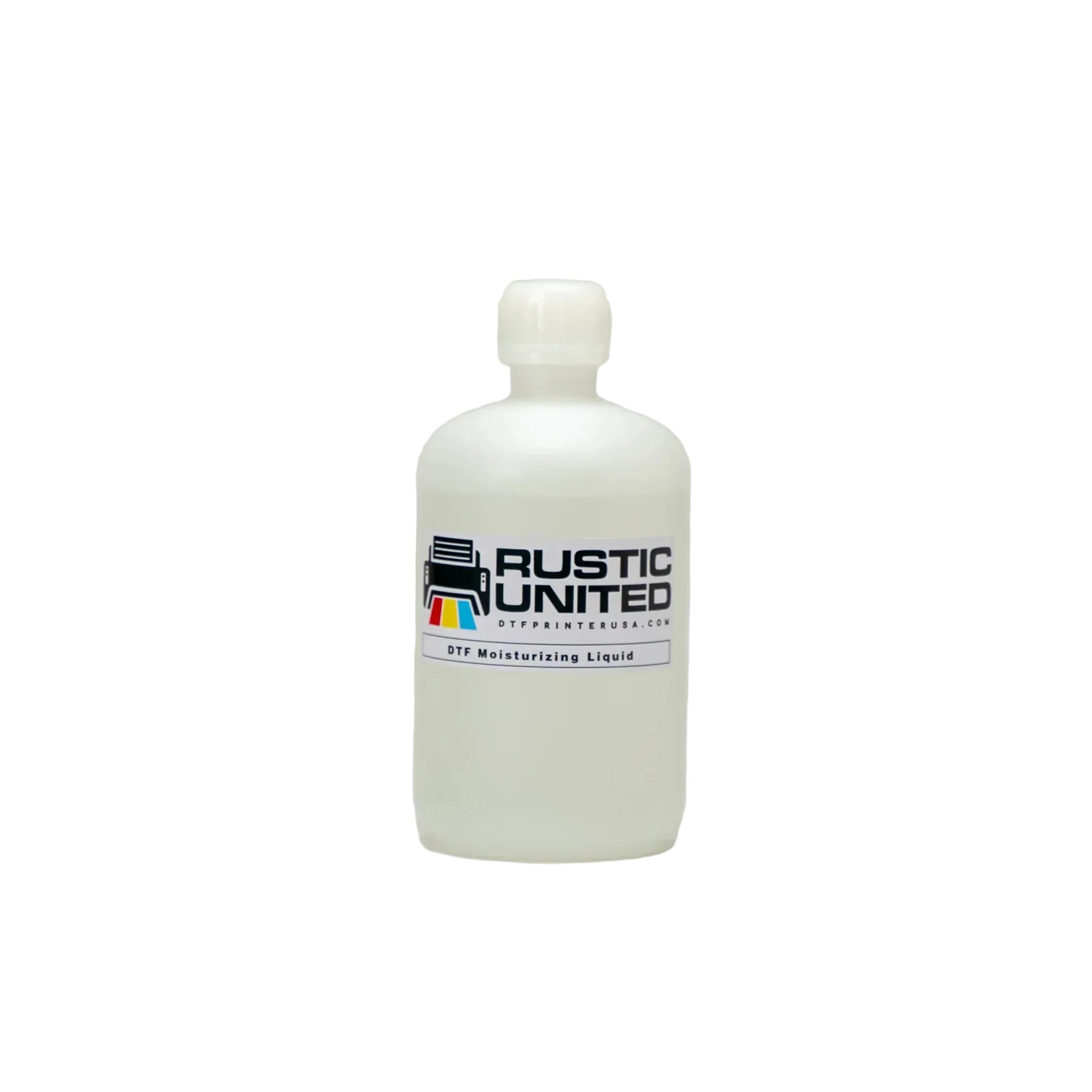
A liter of moisturizing fluid guarding the head against drying out. Particularly worth having where the press can sit unused for several days at a stretch.
DTF powder is the adhesive that fuses your printed sheet into the garment, and two grades between them handle everything a Dayton bench sees. Fine grain keeps thin lines and logo detail intact on lighter cotton. Premium drives a harder bond into hi-vis vests, work shirts and heavyweight blanks. Both leave Stafford by the kilogram on the day you order.
Best Seller
Premium
$16.55
The harder bond that hi-vis, workwear and trade apparel need to survive.
Fine
$16.55
Small grain that protects logo detail and thin lines on light cotton.
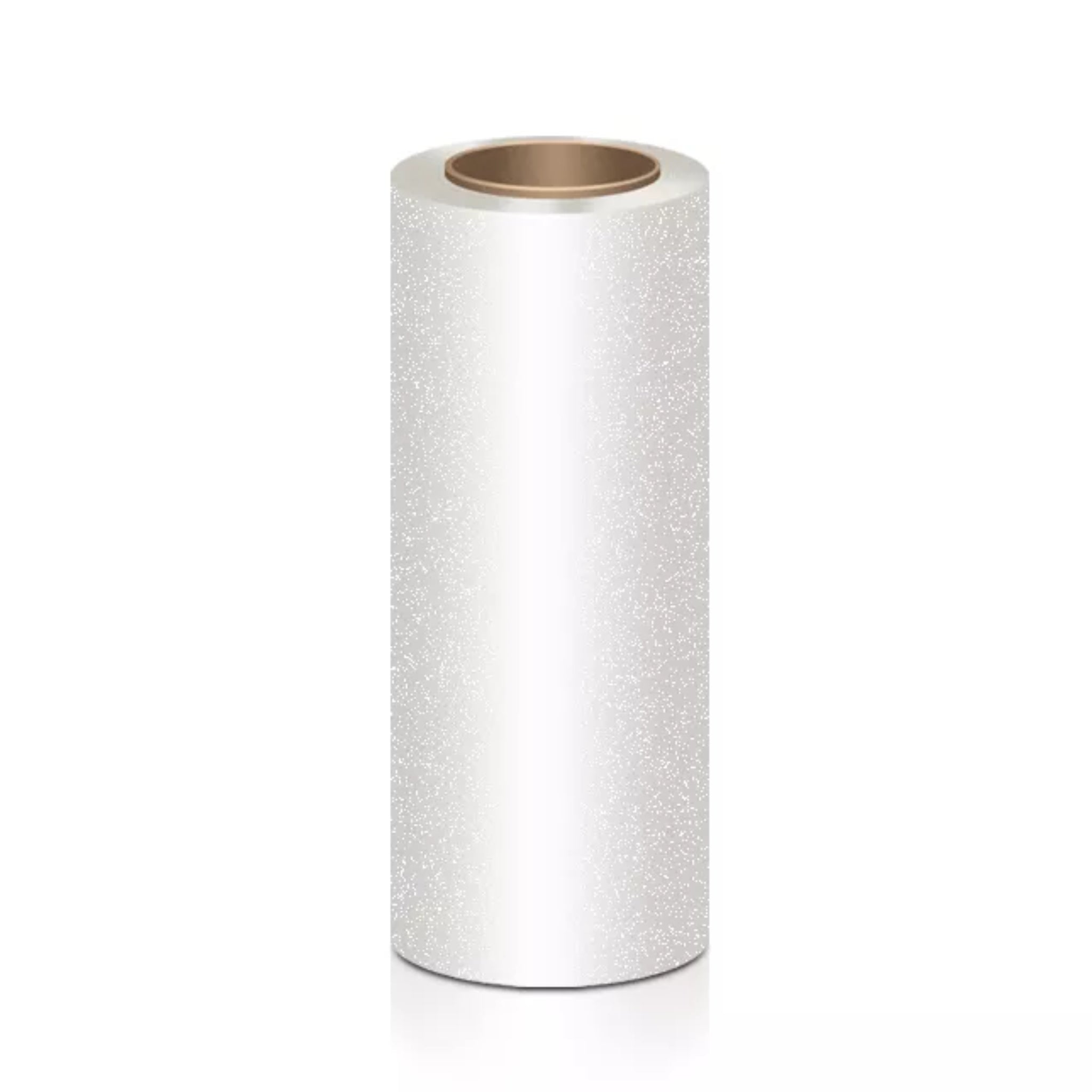
DTF transfer film, sometimes listed as DTF paper, is the sheet your design lives on until the press moves it into the fabric. The right roll depends on the run in front of you: speed through volume, or the cleanest possible detail on small artwork. Here is how the three we stock behave on a Dayton bench.
Best for high volume
Premium Double Hot Peel
Sold by some suppliers as instant peel. Tolerant about timing, which makes it the sensible roll to keep loaded by default.
Our first recommendation for most Dayton setups. A refined hot peel with reliable release and edges that stay defined, in 12, 16.5, and 24 inch widths.
Best DTF printer, best DTF ink and best DTF film I have used. Nothing else I have tried comes close on quality.
Naci Akgun
Best customer service anywhere, same day pickup when I need it, and the best DTF ink and film I have found.
Ceyhun Ustunel
I get all of my consumables for my printing business here. They are very quick and always help out, and I love their film and inks.
Anthony Lane
Why Dayton Shops Order Here
Deep Stock for a Town That KeepsAdding Customers.
Dayton print shops, contractor and trade suppliers, and Liberty County decorators are working a customer base that is still expanding. Enquiries come from businesses that did not exist last year, which makes back-ordered stock and slow answers far more expensive than they look on a price list.
Same-Day Shipping
Beat the cutoff and the order is picked, packed and gone the same afternoon, running east on 90 toward Liberty County. Nothing waits for a fuller truck, which is what lets you accept a job on Monday that lands on Thursday.
OEKO-TEX Certified Ink
OEKO-TEX certification confirms the ink is tested safe in skin contact once pressed. In production terms that shows up as saturated color, a white with genuine opacity, and a formula that behaves predictably on i3200 and i1600 heads job after job.
Production-Ready Stock
Everything listed is inventory we already hold. For a Dayton shop that means no back-order emails and no discovering mid-quote that the film width you need is four weeks out, which is the difference between winning a new account and losing it on the first job.
Fast Local Delivery
The route from Stafford runs east across the Houston side and into Liberty County, a straightforward lane with consistent timing. Facing a contractor start date or a league season opener? Call and we will work out the fastest option available.
What Growth Actually Demands
You Cannot Grow on a Supplier Who Runs Out.
A shop in a growing town gets one chance with each new customer, and the first job decides whether there is a second. That makes availability the thing that matters most: not the headline price on a bottle, but whether the film, ink and powder you quoted against are actually on a shelf when the order is confirmed.
Same Day
Shipping
Ordered before the cutoff, gone the same afternoon, which is how a new customer gets the impression that you deliver when you say you will.
Local
Stafford Warehouse
One Stafford, TX warehouse and one inventory, which is why you can quote against what the page shows without checking twice.
1 Call
To a Texas Team
First time pressing hi-vis, or unsure which film a new job wants? A US-based team who work with this stock daily will answer the same day you ask.
A Supplier That Back-Orders
Back-ordered stock discovered after the quote went out
Restocks that arrive after the customer has moved on
A film width that is always four weeks away run
Nobody to ask when a new fabric behaves unexpectedly
Turning down work because the shelf could not cover it
VS
DTF Printer USA, Stocked for Whatever Comes Next
Same-day dispatch that keeps a new account
Deep held stock in one Stafford, TX warehouse
OEKO-TEX certified ink that behaves the same every run
A US-based team to ask when a job is unfamiliar
No minimums, so a trial job is worth taking
Printing in Dayton
A Customer List That Is StillBeing Written.
Dayton began as West Liberty on the Trinity River bottomlands, took its present name in the nineteenth century, and grew up around the railroad and US-90. What defines it now is the direction Houston is expanding. Liberty County is absorbing residential growth from the west, and with it comes construction, new businesses, new schools and new youth leagues. For a print shop that produces a specific condition worth naming: the customer list is not stable. A meaningful share of enquiries come from people ordering custom apparel for the first time, for a company or a team that did not exist eighteen months ago. They arrive with a logo in the wrong format, no clear idea of quantity, and a date they cannot move. Serving that well is a different discipline from serving an established order book, and it rewards a shop that holds deep stock and can print ahead. Orders leave our Stafford warehouse the same day and run east into Liberty County.
Trades, Contractors & New Business
Growth means construction and trades, and construction means branded apparel: crew shirts, hi-vis with a company name, hats and jackets for outfits that are two people one year and twelve the next. This work goes on heavy fabric, gets laundered hard, and lives in a truck, which is exactly what premium powder and a durable film pairing exist for.
Schools, Leagues & New Teams
New families bring new teams. Youth leagues, school groups and community programs order in awkward quantities with names and numbers attached and a first game already scheduled. Because there is no setup cost to recover and no minimums on supplies, a fourteen-shirt roster is a job worth quoting rather than one to politely decline.
Liberty County Reach
A Dayton shop sits within easy reach of Liberty, Crosby, Mont Belvieu, Baytown and Cleveland, which puts a lot of industrial and residential demand inside one service radius. Same-day dispatch from Stafford is what makes covering that spread a plan rather than an aspiration.
Serving Dayton & Liberty County
DTF Printer USA keeps Dayton and the surrounding Liberty County area supplied with ink, film, powder, cut sheets and printhead care. From historic downtown and Bautista Park out through Liberty, Crosby, Mont Belvieu, Baytown and Cleveland, a Dayton print shop, apparel brand or decorator is restocking from a Texas shelf instead of waiting on an import.
Local Delivery Area
Same-day dispatch and a direct eastward run into Dayton and the towns around it. The same Stafford inventory ships to any US address.
Three things worth having sorted before a growing order book tests them: what usable artwork actually looks like, how to build stock ahead of demand, and how to know a print will last before you promise it will.
What Print-Ready Artwork Actually Means
A shop in a growing town spends more time fixing artwork than a shop with an established client list, simply because more of its customers have never ordered printed apparel before. The file that arrives is usually a logo pulled off a website or lifted from a business card photograph, and it will not print well no matter what film you load. Four things separate a usable file from one that costs you an hour. Resolution comes first: artwork needs to be around 300 DPI at the size it will actually print, so a 500 pixel wide logo destined for a twelve inch chest print has nowhere near enough information and will look soft however carefully it is pressed. Second is the background. DTF prints what it is given, so a logo saved on a white rectangle will press as a logo on a white rectangle, and it needs a genuine transparent background rather than one that merely looks white on screen. Third is color mode, since artwork built in RGB can shift noticeably when it goes to print, and it is far better to see that on a test than on fifty shirts. Fourth, and the one worth pushing hardest for, is vector source files. A vector logo scales from a left chest to a full back with no loss at all, which means the same customer coming back next year for a different garment costs you nothing to set up. The practical move is to write those four requirements into a short note you send with every quote. Customers who have never ordered before are not being difficult, they simply do not know, and the shop that tells them clearly gets cleaner files and fewer arguments about why a print looks blurry.
Printing Ahead and Storing Finished Transfers
One of the genuine advantages of DTF over most alternatives gets overlooked constantly: a finished transfer does not have to be pressed immediately. Once the powder is cured, the sheet is a stable, storable product that can sit for weeks and be pressed whenever the garment arrives or the order is confirmed. For a shop in a town where demand is uneven, that turns printing capacity into something you can move around the calendar rather than something that must match demand hour by hour. The practical uses are obvious once you see it. A design a customer reorders predictably can be printed in quantity during a slow week and pressed on demand. A large order can be printed across several quiet evenings instead of one frantic day. Garments that have not arrived yet do not have to hold up the printing stage at all. Storage is what makes it work, and it is not demanding. Keep transfers flat rather than rolled, because a curled sheet fights the platen and registers poorly. Keep them cool, dry and out of direct sunlight, since heat is what cures the adhesive and a stack left in a hot car or by a window can partially set. Put a sheet of plain paper between transfers if you are stacking them, particularly in humid weather, so the powder side of one does not pick up the film of another. Store them somewhere you will actually find them, labeled by job, because the failure mode here is not a spoiled transfer but a perfectly good one nobody can locate. Handled that way, a printed transfer will still press cleanly well after the day it was made.
Wash Testing Before You Promise Anything
Every shop tells customers its prints last. Very few have actually checked, and the ones who have not tend to find out from a complaint rather than a test. This matters more when you are winning new accounts, because a first order that fails takes the second and third order with it. A useful wash test is not complicated and does not need to be repeated often. Print one extra piece whenever you introduce something new, meaning a new garment type, a new powder grade, a different film, or a change in press settings. Wash it the way the customer realistically will rather than the way the care label says, which usually means a normal cycle at whatever temperature a household actually uses, not a gentle cold wash performed carefully. Run it through five cycles and dry it the same way each time, then look at three things specifically. Check the edges of the design first, since lifting almost always begins at a corner or a thin extremity rather than in the middle. Check for cracking across large solid areas, which points at the print being over-cured or the fabric having too much stretch for the bond. Then feel it, because a print that has gone stiff or rough where it used to be smooth is telling you something changed in the cure. Keep the tested piece rather than throwing it out, labeled with the film, powder and press settings used, and you gradually build a physical record of what actually works on your machine. When a customer asks how long a print lasts, being able to hand them a shirt that has been through twenty washes is a considerably better answer than a number you read somewhere.
DTF Supplies FAQ
Dayton DTF Supply Questions, Answered.
What Dayton print shops and Liberty County decorators most often want settled before they place an order.
DTF Supplies in Dayton
DTF supplies in Dayton are the consumables a direct-to-film workflow depends on: DTF ink in white plus cyan, magenta, yellow and black, transfer film in rolls or A3 sheets, adhesive powder in fine and premium grades, and printhead cleaning and moisturizing fluid. DTF Printer USA holds all of it at one Stafford, Texas warehouse and ships the same day east toward Liberty County.
Yes. Adhesive powder stays in steady stock for Dayton and the Liberty County area in two grades sold by the kilogram: fine for detailed artwork and a softer finish, premium for the stronger bond that workwear, bags and heavier garments need. Orders placed before the daily cutoff leave Stafford the same afternoon, so a Dayton shop is not pausing production to wait on powder.
Ordering & Supply
Yes. Ink, film, powder and cut sheets can all go on one order, which keeps restocking to a single invoice and a single delivery rather than three separate ones. The whole shipment leaves our Stafford warehouse the same day it is placed, and larger ink quantities pick up volume pricing for Dayton businesses.
Yes. DTF Printer USA is a Texas supplier stocking DTF ink and every related consumable for Dayton and the wider Liberty County area, including Liberty, Crosby, Mont Belvieu and Cleveland. Everything ships the same day from one warehouse in Stafford rather than from out of state, which is what keeps a Dayton restock measured in days instead of weeks.
Storage, Workflow & Admin
Keep both out of the temperature swings a garage or uninsulated back room goes through, since heat and cold cycling does more damage than humidity alone. Ink bottles stay sealed, out of direct sun, and white gets agitated before every run because its pigment settles fastest. Powder stays sealed between uses rather than open on the bench. Handled that way the ink holds its full 12-month shelf life and the powder keeps flowing evenly.
Yes, and it is one of the most useful things about the process. A cured transfer can be stored flat and pressed weeks later, which lets a Dayton shop print during a quiet stretch and hold finished transfers ready for whenever the order lands. Keep them flat, cool, dry and out of sunlight, with paper between stacked sheets so nothing sticks.
Yes, for businesses that qualify. The exemption is handled through our tax exemption page, where the requirements and the documentation needed are set out in full. It is worth completing before your first order goes through rather than afterwards, since exemptions are applied at checkout rather than refunded later.
Yes. A tracking number is emailed as soon as the order leaves our Stafford warehouse, so you can follow it the whole way rather than guessing. Because everything ships from that single building, the tracking reflects the actual shipment rather than a transfer between depots.
Choosing a selection results in a full page refresh.